
Why do you find yourself constantly overwhelmed by clutter despite trying countless organisation systems?
Could your cluttered spaces be telling you something deeper about your emotional wellbeing?
What if the key to lasting change lies not in better storage solutions, but in understanding the feelings driving your relationship with possessions?
This episode will transform how you think about clutter by exploring the revolutionary concept that clutter is "emotions first, stuff second." Lesley delves into evidence-based strategies from Cognitive Behavioural Therapy that address the root causes rather than just the symptoms of clutter accumulation.
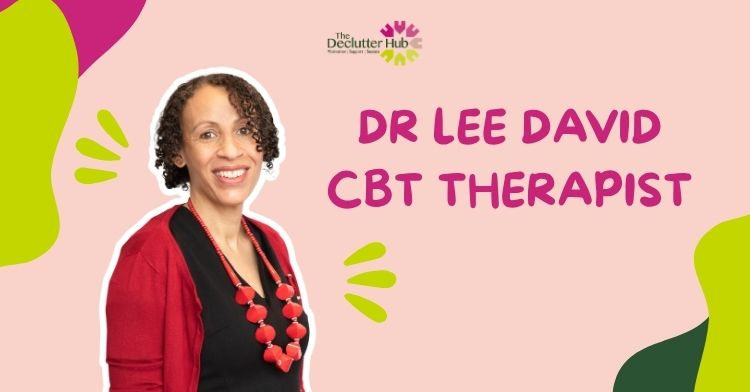
Dr Lee David, a GP and CBT therapist, shares ground breaking insights into how clutter connects to mental health conditions including depression, anxiety, OCD, perfectionism, and neurodivergence such as ADHD. She reveals why traditional decluttering approaches often fail and introduces practical tools from her therapeutic practice that can break the cycle of shame and overwhelm that keeps people trapped in cluttered spaces.
🎙️ In this episode:
- Clutter Emotions First
- Why We Focus Stuff
- Mental Health Signals
- Neurodivergence Perfectionism
- Meet Dr Lee David
- CBT Five Areas Model
- Thoughts Feelings Body
- The NOW Grounding Tool
- Therapy Stigma And Access
- Self Compassion And Values
- Towards Steps Away Steps
- Wrap Up And Where To Find
🕺More about Dr Lee David:
Dr Lee David is a GP and CBT therapist with a special interest in helping people understand the connection between their mental health and their relationship with possessions. She combines her medical expertise with evidence-based psychological approaches to support individuals struggling with clutter-related challenges.
Connect with Dr Lee David:
The Choice Space website
Follow Dr Lee David on Instagram
Discover how the revolutionary five-areas CBT model can help you understand the intricate connections between your thoughts, feelings, physical sensations, behaviours, and environment. Learn practical techniques like the NOW grounding tool (Notice/Name, Observe with senses, Wise mind) that you can use immediately when feeling overwhelmed by clutter decisions.
Dr Lee explains why perfectionism and avoidance create negative cycles that perpetuate clutter accumulation, particularly for neurodivergent individuals. She introduces the concept of "fierce compassion" and demonstrates how to identify "towards steps" versus "away steps" - a values-based approach that moves you closer to the life you want rather than simply avoiding discomfort.
This isn't about quick fixes or perfect homes. Instead, you'll explore how trauma, shame, and self-criticism fuel clutter behaviours and discover evidence-based strategies to break free from these patterns. Dr Lee addresses common barriers to seeking therapeutic support and offers hope for those who feel stuck in cycles of accumulation and overwhelm.
The conversation challenges conventional wisdom about decluttering by positioning emotional regulation and self-compassion as fundamental tools for lasting change. You'll learn to recognise clutter as a signal rather than a failure, opening pathways to more sustainable and compassionate approaches to your living spaces.
Whether you're struggling with overwhelming clutter yourself or supporting someone who is, this episode offers practical tools grounded in therapeutic expertise. The insights shared here extend far beyond tidying up - they're about understanding yourself with greater compassion and creating environments that truly support your wellbeing.
What's your biggest insight about the emotional aspects of clutter?
Share your thoughts in the comments section below, and don't forget to subscribe and leave a review! 🎙️
Prefer to read rather than listen?
Transcript of this podcast episode
Lesley: Today on the podcast, we're exploring why clutter is so often emotions first and stuff second. We'll be looking at what clutter might tell us about what's going on underneath, and how approaches like CBT can help us understand the links between our thoughts, our feelings, and our behaviors. To guide us through this conversation, we're joined by Dr.
Lee David, a GP, CBT therapist, author, and host of the Choice Space podcast
so welcome to the podcast, Lee. This is going to be a very exciting conversation. We've been chatting about it a while, and I think you and I completely gel and get each other's businesses to a T, so I think it's gonna be a great conversation.
Welcome.
Lee.david: Thank you so much. I'm really excited about it as well for exactly the same reasons
Lesley: So yeah, we're gonna really dig into kind of our emotions first, stuff second, philosophy that we kind of bang on about all the time here at the Declutter Hub. And we're gonna really talk about CBT and what that actually is, 'cause I, I feel like it's one of those things that if you're not in it and have not had it, you kind of hear about it, but you're like, "Well, what actually is that?"
It's kind of, it's kind of mythical, I think, isn't it? So you're going to explain all so we understand a little bit more about what CBT is. But before we get stuck in, now we obviously at the, people... we're like 400 and odd podcasts in really, and we've been banging on about emotions first, stuff second as a philosophy for decluttering for a long, long time.
So we truly believe that clutter is not just about the stuff, it's about the emotions that sit behind that stuff. And your work, Lee, will play right into that, okay? That's exactly what you believe. So why do you think then, if we talk about the... if we talk about clutter specifically, why do you think so many people just focus on the stuff and f- and, and assume that clutter is more of a practical problem when it's more of an emotional problem?
Lee.david: I think that emotions are a bit more difficult to kind of get your hands on and, and we're, we're often after that practical, quick solution. And sometimes that is the solution, is to, to do something, and I'm a real, a real advocate for behavior change, so it might be that we do need to look at, know, practical solutions. But we also need to explore has this come about, and actually see clutter not just as a problem, but as a data. It's, it's a flag that says there's something going on here, and where is it coming from? And there's lots of different things that may be relevant, and I think depending on what that is, we might need to take different kinds of actions because some people I've worked with have become quite depressed, and then they st- they lose motivation.
They, they feel very low. They feel very sad, very tired a lot of the time. And, and so the, the idea about tidying, about household ta- tasks, pretty much everything becomes really, really hard to do. And so clutter is almost an inevitable part of that if, if it goes on for a really long time. For other people I've worked with, it's a sign that their mental health is slipping, so they may have a range of conditions.
It might be anxiety, it might be depression, it might be all kinds of complex things. OCD can also come in. And actually, when the clutter builds up, it's a sign, oh, actually I'm struggling a bit right now, and I need to take notice of this because I also need to look after myself. So for me, it's about saying, yes, we do need to look at the clutter, and actually, often there's this positive cycle, and we'll talk about this when we come to CBT, where if we lose...
If we've got low self-esteem and we're feeling bad about ourselves, and then we're living in clutter, then we feel worse because our environment doesn't feel positive. We don't feel like cared about. We come in the house and it makes us feel sad and, and stressed, and a bit ashamed. And so that doesn't have a positive effect on our mental health, so we kind of need to look...
It's chicken and egg, I think. We kind of need to work on both at the same time
Lesley: Do you know, it's so interesting that you say that because, we did a podcast, I, I'm trying to think when it was now, about two or three months ago, about, you know, mental, mental health, what comes first, the mental health or the clutter? And it's, it can be both, and they both play into it, each other. And chicken and egg was a phrase that we used quite a lot during that podcast as well because...
But whatever it is, it's not great, and we need to try and look at the underlying reasons if we can. And self-awareness is everything, and that's where any kind of transformational journey starts, isn't it? By trying to understand and, and it does... For the people in our world, as you say, Lee, there are so many people where it is just a practical solution because emotional triggers, you know, emotional difficulties are not standing in their way, and it's just time or, you know, some other factor that stop them from getting to where they want to be, and it's a quick fix.
But for many of us, it's so much deeper, and that's what we're talking about today. so, you know, you alluded to the fact that it's really is about, you know, mental health, you know, poor mental health and in general, but avoidance, grief, perfectionism. Do you wanna talk a little bit more about some of those things for me, Lee?
Lee.david: Yeah, there's so many different reasons that can lead to... And so that's why it's important to consider mental health alongside clutter rather than just focusing on the clutter because actually th- there are lots of very different reasons, and some of them may well need addressing in their own right.
I'm gonna start with, neurodivergence. So ADHD, for example, can make it very difficult to get started, with tasks that we find boring, and it may well be that for many people, clutter s- s- you know, some people love sorting and tidying, but a lot of people find it quite tiring, kind of boring or... And they might feel a bit overwhelmed about where to start.
And so actually for someone with ADHD, that can feel really difficult and really uncomfortable, and it may be a sign that actually this is something that I need to address as well as thinking about how to approach the clutter. And it might change how to approach it as well because we might need some strategies. so for my ADHD people, often movement really helps, so going for a walk before we try and, attack a task that we don't like, for example, and make it really small can sometimes be quite helpful. else who's, who's quite depressed, then again we would want to know that because there's lots of treatments for, for depression, and that includes CBT, is, wh- which we'll talk about. It includes medication sometimes if it's more severe. And a choice. The person doesn't have to feel like they're going to have to do anything they're not comfortable with, but at least if you can name it and say, "Oh, this is going on here," then it gives people some options so they can decide, "Well, this is how I want to address it.
This is what works for me personally, knowing my history and my experiences." And then there's, there's things like perfectionism where we just want it to be perfect, so much so that I, I see a lot of people who are quite perfectionist who then just get stuck because if I can't do it perfectly, I can't do it at all. And then as I'm sure you're aware, when a lot of clutter that's built up or there's a big task, it's pretty difficult to do it all at once. And so it becomes difficult to then chip away
Lesley: Excuse me. Sorry
Lee.david: idea of, "Well, I'm, I'm moving in the direction of getting things a little bit better bit by bit, and I'll give myself some grace and some time and let go of that pressure and I...
And we'll get there." And but people struggle with that if they're... And it's, it's kind of where our self-worth has become linked to does the house look like, and that might also come up in OCD where people are very s- you know, might have thoughts about, well, it needs to be tidy. Or, or it may be, in OCD actually it might be something else.
So people might be very busy doing other compulsions, around maybe cleaning or maybe... There's so many different mental compulsions people have in OCD that are not visible on the outside, and they stop us. They get in the way of being able to do the day-to-day job. So it may be that it's not a compulsion around cleaning per se, and so that makes cleaning really hard because we haven't got time to do it on top of all the other things if we're having to check the locks, for example multiple times a day, or if we're...
I've, I've had people who are checking with ChatGPT, about various things multiple times a day, and it can take literally hours of the day doing these checking-type behaviors. And so of course it's really, really hard to then find time to tidy up the clutter
Lesley: Do you know what's so interesting, Lee, 'cause I mean, what have we been chatting about that for three or four minutes, and just in that three or four minutes, that's complex stuff. You know what I mean? All of the things that you've spoke about, they're not easy things to fix. You know, we've talked in there about perfectionism, procrastination.
We've talked about checking behaviors for people with OCD, mental health. all of the things, all of those things just compound to make it really, really difficult. And so it's so important to just take a little step back and to try and be- become self-aware. And I think in the decluttering world, where the world thinks it's just about stuff that needs to be thrown away, we can be forgiven for not going deeper on that.
and I think, you know... And it's so funny 'cause we do, we do a lot of, challenges and things that people are very new into our world. And just knowing that it's emotions based, it's like such huge kind of weight off people's shoulders and people go, "Oh, right. Okay. There's a different way to, way to this."
Because I think we're sort of tuned into these kind of before and after kinda transformations and, you know, and it's... L- life's not like that for so, so many people. So I'm really glad that we're having this conversation. you know, I was thinking about when you were talking about, ADHD in particular there.
You know, I've got two ways that that... Well, lots of ways actually, that that kind of presents. But we've also got then the, people with ADHD then go into hyperfocus, and so it's recognizing that as well, where they'll declutter till they drop almost as well. So you've got the kind of procrastination side of it, and then you've, you've got the other side of it, which then means that you run for the hills every time you think about it, 'cause the last time you did it, it took you all weekend, and you were absolutely exhausted after it.
And so it's complex. And even if you understand it, how do you then put sensible strategies in place to recognize these behaviors? So it starts with, okay, this is emotions based. Let's think about that. Let's try and understand our own behaviors. Let's try and understand our own energy levels and all that kind of thing.
Then we need to go a little bit deeper. And so presumably, that's where people like you and people like CBT come in. So I wanna go really back to basics on this, Lee. So first of all, tell us a little about yourself and how you've come to be working in this space. And then I really wanna go down to the basics of what CBT is and how it potentially can help people with clutter
Lee.david: Yeah. So, so I'm a GP by background, but I've always been at, well, I'd say and, I've always been really interested in people and what makes us tick and what makes us do, how we look after our health, how we behave in all kinds of different situations. And there's an awful lot of mental health that we see in primary care as GPs, and so I wanted to improve my skills about working with people with mental health problems in a range of different situations.
So I did some extra training and, and became an accredited CBT therapist and became really interested in what are the quick things that we can do as well. It's not Obviously, CBT, we, we have a longer session. it doesn't mean that ... There's a, there's a, there's formal CBT where people go and have therapy, but there are also lots of th- tips and tricks that people can use themselves, self-care, maybe supported by a, a clinician, that can still make a difference even if it's not full-on CBT.
And I think that might depend. You know, when we were talking about the mental health problems earlier, then I think there's a, there's a spectrum of people that we'll see, and some people will be much more, impacted and, and will be more likely to need to be seen maybe by a health professional, maybe diagnosed and offered the right kind of treatments. And other people may just have some traits that they can work on independently, and actually if it's things that are not impacting them quite so much, then there's an awful lot we can do for self-care. And so it's trying to recognize, okay, where am I at on that line? Am I at the point where I need to get some help?
Am I, am I struggling with this? And it's actually I'm a bit overwhelmed, and I don't know where to start, and I just need somebody to sit with me and say, "Okay, let's work it out together, and let's make some decisions together about what to do." And I think if people are at that point, it's really important to say there is support available. They could just see their own GP, they could seek a- they could access therapy themselves. And for other people, you know, perhaps people you'll be seeing, through the, through the, your kind of Clutter Hub, it may be that quite a number of those people are not, are struggling emotionally but maybe, don't have a diagnosable mental health problem. And actually then a lot of self, self-care, self-help, understanding themselves can be hugely powerful and beneficial. So, so I now work, in a lot around mental health. I, I work as a mental health GP for an organization called Pra- NHS Practitioner Health that supports the mental health of, of clinicians.
So health professionals who have their own mental health problems. So, sort of do lots around teaching, and I do some writing, and as you say, I've got my own podcast which also looks at wellbeing in all kinds of different parts of life
Lesley: And I think, you know, Lee, it's good to ha- to come from lots of different angles. I mean, people, you know, we talked about the impact that people have got, and some people have got quite severe mental health issues, and some people have got, you know, it's affecting them, but not as much, and they feel like they can tackle it on their own.
Everyone's different, and everyone... And, and it will, of course, ebb and flow throughout your life as well. So just because, you know, you might have poor mental health at a certain stage, that might not be there for life. And so it's good to sort of attack it from lots of different angles, and it's really about finding people that are compassionate and understand, you know?
You need to understand yourself, and you need to have people around you who understand and get it. And, you know, so that's why a, a community like ours, it's not just Ingrid and I that understand people, it's the whole community that understands it, which is also really important. So often, you know, a combination of things like therapy and being in a, a, a sort of safe, welcoming, understanding space like ours is super helpful, you know, to have both of those things together.
So just jumping back to CBT then as a thing. So somebody comes to you, poor mental health and decluttering is, you know, high on their list of things that's getting them down, probably 'cause of the shame element of it that you spoke about before, and it just never goes away. You know, our homes, they should be safe spaces, right?
And if it's just there, isn't it, all the time, like kind of winking at you like, "Sort me out, sort me out." And so it just, it's not something that we can really avoid. So explain CBT to me and what that is and how it helps, please.
Lee.david: Yeah, so I think the first thing to say is that CBT is really a f- it's got a lot of evidence of being effective. So it's one of the therapies that has had the most studies done about does it actually work? Does it make a difference to people after they've been through it? do, do people tend to feel better?
And it's one of the ones that, that does in a whole range of different conditions from anxiety, depression, also with lots of health conditions, about adjustment. and so it's, it's very broad because it can actually help people with lots of different things. And actually, over the years, CBT was, I think, first really became popular in the '80s, and over the last sort of few decades, it's, it's evolved to be quite a lot of different parts.
And, and actually you could meet several different th- CBT therapists who will have quite a different approach. so but the basic, idea is that if you break things down, I like to use a very simple five areas model of any problem. So come on- someone comes in and says, "Right, I've got a problem with clutter," then I would be looking at, their thoughts.
So how, how are they thinking about the problem? And it might be that they're negative thoughts. It might be thoughts about, "I'm a failure." It might be, "I'm, I'm, I'm useless." Lots of negative. There might be self-critical thoughts. It might be, "I'm ter- this is gonna be so awful." So it might be an anxiety-based thought of, "Oh, it'll be so awful to have to do it.
I can't stand it, so I'm not... So I'm gonna avoid." look at what's, what's going on in people's minds. We look at what emotions that might trigger. So it might trigger, as you've mentioned, shame. There's anxiety, there's sadness, and obviously positive emotions, but they tend to come a bit later. Then we look at, so we've got thoughts, we've got feelings, we've got what's happening in the body, and I think we often miss that.
We tend to just jump straight into, well, let's get on with it. But actually, sometimes just pausing and noticing, "Oh, I'm really tense in my neck and my chest, and I'm to breathe faster," or, "I'm feeling really heavy, and I've just got fatigue, and it makes me wanna curl up and lie down on the sofa and just not get up again." And so actually noticing our body is really, it helps ground us in, in the present moment and actually come back into ourselves rather than just trying to push on and ignore how we're feeling. so we've got thoughts, feelings, physical symptoms we've got, then we've got our behavior, so that's what we do. So we might... And that's something that if I was watching you, I can see what you do, but also there's things that we do in our head. So we might do thinking, we might do worrying. I'm going to think and think and think about this, oh, all night and see if it helps, and generally speaking, it doesn't. It makes us really tired and stressed, but our brain still thinks, "If I keep thinking about it, it will help me."
So that still can be seen as a behavior even though it's something that no one else would see outside. But we might also see doing something as a behavior. So if I'm tidying up the clutter, then I'm probably doing something else instead. So I might be scrolling on social media. I might be sitting down.
I might be going out and doing something, and it might be something positive, but it might also... Often when we're doing avoidance, we're doing things that we don't really value. And so if it was, well, I didn't get round to dealing with the clutter at home 'cause I had this really important stuff that I really care about, and I'm really glad I did it, then that's really different, isn't it, to, well, actually, I spent five hours scrolling on social media, and I feel really now depressed and it, and it's really, it was a very negative experience.
So it's not about whether things are good or bad. It's about how do they work in, in my life? How is this behavior working out for me? And then the fifth area is environment, and so that's where our home is our, one of our environmental spaces, our relationships with others. You know, is this actually coming out of, is there some kind of conflict going on with people around us?
Are we worried about our kids? Is there a problem in our, in our relationship with our partner? Or if it, is there something at work? Am I being bullied in some way? And actually, all of that is having an impact on how I'm then approaching what's going on when I get home. Or maybe, and I think this is another important one, do I have a history of trauma of some kind that's, that's recent that I'm trying to avoid, and in some way that's being triggered when I'm at home or when I'm thinking about, facing trauma?
And I think we're really starting to see now is, is under-recognized hugely, and it has a huge impact because it takes us to... If you think about green, amber, and red of our nervous system, green is when we're regulated, we're calm, we're kind of able to think flexibly. Amber's when we're starting to get stressed.
I've got just so much to do, I've got to tidy up and I can't do it. And we get a bit flustered, and we're not as functional, but a little bit is probably helpful. It gives us a push, but too much we get... it's overwhelming. Then, but if we go up to red, when we're completely overwhelmed, we shut down, we disengage, and it's just too much.
And so if there are experiences around that, then we may be tipping into, to, to the red zone where we, we are not able to really engage with the world. And again, you can imagine how that would make it very, very difficult to then get started on a task. So, so CBT looks at all these areas, and there are different ways we might think about changing the thoughts or challenging the thoughts. I would focus more on a mindful way of distancing from the thoughts. I, I use an approach called acceptance and commitment therapy, which is the thought, but I don't have to believe it, and I don't have to buy into the idea that my- I'm useless. I can recognize I'm having a thought about being useless when I see the clutter at home, but I don't have to agree with it, and I can be kind to myself and say, "Okay.
Hello, thought." You know? I, I know you're... it's often a kind of self-critical part that's trying to motivate us to get tidy up. It's like, well... But, but we're doing it by being kind of harsh. So we can say, "Well, I hear that you're wanting me to tidy, but I'm... it's, it's quite hard right now. I'm, I'm really tired.
So, I'm gonna listen and we'll see what we can do." So it's, it's not so much about to completely change a thought from useless to great, as much as just label it, recognize it, and notice what impact it happen- what happens when it comes, and then maybe choose a chi- a kinder way through. What would happen if I believed that I'm doing my best, for example?
How... what would that change? How would I approach it differently if I could just shift a little bit with a bit more kindness?
Lesley: And that comes from, from chatting things through, yep, with your patients, I guess. and does that take quite a while? You know, does this involve several sessions, or can something be done in just one? How does that work?
Lee.david: I think a really useful quick tool that people can use without having to have done formal therapy is something that I call NOW, So it's a three-step process that's about grounding ourselves when we've got caught up. It's about noticing emotions, recognizing them. And so it's, it's the difference between notice what's happening inside and carrying on in a helpful way versus trying to ignore it and push through or p- push it down, and then we end up doing stuff to, to avoid it, which is often more unhelpful. So we might end up having to go on social media or doing other things that we don't want to do rather than addressing it.
So steps, And, and it's based on the idea that when we're in very intense emotion, then it's harder to think clearly, it's harder to make decisions, and it's harder to, to do stuff that is difficult because we're so emotional. So if you think about someone who's really angry, and this applies to any emotion, then how reasonable is their thinking?
If you've ever had to try to talk someb- to someone who's in a rage, h- how have they been in your experience?
Lesley: I know. It's time to step away really, isn't it? And come back to it later. They're not thinking rationally at all. Yeah, exactly
Lee.david: Exactly that. And that's true for all of us. When we have any, and that could be anxiety, it could be shame, it could be
Lesley: Yeah.
Lee.david: When that emotion's very high, we're much less rational. But if you think back to that angry person, how much do they believe they're right when they're really angry?
Lesley: Oh yeah, for sure. I definitely think they're right, yeah
Lee.david: So, and again, so our emotions, it's called, it's a kind of emotional trap where the more intense our emotions, the less rational we are, the less likely we are to see the realistic situation, but the more it feels true. And so at that point, we've... If you think about the green, amber, red, we've definitely gone into amber at the top end, and so we need to get back down to green before we can try and actually carry on and maybe do a task. So actually, the very first step when we've really got dysregulated and we've got strong emotions is to try and get back down to green, and then we can get on with whatever we want to do. So it's just a very micro pause, if you like. And so the NOW is a way that brings us back down th- from strong emotion back to the here and now, and allows us to carry on.
So N is notice and name. So it's like, okay, there's emo- an emotion's shown up. Maybe it's anxiety, maybe it's sadness, maybe it's anger. Today I'm annoyed with my, you know, my child or my husband. or maybe it's shame. I've come in the house, I've opened the door, and I've seen the clutter, and I've had this rush of shame and a lot of negative thoughts about myself.
Just seeing it has triggered all of that. and so we just notice that, say, okay, some... And it might just be difficult stuff is here. We don't even have to give it a full name because some- not everyone is, finds it easy to name difficult emotions, and we don't have to be specific. You can just be like, "Okay, this just feels uncomfortable." And that might be enough to say that. So we can just give it a name, but we know it's not a good feeling, so that's, that's enough to say that. And then O is, okay, I'm gonna observe with my five senses. So I'm gonna get you to, to do this with me so that we can talk people through so they know what we'd be doing. And you don't have to do all five. I'm gonna talk you through five because it helps people to have an idea, but it's just a way of finding parts of the body and mind that are not dysregulated, that are not stressed, that are not feeling shame, that are actually perfectly neutral and fine. So, I start with vision. So if you look around, and I can see... I'm gonna ask you for two things that you can see with colors. So I can see a green mug and, a blue water bottle. How about you?
Lesley: I can see my red phone and I can see my green sign
Lee.david: Okay, great. And then can you hear any background sounds behind, any background sounds, anything quiet your room?
Lesley: No, it's all quiet here. Hope... And it has to be. Normally there would be a lot going on, Lee, but when I'm recording podcasts, it has to be quiet. So nice and quiet and calm here. Yeah.
Lee.david: that. Just notice the absence of sound.
Lesley: Yeah
Lee.david: And what we can also do is create a sound. So what I really like to do is a slow sigh breath, which is like a ha, like a ha. And what that does is, is it's a diaphragm breath, and we can do a really slow one. So I'm gonna get everyone to do a slow ha breath as long as possible. your diaphragm, which is in the top of your tummy. Just will tip up whilst we're doing that, and, and listen to the sound of the sigh as we do it all together like a ha And it can really help to do one or two of those and to count, can you get up to four, six, and maybe try and go up a bit time? the- when we exhale, we trigger our s- parasympathetic nervous system, which is the calm, soothe, rest. So it says, "Stand down, threat system. There's no threat. It's okay.
It's okay. Let's just settle." So it's kind of like a soothing thing to do. So I really like that slow exhale. Don't worry about the... And just breathe in, and then do another one. sometimes people like to hum and make a noise that they can hear as well. so we've got, we've got, w- well, we've done vision, we've done hearing.
We can move a little bit, so might wriggle your toes, and just maybe rock from toe to heel. Bring your shoulders up towards your ears, and then bring them back down again, and just get a posture, like a strong posture of, "I've got this. I'm strong physically. I'm not in the fight, flight, oh, I'm running away from danger position" but, "No, I'm strong, I'm capable in my, my body." and just notice that our toes, they're not really anxious or stressed or sad. They're just doing their thing. They're just like, "We're, we're all right" you know?
Lesley: Yeah.
Lee.david: it's good to know that my toes are o- even when I'm worried about the clutter, my toes, don't really care either way. And so it's kind of coming back to a sense of there's bits of me that are actually all right even now. And then you could do taste and smell. So I won't go through those, but people might have a sip of their coffee, smell their coffee. They might have a perfume that they love. So it might be something that actually h- really helps. Say I'm gonna bring a lovely smell into the home so that when I go through the front door, the first thing I notice is this really nice smell that makes me feel happy, and actually that will be the thing that I think about more than the clutter.
So there's these little things that allow us to regulate. and then the W is really important. So it only has to take anything from 10 seconds to a couple of minutes to do that sort of noticing. So we've taken a bit longer 'cause I've been talking it through, but it really does... can be done very, very quickly. And then the W is really important. We can't miss that. It's wise mind. So we ask our wise brain. We're hopefully back in green now, and we're a bit more ready to think flexibly about what, what, what do I need to do. So ask kind of my wisest part of myself, "What should I do next?" And then I focus on doing that with my full attention.
So if we've come home, it might be, "Well, actually, I'm going to go and make myself a, a cup of tea," or, "I'm going to... Actually, I'm gonna go out for a walk," or, "I'm, I'm actually gonna address the clutter. I'm gonna spend five minutes doing something." And then we do that with as much attention as we can. So again, rather than getting caught up in the story of, "Oh, there's so much to do, and this is a waste. and I should've done it yesterday," and all of that, it's coming back to, "Well, I can feel the box in my hands. I can smell what happens when I open this, and oh, I..." So we can just be really present physically and emotionally with doing whatever we're doing so that we're, rather than trying to be calm, it's trying to be present and engaged with our day-to-day lives
Lesley: Wow. I just, you know, I just can't help but listen to what you're saying, and I've never had therapy, Lee. I've got, I've, I've had this because I've had a life coach. I've gone a little bit down that kind of delving into, into my life, but I've never had, formal therapy. But as I, as I look at it, I can see that that ability to find strategies, even if they're quite small strategies, quick strategies, that can get you to be present, get you to think, are gonna be so powerful for when people are in that fight and flight mode, fight or flight mode.
So I'm gonna go to a break, have a think about it, and then I'm gonna come back and we're gonna carry on this discussion, Lee. Thank you so much
So welcome back, and welcome back to Lee. It's so-- I'm really, really enjoying this conversation because it's taken us into a practical place, and I think it's really bringing it to life.
And I think what, what strikes me, Lee, is that for so long in Britain then and perhaps in other parts of the world, therapy was something that people felt a little bit ashamed of seeking out, and that thankfully have changed, has changed, hasn't it? certainly over the past decade, over the past couple of decades.
And that's got to be a good thing because, you know, some of the things that you're saying seem quite simple, but you need to have them explained to you, and you need to be able to remember them and pull on them when you are in times of stress or a difficulty. And so I wish that more people had that available and more people would try and seek it out.
Obviously, it's difficult sometimes to get these things. We won't go into all of that. but certainly if that's something that you think could help you, don't try and do this alone all the time. Try and reach out for some help. Anyway, that leads us on to the fact that not everybody can or will want to or will need to, have a CBT.
So what can people do? What can people borrow from that process, Lee, to do at home themselves, to give themselves a few little handy hints and tips to motivate them forwards when they're feeling the types of things that we've spoken about already?
Lee.david: Yeah, so I think one of the things that is, is self-knowledge, and I, I often call it neutral self-acceptance. So we're not nec- people often want, we want to see ourselves positively, but that can feel far away if we have a negative belief about ourselves. So sometimes an, a step in is to just accept this is me.
This is the me that I am today, and I think that acceptance is really important. And then when we have that, we can have a bit of curiosity when we can let go a bit of the shame, and so we might need to build in some self-compassion. So I'm gonna start there because I think there's not a single, person in the UK who wouldn't benefit from being a bit kinder to ourselves.
I
Lesley: Yeah.
Lee.david: we are naturally all really critical. We give ourselves a much harder time than we would to anybody else, and the, the, the... we call ourselves names. We give our- as soon as we make a mistake, we say, "Oh, this means you're completely terrible." And we would very rarely talk to our best friend like that.
It would, it would be really unusual to, for that to be true. And so but actually how we speak to ourselves makes a huge difference. So I think the first thing I would say, because this is so universal, is, is that if we can all learn some skills around self-compassion and being a bit kinder to ourselves, then that makes everything easier because If we go back to the, the red, amber, green idea, if you think about if we're in threat, if we're in the amber zone, actually some of that threat comes from the internal threat of not being good enough.
And, and actually if we can let go of, if we can be kinder to ourselves and say, "I'm doing my best, I can be kind," that makes us move down towards green straightaway without actually changing any of the thoughts, without necessarily having changed the situation, but just that, a little bit more kindness.
And kindness isn't the same as, not doing, getting started for something that matters. Sometimes we need a bit of fierce kindness. Kristin Neff, who's, an American, she does a lot of, psychologist, and she has written a lot of books and done some TED Talks, and the other person I really like is Brené Brown, and they've both got TED Talks that are amazing. they talk a lot about self-compassion. But Kristin Neff talks about fierce compassion, and that's about being kind to ourselves, but being like a mama bear who's like, you know, "Ar." it's not just about, "Oh, well, don't bother starting today." Sometimes we need someone to be quite strong and say, "Actually, this is really important.
We need to get going with this." And so the, kind to ourselves sometimes comes with fierceness and strength, rather than being weak or giving up. And so it's kind of reframing what we mean about self-compassion, but I think that's a really powerful first step to think about. And the other thing that we can do that I think everybody can do with i- irrespective of, you know, this, this applies to everyone, and you may have done this in your coaching, is think about your values.
Think about what matters to you. And thinking about what, what, what things matters the most to me in my life, and it might, often it's about relationships with people that we care about. Often it's about time to do things that we enjoy. And so we need to think about making choices that move us towards s- a value, rather than away.
So I would talk about, a lot about towards steps and away steps. And a towards step is- "Well, okay, I'm gonna do decluttering a little bit today because I really value my space, and I want to look after myself, and I want to create a home that is a safe space. It's a haven that when I go in there, it feels lovely to me, and this is like a gift. And so therefore, it a bit of fierce compassion, but the reason I'm doing it is because I value myself and I want to do something that looks after me." Versus an away step is, "If you don't tidy up, you're, you're, you're just gonna show the world how bad you are, what a failure you are. You're just this terrible person, and so you need to get on and, and start do- getting rid of the clutter because really y- you're losing at life." And that's such a negative reason to do it. So every time we do then do some declutter, we're, we're thinking about how that means that I'm at risk of if I don't do it, then I'm gonna be seen negatively. People will judge me. I'll judge myself and, and so our threat system is completely activated the whole time, and it's not a positive activity.
It's ... It becomes a negative activity. And so I think there's something about trying to move it away. They look the same on the outside. You know, I, I might just see somebody putting a few things into a box, but internally, they're massively different because on the one hand, my threat system's triggered and I'm feeling stressed and shamed and, and I'm feeling...
And the other one, I'm feeling kind towards myself and accepting, and it feels like, oh, I'm making some progress and, and I'm, and I'm gonna acknowledge my progress, and I'm gonna be positive and give myself a sort of thumbs up for e- for every small step I make. And it, it feels like those two are entirely different experiences
Lesley: It's so interesting. I wanna talk about a, a couple of things that you talked about, and it's, and, and you were talking about in the context of self-compassion, I think, and self-awareness and, and self-kindness. And we do that as well in our communities as well. So Ingrid and I typically are known as very kind people and, and that's, we lead with kindness w- the way that we teach.
But there are times when tough love comes into the mix a little bit, and that's when it is from somebody else as well, where it's kind of like you can only go so far before the reality of what that, you know, you, you tried that tactic and something else needs to step in. So every now and again we'll steer into kind of tough love territory with kindness in mind, but it's, it's that positive step of moving, moving peoples forwards.
And you know, when you were talking about the kind of towards, what was it? The towards step and the away step. Was that, is that what it was? Yeah.
Lee.david: Yes
Lesley: it's a wh- it can take a while to understand and to get that, I think, can't it? You know, to, to start to refa- reframe it positively. Everything in your being will be fighting against that in the beginning because, because of this decade l- decades long-held belief that you're not good enough or the shame or whatever, or the negativity associated with it.
So it's not a quick fix, but we can fix it with small step setting. I think just being aware of that is really important. So being aware of your own behaviors. But it can take a while to get there permanently, can't it? And you've got to go on a whole journey, I think sometimes. But a lot of people don't understand the difference between the two and so you need to understand that it's there and it's a thing before you've got the, ability to move on.
Lee.david: I completely agree that it can be really hard to feel like, "Oh, I really care about myself and I feel so positive," when actually we're still in a lot of clutter, life's still very stressful, I'm still struggling at work and, and the, you know, there's all sorts of other issues.
And so it might be unrealistic to say, "I've gotta feel great." But what we can do is imagine what would... how would I behave if I believed that I was worthy of a little bit more kindness? Or how would I treat... wh- if I was advising somebody that I cared about, like a friend, if I was supporting someone in my family, what would I say to them, and what behavior would I think would, would I ask them to do?
And so it can really help to step out and make it not about us, but then we a- we can then choose that behavior ourselves. And I think w- what you're saying there is, is behavior can lead, and I really do think that's true. So we take an action, and actually when we change our actions, how we're living, that will affect our emotions and it will affect our thoughts.
So if we choose things that are more positive for us, then we'll start to feel better emotionally and probably some of our negative thoughts will start to gently... they'll be like clouds, they'll just pass on their own. So we don't necessarily have to fight off these negative thoughts. It might just be enough to behave in more healthy, positive ways. And one of the ways to do that is exactly what you're talking about, a community. Because shared common humanity is one of the, one of the principles of, self-compassion, is about having people around you who get it and who are gonna support you and give you that care and understanding, and maybe a bit of the tough love sometimes. And actually being part of a community is hugely important and can make such a difference
Lesley: Absolutely. Just, just reminded me when you were talking about, the kind of behavior leads, and the framing things in a positive versus negative way. one of the things that we talk about in ward- with wardrobes is seeing possibility rather than impossibility. So if you're retaining stuff in your wardrobe that is not fit for purpose or is too big, too small, whatever that is, all you see when you open those doors is impossibility, and you start your day in that frame of mind.
But what... So the reason, one of the main reasons why we want people to have a wardrobe that is fit for purpose and does con- contain things that are gonna, allow them to wear them is because it's possibility overrides that impossibility, which we've lived with for years. And so, absolutely, love everything about it.
It's... We could talk for so long, Lee, couldn't we? 'Cause there's so much to go into because the bottom line is we're emotions-based decluttering. We've only scratched the surface, and we've only scratched the surface of CBT as well, of course, 'cause there are so many things. But I think to me it's, it's opened up...
I, I hope that it's opened up the possibility to some people that perhaps are looking, seeking a community, starting with these small steps, reading a book about CBT, reading a book about mindfulness, whatever that might be. Just go down that route and don't just think that, that decluttering is about stuff.
It's about what sits behind the stuff. And as soon as you can get to that point, then that's gonna open up a whole world of possibilities to you. That's what we try to do in the Inner Hub. we try to ex- explain and help people to get to the point of understanding their own behaviors and what it is that's been holding them back for so long.
It's what Lee does in her work. It's what she does in her podcast. I'm excited to be on Lee's podcast coming up as well. So if you wanna know more about... We're gonna combine it and go the other way and talk a little bit more about decluttering than CBT, but in the same, thing. Then do pop along and listen to me.
Although you've listened to me a lot on this podcast, on Lee's podcast.
So do pop along and listen to me and, of course, all the other amazing episodes on the Choice Space podcast to delve in a lot more deeply into what Lee can offer you.
So Lee, is there anything that you would like to add before we get finished?
Lee.david: always got something to add, but I'll keep it brief. But what I think is it's trying to see declutter as part of creating a life that's amazing. So it's not about the clutter per se, it's about living your values and that's part of it, but the purpose of doing it is to create a life that feels meaningful, that allows you to do the things you, you care about, to n- connect with the people that you love, and have space for all the things that you want to do in life. And for me, and that might be your wardrobe, it might be sitting peacefully. There's so many different aspects, but I think it's really trying to connect to the why and those values, and I think that then makes it a super powerful thing to do
Lesley: Amen. Amen to that, Lee. Thank you so much for being with us today. I've really enjoyed our conversation and, I'm looking forward to being on your podcast too.
So Lee, last thing, let's let people know where they can find out all about you
Lee.david: Yeah, so I'm on Instagram at dr.lee.david, the choice, thechoicespace.co.uk website, or on all podcasts, platforms at The Choice Space Podcast
Lesley: Oh, thank you so much. And I'm sure lots of people will be jumping over there straight away to listen. So thank you so much for being with us today. Thank you for a lovely, lovely con- lovely conversation. I'm looking forward to returning the favor on your podcast, and we will see everybody next week. Thank you so much for listening.
See you again
Subscribe now so you don't miss an episode
Prefer to watch rather than listen? Watch on YouTube
Looking to further your decluttering?
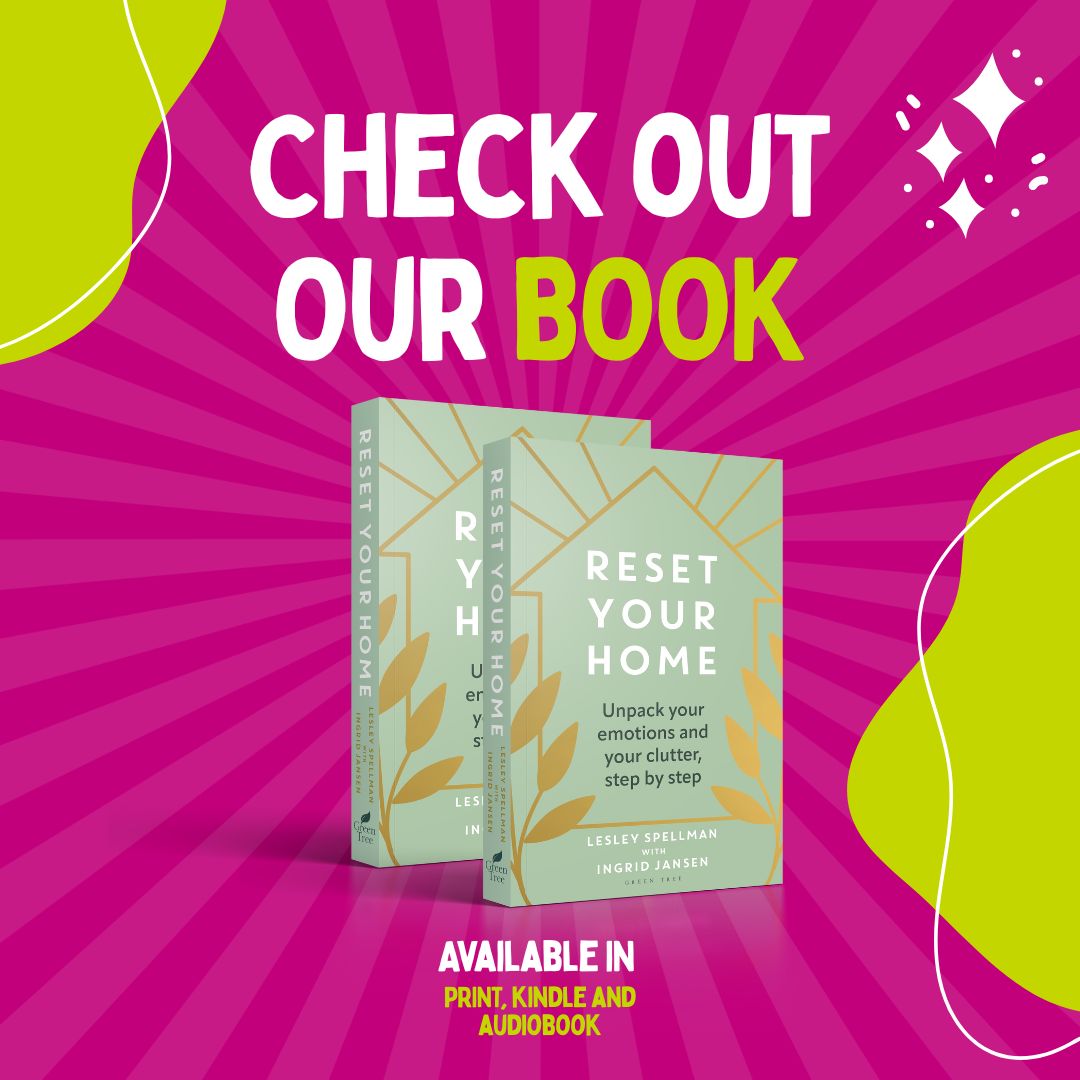
Purchase our book!
Useful Links and Resources
Subscribe now so you don't miss an episode
