
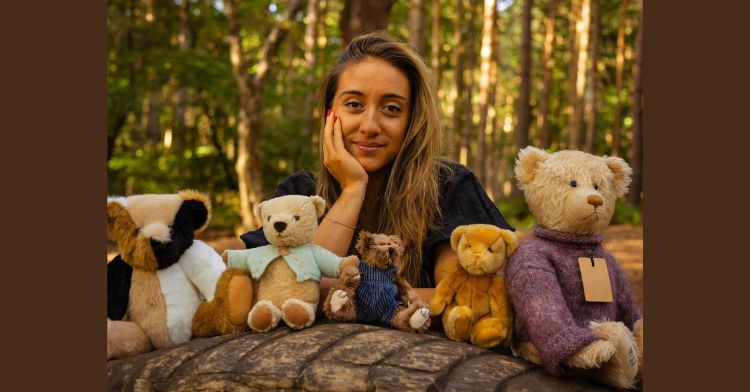
Have you ever looked at a pile of outgrown soft toys and wondered how to part with them without sending them straight to landfill?
What if those beloved childhood companions could find new homes instead of ending up in the bin?
Could there be a way to honour the sentimental value of these fluffy friends whilst decluttering your space?
In this heartwarming episode, Ingrid explores an innovative solution to one of decluttering's most emotional challenges through Charlotte's inspiring journey as the "Fluffy CEO" of Loved Before. Discover how this unique soft toy rehoming agency is revolutionising the way we think about parting with cherished childhood companions whilst making a genuine environmental impact.
Charlotte shares the fascinating story behind creating Loved Before after witnessing charity shops overwhelmed by donated soft toys that were sadly destined for landfill despite their sentimental value. From humble beginnings in a university living room to partnering with prestigious retailers like Selfridges, this episode reveals how one person's vision has saved an estimated 75,000-100,000 toys from waste whilst bringing joy to new families.
🎙️ In this episode:
- Soft toy clutter crisis and why traditional donations often fail
- Meet Charlotte the Fluffy CEO and her mission
- The origin story that started in charity shops
- Bootstrapping a business from the living room
- Early days finding donations through creative methods
- Multiple ways to donate your soft toys today
- UK hub operations with plans for global expansion
- Impressive impact numbers and environmental benefits
- Behind the scenes warehouse triage and stuffy spa process
- Adoption drops and partnerships with major retailers
- The heartwarming process of naming toys and sharing their stories
- The bigger mission to reduce new soft toy production
- Managing sentimental clutter and finding relief
- Environmental impact and future vision
- Where to find Loved Before and get involved
- Essential takeaways for listeners
🕺More about Charlotte:
Charlotte is the founder and "Fluffy CEO" of Loved Before, a pioneering soft toy and doll rehoming agency. After witnessing charity shops overwhelmed by donated soft toys destined for landfill, Charlotte created an innovative solution during her university years. Starting with no investment and piloting with a single London charity shop, she has grown Loved Before into a thriving business that has saved an estimated 75,000-100,000 toys from waste. The company operates a comprehensive process including toy triage, sanitisation, restoration in their "stuffy spa," professional photography, naming, and rehoming through both direct sales and retail partnerships with prestigious stores like Selfridges and Fenwick.
Connect with Charlotte:
Struggling with sentimental clutter in your own home? What soft toys or childhood items are you finding hardest to part with?
Share your decluttering challenges in the comments below, and don't forget to subscribe for more inspiring solutions to your toughest organisational dilemmas! 🎯
Prefer to read rather than listen?
Transcript of this podcast episode
Ingrid: In this episode, we explore what we can do with those soft toys in our home that are too precious to throw away, but adding hugely to our clutter problem. Charlotte, lovingly known as the Fluffy, CEO, is the founder of Love Before a soft toy, a rehoming agency on a mission to save the world. One teddy at a time.
With an estimated 8 million soft toys thrown away every year. Charlotte is on a mission to rescue soft toys from landfill by lovingly restoring them, giving them a spa day and matching them with new families. We can't wait to hear more, so let's dive in.
Ingrid: Hello and welcome listeners. I'm Ingrid.
Lesley: And I am Lesley. Now, if you are here for the very first time today, or you've been listening in for ages, we want to say a huge thank you we have a little favour to ask.
Ingrid: If you like what you hear, be sure to hit that follow or subscribe button. Share us with your friends or leave us a review. It makes a huge difference to us.
Well, Charlotte, I was saying right before I hit record, how excited I am to talk with you on this podcast. I, I, I've been determined to get you on as a guest. I've reached out couple of times because I was like, your story is so amazing. I want everybody, all of our listeners, that we, that tune into us every week in week out.
I want them to know about you because I'm so excited. So thank you so much for being here.
Charlotte: Thank you for having me. Thank you for persisting. I was just saying as well, really appreciate you, you, you trying again, and, and it's lovely to be talking to you. I. Under your audience here as well.
Ingrid: absolutely amazing. Now, what you've built up is I think very, very special. I spotted you on Instagram and I was like. This is like amazing. I and I, I was like, I, I need to talk to Charlotte. I need to get the loan out on this all, and I'm so delighted that you're here. So your company, I mean the, your title alone, the fluffy CEO, how cool is that?
We, we need to know more about that, but so love before, can you please just start from the beginning and tell our lovely listeners. Your journey, why you started this? What? Tell the floor's yours.
Charlotte: Yes, absolutely. so I guess it started a few years ago now. I was fresh out of uni and I was actually, well, I was, I was actually. Still in uni when I, when I actually came up with the idea and I was spending some time in a charity shop that, you know, was in London and I started to notice just how many people were bringing in soft toys to donate. And often when these people brought them in and handed them over, it was becoming really clear to me how much. They meant to those people, how many memories they came with, the emotional and sentimental significance they held, as it was, and as it unfortunately is across the country and actually across the world, those charity shops are not set up in a way that allows them to and process the many, many toys that they get on a daily basis.
And so as it was, those toys were. Thrown into a box and you know, potentially sold us dog toys for, for pennies. The memories and the stories that they came with were thrown away in that moment too, or even more heartbreakingly. They were thrown straight out into the bin, and that's not the fault of the, you know, the charity shops that are doing their absolute best.
They are just so overwhelmed, and so I went home that night.
Ingrid: Yeah.
Charlotte: looked like a, the image of me as a kind of mad scientist, I had scribbles all over the walls and post-it notes everywhere. I was really, really kind of understanding and researching. Is this just a problem in this charity shop? Is it, you know, charity shops on every high street?
Is it in every town? Is it in every country? Like, what's the problem here? And what I discovered just absolutely flawed me. there are millions and millions and millions. Plus, plus plus, that are ending up in landfills in our oceans and in incinerator, every single year. And that number is only getting bigger and bigger and bigger.
Ingrid: Yeah.
Charlotte: someone who's always had my own, you know, little circle of stuffed animals who all have their own names and characters and they all play their own own roles in helping me navigate life, I was utterly heartbroken by this and I thought, okay, well maybe if I can step in somewhere at the core of this and change and transform the perceptions of these toys. rubbish and losing their value once they've been loved, then maybe we can do something about it. We can redirect the toys from landfill and we can change the trajectory of the toy industry. you know, five, six years
Ingrid: Mm-hmm.
Charlotte: here we are, hopefully doing just that. So it's been quite a journey, quite a journey.
Ingrid: Yeah. Yeah. Now you said I had some scribbles on the wall and I kind of looked like the math scientist because you were like, you were on a woman on a mission, weren't you? You just, you started at home, didn't you? You didn't have a, a, a, a warehouse and an office and it, it just really started your old living room, didn't it?
Charlotte: Literally the living room. The living room floor on a Post-it note. it really was just. A, a post-it note. I ha had, you know, money. Frankly, absolutely none. This is a business that's very much been, you know, we, we've never had a penny still to this day of external investment. So it was a case of how do you take five pounds and turn that into 10? How do you take 10 and turn that into a hundred and a hundred into a thousand? I didn't have any experience. The uni, the university degree I did was product design, which, You know, I, I took a lot of my mindsets from and, and, and skill sets, but, you know, I, I was not a business woman. I had absolutely no idea what I was doing. and yet it was, it was step by step from, the living room floor to, you know, having the several warehouses and the workshop and the global team, to this day, Yes, I did very much start with nothing. What I did, was lucky enough to be able to do is at the very start I actually piloted the idea, you know, for a little while alongside that charity shop and I said, can you let me just kind of test this out and see if this could work and see if this is something that other people care about as much as I do? so I'll
Ingrid: Mm-hmm.
Charlotte: grateful for
Ingrid: Mm-hmm.
Charlotte: helping me and sending me off into the world when, when I turned into, you know, a business and what it is now.
Ingrid: Yeah, exactly. So how does it work in Charlotte? So. Do you kind of ask around for people to, in the beginning, right? I mean, now you've got a whole process and I definitely, definitely wanna know more about that, but in the beginning, did you just kind of ask a few friends, like, have you got some soft toys or did you just walk around charity shops trying to find soft toys to kind of, kind of hone your skills on?
Or how did that go?
Charlotte: Yeah, so at the start it was very much a case of, telling and talking to everyone I can. So that started with friends of fam, friends and family. And then I remember, I was working a very intense, full-time job alongside all of this, but I, in my evenings. I would go around the local neighborhood and I would post through little leaflets that just said, just in case you're looking to throw away any toys, I'm down the road.
I'll come and grab them. Give me a call. Here's my number, and I spent my weekends at charity shops. And I would knock on their door and I would say, this is who I am and this is what I'm trying to do. I can see that you've got two bags, you know, sitting out the back that are about to be thrown away. Give me a call.
If you've got anything that you are getting rid of, please just give me a call. and so.
Ingrid: Mm-hmm.
Charlotte: It, it went from there. It went from me kind of pitching myself to anyone and everyone that would listen and those that wouldn't, and, and taking on any, taking on any I could and rescuing them myself. You know, you don't have to look far to find one on the street or in a bin or something as well.
Ingrid: Yeah. Yeah. Amazing. So now of course, you know, you are several years already in, you've refined your processes, so. Let's say I have a clear out of toys from an attic or my daughter who's off the uni in August. What do I do? What? What's, what are the steps? How can I donate my beloved soft toy or her beloved soft toy?
How does it work?
Charlotte: First of all, you've gotta ask permission from the person you're donating from in case they're yours. Because we've had many, many a scenario where they get to the door and they say, the kids are asleep in the car. I've gotta give them to you before they wake up. And I'm like, no, no, no, no.
Ingrid: No, no, no. Yeah.
Charlotte: no. It starts, I think, at a place of, on a personal level, what's the journey that you want to go on with them, and what is the process that matters to you?
So, for example, are you wanting to just send them over or are you wanting to, for example, wrap each one with their story of, you know, the story of their life and their name and all of that? So it starts on a personal level of kind of reviewing what you have and understanding whether you're just wanting to put them in a box and find them, you know, a new adventure or whether you're actually wanting to kind of do a bit more than that.
Give them each a name, give them a story, something like that. They'll all eventually go out with a bio of their own. but. You know, how they arrive with that is up to the person. Sometimes it's just a name,
Ingrid: Hmm.
Charlotte: a couple of bullet points. Sometimes it's a five page essay for each toy. and then we kind of
Ingrid: Oh, really?
Charlotte: to build that into a, of more, you know, shareable standard format. and then I
Ingrid: Mm-hmm.
Charlotte: where you are. Our three kind of top methods of getting them to us are posting them. So we literally receive. and boxes and boxes each and every day. they're dropping them off and we have a few kind of local, locations around where we are based that you can do that. many people will travel, you know, cross country to do so. and we also do events where you can kind of find us. So kind of almost road show, Collections, if you will. and we'll always let people know when we are around their area. We'll collect that information and we'll ping out, of comms around that and you can kind of come and find us as well.
So there's lots of ways to do it. It's all about what
Ingrid: Okay.
Charlotte: each person and their scenario really.
Ingrid: Got it. And is this mainly in the UK that you're speaking about or have you already gone worldwide?
Charlotte: So
Ingrid: I.
Charlotte: in terms of donations, the UK is our kind of main hub. People will send us toys from all around the world to that UK location. Sometimes they will spend $200
Ingrid: Really?
Charlotte: box with one special tiny teddy in because it just means so much to them that they're safe. They're
Ingrid: Wow.
Charlotte: loved. We have now opened, although they're currently temporarily paused 'cause we got a little bit overwhelmed. a UA US donation hub internally within the us. as I said, that's currently paused, but it will be opening soon. And in the meantime, if someone's desperate or people
Ingrid: Yeah.
Charlotte: do send from the US to the UK in the meantime. but yes, we, we will certainly be expanding to quite literally every corner of the globe, as I always say, fluffy, world domination. and so. And so at that point, we will have kind of donation hubs and spots everywhere and we will continue to grow that, kind of reach, you know, in the way that almost you have bottle banks and things around even the
Ingrid: Yeah.
Charlotte: I think it's one of our next steps is really exploring how we could do that from a love before and soft toy perspective.
What does that look like? A safe place to leave toys, that we can then collect from?
Ingrid: Yeah. Now, just to clarify, it's not just any toys, right? It's only soft toys.
Charlotte: Correct. Yeah. Soft toys and dolls. and I often use teddy bears as a collective term, but I don't just mean bears. it's, you know, any species, any type and, and, you know, make, et cetera. but it is just.
Ingrid: Yeah.
Charlotte: no plastic dolls or porcelain dolls, or wooden toys, et cetera, et cetera, is soft toys.
Ingrid: Soft toys. Got it, got it. Important to know, I think, and I'm, I'm really wondering already, Charlotte, if any of our listeners are going Yep. I got two bin backs full in my attic here. I need to, I need to make sure that they get a safe home to go to and, and this sounds right, like right the right place. So listeners, don't worry.
We will definitely, make sure that Charlotte mentions the website. at the end of the podcast. We put all of her details in the show notes, so don't worry. We'll definitely make sure, that all that information is available now. You get boxes and boxes and truckloads full of soft toys every day. Do you have any idea how many you've, do you think you've, you've saved so far?
Charlotte: It's, don't have the exact number. because there aren't systems and infrastructure that's built to kind of measure this stuff, or there wasn't when we started, we're looking at. Between 75 to a hundred thousand, closer to a hundred thousand I think, probably significantly. and yeah, that's
Ingrid: Wow.
Charlotte: And, and when we, when we talk about, for example, the donation size, we advertise that anywhere. We, we, we advertise it on our own website, but we don't push it. We don't market it. So the, for example, donations that we get are the ones that are just. You know, people are coming across us or finding us or hearing of us, but we know that there's so much more
Ingrid: Yeah.
Yeah, definitely. Oh my gosh. I think it's absolutely so amazing. Listeners, let's go for quick break because I would love to know more from Charlotte, kind of what happens once the toys arrive at her warehouse. So quick break and we'll see you soon.
Hi everyone. Welcome back. Oh my gosh. I'm chatting to Charlotte, the fluffy CEO of loft before, who's rescuing soft toys all over the world with her loft before.
Toy adoption agency. I mean, the whole thing around it is like so cool. Charlotte, so like before the break I said I would love to know more about what happens when the toys arrive. Boxes, bags, they arrive at your warehouse that you now have, that you didn't have before. But what happens? What, what kind of journey do your toys go on?
Charlotte: Yeah, absolutely. So actually a lot of them still, well, until the last week or so arrived at my house, which is also a warehouse. I. So it's, it's been a journey. Well, our house is still very much considered a warehouse in there. I think it will be for a little while. Yeah. we, as you can imagine, every toy that arrives with us is different. They are a totally different size, shape, condition, level of loved level of care, all of the rest. And so what the kind of first
Ingrid: Mm-hmm.
Charlotte: is that, guess a triage process, right? So we have to look at each toy and we have to. it, and we have to understand what it's going to need in order to sort it into what kind of processes, what order of processes we are gonna, with it. If a toy is arriving with, name, a bio, anything like that, we are gonna be making sure that that's kept with them, that that's stored correctly and that that's matched with them at a later point when it needs it. and then often people will leave us a little note and they'll say, please let us know. When, when our staffs arrive safely, which is so important to people, it's something that we really struggle to keep on top of. Really transparently. We're doing our absolute best. We've got a big backlog of thank yous, but that's also a part of the process is getting back to people and letting them know. and then from that point. They kind of get booked into our spa. so our stuffy spa is comprised of a range of processes. every toy that comes through with us and goes out with us will have the same base level of care and sanitization, for example, they will all go through antibacterial cleansing, and they will all go through, you know, high temperature, steaming, and a range of stuff like that. really gives us that peace of mind that we're. Covering the basis of kind of sanitization as a first port of call. We've done a huge amount of and testing and experimentation and working with all kinds of people to understand what that really looks like. Obviously, we don't know where these toys are coming from, and so you have to assume that everyone is coming
Ingrid: Yeah.
Charlotte: worst, in order to make it safe.
So
Ingrid: Yeah.
Charlotte: of go through that. And then then all get a, a, a, a relatively bespoke kind of, range of processes that suit them. Some just need a light, you know, after that sanitization, they just need a, a refresh and a pamper, whereas others need a bit more of a thorough kind of repair or restoration or ret stuffing or buffing. so there's kind of a huge. Range and selection of processes they go through as part of that spa. and then the team will, put them into, there are two kind of core avenues that they'll go down. So one is our website, our director, consumer people come on a Monday, 8:00 PM we do drops. So the toys will all have their own little photo shoot. and their story and their, all of their information will be uploaded into the website. So that's kind kind of like a big process in itself is making sure that all each toy's,
Ingrid: Mm-hmm.
Charlotte: and their, you know, weight and all of that is entered in. And of course their photo shoot and story. And then the other avenue is the retail side.
So we are stocked in. In Selfridges and in FedEx and in a whole load of wonderful kind of boutique, small and independence. and so they will place orders and we will then ship them off that side and they each come packaged along with that story. The retail packaging versus the online store packaging is a bit different, but I like to think that's quite a kind of magical way for them to arrive. It's not just them, you know, put in a box or a bag, but it's lovingly done. So with our branding, with our storytelling, with their story, with a care guide for their arrival and that kind of thing.
Ingrid: Yeah.
Charlotte: yeah, then they, they go off, they find their new homes. Across the world and we have, for example, something called Loved Again, which is a space on our website where people can upload and share the adventures that they're now on with those toys. So previous owners can come in and check in and check that out. Of course we do that on socials as well, and lots of people.
I think that's one of my favorite parts is, is when someone says, oh my God, that was my toy, and now look at this person loving it again. So really one of the most, yeah. Magical bits.
Ingrid: Yeah, I think it's what is so, just absolutely lovely and I've seen that both on your Instagram and on your website so that all of your toys get names, right? So they all have, and it's like, oh gosh, that's so sweet. You know, because, so even toys that don't come in with a history and a name, you still name them and give them a little story, right?
To really make it come to life.
Charlotte: Absolutely. I think that is just such a part of reminding the world of their value. You know, these aren't nameless
Ingrid: Yeah.
Charlotte: things that can be tossed away. They are. You know,
Ingrid: Yeah,
Charlotte: they, we say they have souls because what they carry are the souls of the people that have loved them. And you can see that, and you can feel that.
And one of
Ingrid: yeah.
Charlotte: ways to celebrate that is by giving something a name. so every toy will
Ingrid: Yeah.
Charlotte: name. we have a huge amount of ways that we, you know, we have, well, the team love doing it themselves, but we also have volunteers. We sometimes send them off, for example, to schools.
And the school children will spend a term with the. You know, a set of toys, and then they will write stories about them and send them back to us. And so there's a range of ways that we get hold of those if those don't come but them. It's funny though, how if a toy doesn't arrive with a name, it's really not difficult to give them one.
You only need to look at them in your like, well, that's, that's Benedict, obviously. it was all very, very fun. All very serious stuff here, as you can imagine.
Ingrid: Yeah, yeah, yeah. I must admit, I think the whole stuffy spa is my favorite thing. I can see them like, you know, in my head I'm like, I have this vision of these, you know, these soft toys sitting like in a whirlpool, hanging out together.
Charlotte: Cucumber
Ingrid: just think it's so clever.
Charlotte: Oh yeah.
Ingrid: Exactly. It's like, but it, of course, you know, for HY it's important, but I love the whole concept about it that those toys who are often so often far too good to throw away, but we know you can't donate into a charity show because they just.
They can't out of hygiene, they can't sell them on. And I think you've actually solved a massive problem because I think because you said the number is just getting bigger and bigger of of items, softwares going to landfill. I think this is true because I think the kids nowadays have far more soft toys than we had when we were young.
So you're actually probably at the start of, of a massive. Thing worldwide happening. There's so many more soft toys coming. Charlotte.
Charlotte: Absolutely. I think. honestly, when you speak to a parent, it's just fascinating how by the time a child is, you know, two months old, they already have far toys than they could ever play with or love. and as a kind of
Ingrid: Mm-hmm.
Charlotte: we are so used to giving and gifting and let's add more.
Let's make more. Let's do more, but. There aren't many people out there saying, hold on, but look at all that we've already got. You know, I always say that there are already enough soft toys in the world to not have to produce another for a very, very long time, if not ever. and so that's the
Ingrid: Yeah.
Charlotte: the principle behind which we work.
Ingrid: absolutely. And I think that's one of the reasons why. we are completely on board with you and your company because we see, you know, as professional organizers and as people who run a membership who struggle with clutter, we see the amount of stuff and we, know from day to day working with clients and with members and in our communities that there's so much stuff out there and we actually go.
Of course decluttering is important and making sure it goes to the right place. But at one point you're also gonna wonder what's coming into my home and do I need to buy that thing, or can I just not, you know, re reuse, reuse, recycle, find something in the charity shop instead of buying new. All of those things.
So that's why I think your ethos of your whole company is so aligned with the message that we find so important as well, Charlotte, because we've seen the excess of stuff in people's houses and people are just so overwhelmed by it all. But of course, a lot of times toys and soft toys are sentimental items.
They are the hardest items to let go of, of course. And. A lot of people who have clutter, the first thing they think about is the hardest items. You know, the items from their mom and dad that maybe have passed away, or from their nan or the soft toys from their youth, or those things. So we always say, you know, you have to start in easier rooms.
And work your way up to those sentimental items, AKA, those soft toys from your childhood or the soft toys from your children. But having now found you and the wonderful company that you, that you run, it's so just such a fantastic way to not feel guilty about. Adding more to, you know, to the, to the landfill and to the tip and to be wasteful because I think that's what a lot of people struggle with.
So I unders I'm, you must get so many people who are really grateful that you have set up this amazing company.
Charlotte: So, so, so many. I think that's of my favorite parts of leading this business is I just think we're one of the most like human and emotionally kind of. Connected brands in the whole world. The, the messages that people
Ingrid: Mm-hmm.
Charlotte: accompany these toys or the messages that we receive just around talking about soft toys in general, and people sharing stories of how much they mean and how relieved they are to have found us.
And how, you know, like you said, they're,
Ingrid: Yeah.
Charlotte: they're facing the prospect of throwing away the toy that belonged to someone that was so special to them. And has now got no, you
Ingrid: Yeah.
Charlotte: no place to go and isn't being loved and, and you know, they're moving away or whatever it is. And so the relief that we exist that we can assure them that they're gonna be loved, and that they might even be able to see that
Ingrid: Mm-hmm.
Charlotte: of their eyes is I think really
Ingrid: Yeah.
Charlotte: into lots of people's wills, because it
Ingrid: Oh really?
Charlotte: It matters to them so much to have that guarantee that they contact us off their own back. It's not even something again that we advertise and say, just to let you know, you're written into my will. so yeah. Fascinating.
Ingrid: That is so amazing. I, that had not even occurred to me. That had not even occurred to me. Oh, that is absolutely fantastic. So they want to make sure that their, their beloved toys go to the right place. Because normally, of course, when you're clearing a house, you've got so many decisions to make and so many.
Thousands and thousands of what are we gonna do with all of this stuff. And I think one of the things that we talk a lot about with our, within our communities is, you know, sometimes when you have so much stuff to deal with, if you're so overwhelmed with clutter, you can't, because a lot of, and our communities are very, it's interesting, they have a lot of clutter, but on the other hand, they have a lot of clutter because they're very environmentally aware.
So they don't want the. Throw it away because then they feel they are bad for the environment. Right. So it's like a whole thing going on. And on the one hand, Lesley and I, in the beginning, when people go on a journey, they're, we are like, you can't micro donate. You have to make sure that you first clear some space for yourself and once you kind of get more space in your home and on your shelves and in your life and in your mental capacity as well, because kata can really make your head like full up.
Then you can kind of go, okay, now there's a time to really think about where am I gonna donate? Where's this stuff gonna go? But sometimes decluttering can really be stopped in the stretch because people want to find the exact perfect place to donate before they can let anything go. Soft toys has always been one of those things, and now knowing about you and that's why I was so delighted that we were able to, to, to, to get you on this podcast because I think it'll be such a relief for people to know.
Wow. there is somewhere that I can send my soft toys to whether or not they have a name and a story, but just because we have hundreds in my house and I feel bad throwing them away, and I don't wanna do that. So we hang, cling onto them, for dear life. And now it must be so satisfying and, and you must be feeling so good as well, that you are really trying to solve for incredible environmental.
Impact and a problem.
Charlotte: Absolutely, because you know, it extends far beyond just. Saving, you know, a few toys from landfill. What love before is hopefully gonna do
Ingrid: Yeah.
Charlotte: is teach future generations through the medium of a teddy bear, how we can ReLove and reuse and understand and assign value. And when, you know, people are sorting out and they're clearing out doing this alongside children, for example, and helping them, you know, using it as an
Ingrid: Mm-hmm.
Charlotte: to teach that and almost as a, a kind of therapeutic process to do as families and things.
It's really magical and special. and like, you know, like I said, beyond the kind of saving toys, it's the emissions of of. That come with producing the toys. If we can slow down the production of them because we're having such an impact and reusing the ones we already have, then we're, we are changing not just the space that's taken up in the landfills and the breaking down of the materials, which by the way, don't break down. We're also looking at the footprint it takes to get things across from China and a, you know, from a manufacturer perspective and the emissions that are caused in the factories that are making these. Millions and billions and bajillions of toys, each and every year. So yeah, it does, it feels good. It feels, it feels good.
It's a battle. It's an endless battle of solving problems and doing things that have literally never been done and breaking systems and remaking them. But, we'll keep doing that and doing that and doing that and driving the change.
Ingrid: Yeah. Well, I can say wholeheartedly. Charlotte, I applaud you. I applaud your vision and your dream and that you're putting it into practice and that you are such a fantastic. Company to to, to do this. And I think it's going to be, you know, I, I have a sneak suspicion you're gonna get lots of boxes from, from our, from our listeners, possibly from all over the world.
but I think it is, it is. It's so, I, I think it's such a worthy journey that you're on and, we couldn't support you more and it's been absolutely just such a treat for me to talk to you and hear the story behind it. And if people wanna know more, can you please tell us? Where do they go?
Charlotte: So you can find most of the information at ww Do, before London. I forgot my own website there. we're also very active across socials on Instagram and TikTok. We're loved before. Underscore London. Ignore the London. It doesn't mean we are just for London or for uk It's just where we started.
We'll be, we'll be moving across to.com, et cetera
Ingrid: Yeah.
Charlotte: but all the information should be on there if it's not. Reach out to us via those socials, via the website, and we can't answer any kind of specific questions or queries that you have. definitely recommend a follow on the socials because it's a, a bonkers, magical world, and I think a lot of people find a lot of joy in following along the toys in their adventures as well.
Ingrid: I have definitely have to agree with that. I was, I was on your, socials again, earlier this week, kind of, you know, thinking about this podcast and what I wanted to talk with you about. And I saw your whole little video about your birthday and the whole video with the tennis, making your breakfast, and I was absolutely.
Just howling with laughter. I thought it was just so funny and so cool and you've got such, you know, it's just, it's just amazing to see soft toys do this and they go for spa day and it's just absolutely brilliant. But I, I completely understand your whole message behind it and you're just bringing it to life and I think it's absolutely fantastic.
Charlotte: Thank you. I really, really appreciate that and I'm glad that it brings you a little bit of joy and a little bit of magic as well. That's exactly, that's exactly what we're here for.
Ingrid: Definitely. Well, listeners, has this conversation with Charlotte inspired you to have a dig through in the kids' bedrooms or kind of go, Hmm. I think I've got a suitcase up in my loft that is maybe full of toys that I haven't looked at and about. 20 years and it's about time they get rescued and be brought back to life.
definitely, find out more on, on Loft before London. Have a look and find out more about the amazing things that they do. And, yes, let us know. Listeners, I, I want, I want to know in the comments, share on socials. How did you feel about this podcast? Has it made you think, has it made you think.
Oh my gosh. I had never thought about, we always buy new, but why do we do that? Can we not just maybe look a little bit more at buying something that's been loved before? Or can we maybe not buy a new one because there's already 35 soft toys in my house? We would love to hear from you. Thank you, Charlotte, for being here.
Thank you for. Telling us all about your amazing journey, and I really, really appreciate you being a guest on our show today.
Charlotte: Thank you for having me. Thank you so much.
Subscribe now so you don't miss an episode
Prefer to watch rather than listen? Watch on YouTube
Looking to further your decluttering?
Purchase our book!
Useful Links and Resources
Subscribe now so you don't miss an episode
