
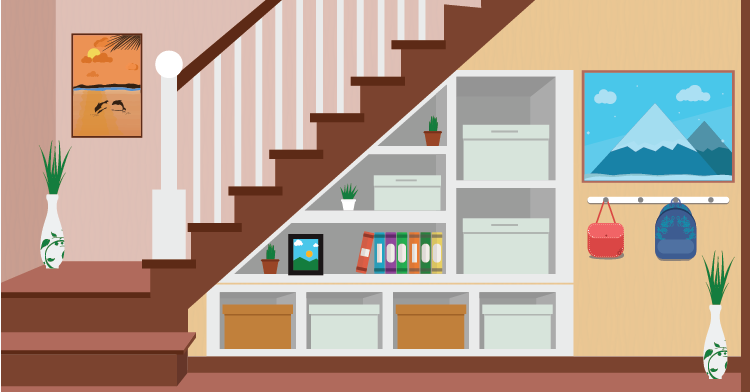
Are you constantly battling clutter because your home lacks adequate storage space?
Do you live without a basement, attic, or garage and wonder how to make every square inch count?
What if you could transform forgotten corners and cramped spaces into organised storage havens?
In this practical episode, Ingrid and Lesley share their expertise on maximising storage in homes where space is at a premium. They'll reveal creative solutions that go beyond simply buying more storage containers, focusing instead on working smarter with the space you already have.
The hosts draw from their personal experiences living in homes with limited storage, offering real-world solutions that actually work. From transforming under-stair cupboards into organised storage systems to choosing furniture that pulls double duty, they explore innovative ways to store better, not just more. You'll discover how to think vertically, make strategic decluttering decisions, and choose storage solutions that enhance rather than compromise your living space.
🎙️ In this episode:
- Introduction to Home Storage Solutions
- Hosts' Personal Storage Challenges
- Maximising Under Stairs Storage
- Decluttering and Organising Tips
- Creative Furniture Solutions for Storage
- Vertical Storage and Final Tips
- Conclusion and Final Thoughts
Ingrid and Lesley understand the frustration of living with insufficient storage because they've been there themselves. Their approach combines practical decluttering principles with creative space-saving strategies that don't require major renovations or huge budgets. They'll help you see your home through fresh eyes, identifying untapped storage potential in areas you might have overlooked.
The conversation covers everything from Ottoman beds and storage sofas to vertical shelving solutions that make use of often-wasted wall space. You'll learn how to categorise your belongings effectively, ensure easy accessibility to frequently used items, and maintain visibility so nothing gets forgotten in the depths of a cupboard.
This episode is particularly valuable for anyone living in flats, terraced houses, or modern homes where traditional storage spaces like basements and attics simply don't exist. Whether you're dealing with a small apartment or a family home that's bursting at the seams, you'll come away with actionable strategies to create more organised, functional living spaces.
The hosts emphasise that successful storage isn't about cramming more things into your home - it's about being intentional with what you keep and strategic about where you put it. They'll guide you through the decision-making process of what deserves precious storage space and what might be better donated or discarded.
What's your biggest storage challenge in your home, and which space do you find most difficult to organise effectively?
Share your thoughts in the comments section below, and don't forget to subscribe for more practical decluttering and organisation tips! 🏠
Prefer to read rather than listen?
Transcript of this podcast episode
Ingrid: Storage is one of the biggest pain points we hear about, and for many people, if you have one, the Loft basement attic or Garage becomes the default dumping ground. But what if you don't? In this episode, we are exploring how to maximize storage throughout your home without relying on a loft or garage.
We'll talk about smarter use of existing spaces, furniture that works harder for you, and how this episode will help you store better, not just more.
Ingrid: Hello and welcome listeners. I'm Ingrid.
Lesley: And I am Lesley. Now, if you are here for the very first time today, or you've been listening in for ages, we want to say a huge thank you we have a little favour to ask.
Ingrid: If you like what you hear, be sure to hit that follow or subscribe button. Share us with your friends or leave us a review. It makes a huge difference to us.
hello everybody. welcome to your latest episode, and we're gonna talk about storage because we have to get creative sometimes, don't we, Lesley? Because loads of people have a basement garage, attic loft, absolutely through the rafter school with stuff. But sometimes when you live in an apartment or live in a small house, you're like.
I would love any of these, but I don't have anything like that. So what do I do now?
Lesley: Exactly. So let's, put it out there. Have we got, what have you got in so that everybody knows we've got a garage, an attic, a laughter, basement? What have you got?
Ingrid: yes, I have a large, attic slash loft, that has stuff on it, and I actually have a. One and a half, two car garage at the back of the house, so I don't have a shed, but I do have a garage at the back of the house, which basically functions as a garage and shed all in one. So yeah, I'm lucky. I've got a lot of space.
Definitely
Lesley: a lot of space to
Ingrid: I.
Lesley: don't you? You do have a lot of space and, but you've not got other, many other peripheral rooms. So that's, kind of it. So you've not got loads of extra big storage cupboards and things like that. under stores cupboard is a toilet, right? And so you've got a little, you've
Ingrid: Yep.
Lesley: room, but not a massive one. so I've got, quite a big house, but I don't have a garage. I don't have a shed. I've got a downstairs storage room that in incorporated into the basement, which is just for storage. I've got a second little room. That I use for bike storage and I don't have a loft, but I do have a cupboard under the eaves, which I use for suitcases. So I've actually, for the size of the house, I've actually got quite limited storage options actually in the house. I've had to be quite clever with that storage, and it was an intentional decision not to have a
a shed. Indeed a loft space because I
laundry room and stuck my laundry room in what was my loft. So
Ingrid: Yep.
Lesley: So we are still lucky, right? We've got storage rooms and things like that, is what we're saying. we've not got an
but whatever you do, whether you've got a loft, a garage, a basement, an under stairs cupboard, a little cupboard off the landing, whatever that might be, you've gotta maximize things and you've gotta. Find
Ingrid: Yeah.
Lesley: where you can store things. 'cause there are things that need to be stored. So let's talk about the under stairs cupboard, which is certainly a big thing in many British homes. Yeah. And I'm guessing that
Ingrid: Yeah.
Lesley: in mind that a lot of people have stairs, that it's probably a thing elsewhere in the world as well.
Ingrid? So these kind of awkward. Under stairs, triangular cupboards that become a bit of a catchall for loads and loads of stuff when you stuff it under there. So what do we think about an under stairs cupboard? Ingrid?
Ingrid: Well, an under stairs cupboard can be amazing, but it can also be almost like a room of doom where you just. Where stuff gets crammed in, and then one day where you're brave enough to go, I need to sort this out. You're like totally amazed of the incredible amount of stuff that comes and you're like, surely it was not possible that all of this was in this relatively tiny under the stairs cupboard.
How is it? Possible. How did it even fit in the first place? So it, you can make it work for you, you can make it work hard for you, but you have to be clever. And I think the problem is as soon as you start to cram stuff in and more and more gets added and it gets trickier to get stuff in and get stuff out in the, in the kind of the same kind of thing.
Then it's like right now this is my signal that this is not working for me. But yeah, there can be a plethora of stuff in an under cupboard, right? I think it really depends on. How your other storage is. And I think that's the trick, isn't it, Lesley? It's not just the one under the stairs cupboard.
It's also what else have you got to play with storage wise in your house? So that kind of depends on what then goes into this under stairs cupboard. So you have to really, it's, never a kind of. Lemme do this and then I'll be fine. It involves normally other areas as well that then come into play when you have to think through okay, so if I store this here, this is like a good place, but then that means I can't store this here, so it needs to go somewhere else.
Where does it make, it's this little snowball effect going on, I think.
Lesley: Definitely, I think, under stairs cupboard, is we, it is a compromise, right? It's not the perfect storage solution 'cause
Ingrid: Yeah.
Lesley: awkward. It's quite difficult to access it all. And there are loads of things that are happening at the moment to make these things more accessible, which is absolutely fantastic.
But for most homes, you don't have a choice and so you have to compromise, right? You're. I haven't got a garage or I can put, I want to put my car in the garage. I've not got a loft, I've not got a basement. That's what I've got. I've got an under stairs cupboard or a lodge, cupboard in the hall that I can use, and that's what we do.
So what kind of things can get stored here? talking sports equipment get stored in there. Tools get stored in there. If you've not got a garage, sometimes your cleaning supplies get there. Or your over overflow cleaning supplies and nine times outta 10, definitely your Hoover, your mop goes in there as well. Sometimes that's where we have to store memorabilia, sentimental items, even garden items. We might have garden, no garage or shed. That's also possible. it
up as like loft style stories. The types of things that you might put in your loft or your garage or your basement need to all get crumbed into this under store underst status cupboard. But they are problematic. Now, this is one of the things that we do quite a lot as professional organizers. We go into under as cupboard and we try and work it out. It's a little bit like a jigsaw puzzle, isn't it, to try and maximize and make things accessible, visible, but with that
Ingrid: Yeah.
Lesley: which is the case, but. The problems that we see all the time in unders cupboards are. Nine times outta 10, too much stuff. So we're over stuffing the space and so nothing becomes accessible or visible at that stage. access is quite poor or we can't get in to it. quite often the dark or there are dark corners in it, in the down, in the kind of bottom bit of it.
It's quite dark. Sometimes the floor is unfinished in there. All of these things create barriers to us
Ingrid: Yeah.
Lesley: to use it as the best storage possible. And there's a limit to how much we wanna spend on an under stairs cupboard writing grid. We can't suddenly start
of pounds to make it the best thing that it can be.
Now we're looking, now that, people are starting to see the possibilities within under stairs cupboards and seeing that upward space is and Creating, options where you go from the outside in and putting pull out drawers and things like that. So we're seeing that and more homes at the moment. but again, that's an expensive solution and what not, one that loads of people have got money for. So it is an option if you have got an understand cupboard, you can put access in from the outside and have a draw situation. let's talk about if you can't do that and you haven't got the budget for it, how do we go about sorting out an under stairs cupboard?
Ingrid: I think it, what's really important, first, you first need to. Start at the beginning and take everything out and go, I'm going to categorize this because based on that, what comes out and the categories you have, you can then figure out, okay, what kind of things actually do I expect to go back?
Because depending on what goes back. You then need to decide, do I need to put some a shelving? Can I get a little three drawer plastic trolley to create some extra space? Do I need to get some coat hooks up so I can hang some stuff up? What kind of space needs to go back into this under stairs cupboard?
Because you can just go, I'm gonna get all the things and I'm going to, again, I'm gonna get all the storage. I don't even know what I'm doing yet. But I am gonna buy the storage. So I've got the storage ready. That's the wrong way around thinking you first need to go, okay, everything out. What kind of categories?
What am I going to declutter? What am I going to keep? Then do all these things need to go back? Or actually is the underserved cover the wrong place and actually does it need to go somewhere else? And then if I put that there, what do I possibly then need to in the future? decluttering session. Need to sort out there.
Maybe then you realize, oh, actually in that other room where I wanna put some of these things that are now in my under the stairs cupboard, there's some stuff actually that needs to go into my, it's like a little, it's a jigsaw puzzle, but you can't start with the shelving and the hooks and the storage.
You first need to determine what actually needs to go back in, and then you have to see, okay, how can I. Make this word work as best as I can, but definitely put some sort of light in because they're always so dark and dingy and if you can't see half the things that are in there, then it makes, it extra hard.
Lesley: back in the day, Ingrid, we could only, if we wanted a light in there, we had to get an electrician round and pay for a bulb to be put in and to be hardwired and all that kind of
Ingrid: I.
Lesley: That's not the case anymore. You can literally get a, battery kind of motion sensor light that you just stick up on the roof, that you can get those from Amazon for like paint.
We not pennies, pounds, but can get those. Easy.
Ingrid: Yep.
Lesley: When you go in. You can put them in various places and it can really light the space up. we talked
Ingrid: Yep. Yep.
Lesley: we often there's, floors are a little bit unfinished. if you've got an offcut of carpet, ask your carpet fitters, so just stick it in there.
It just makes it just that little bit more kind of appealing for you to work in there. And it'll probably
Ingrid: Yeah.
Lesley: a little bit flatter so you're not working on wobbly floors that are uneven, where boxes are teetering over and things like that. So things like that are really important. about the accessibility now. Different stairs are different sizes, but often people stuff the whole of the under stairs cupboard and don't allow any access to go and walk in. And now it's tricky sometimes to walk into it, but if it's possible, allow yourself some walk in or access space in the under stairs cupboard so you can see what you've got. They're, because they're a triangular space, if that makes sense, from where the stairs start and it goes
you're gonna need different boxes that stack. So at the bottom, at the, kind of inner end of the under stairs cupboard, you might only be able to fit one very small box. Then towards the outer reaches of the under stairs cupboard, you might be able to stack three or four on top of each other.
And so that's where you need to really max out on that space. You need to look at the size of boxes that you're getting. You need to make sure they're stackable, probably liable,
Ingrid: Yeah.
Lesley: if they're sometimes not always liable because if, you've got like collapsible crates and they stack into each other, that can be super handy as well. So really think about how can I maximize this space? And of course. Labels. You need those labels in there so you can see exactly what you've got. But before all that comes, and ING was already talking about taking everything out and deciding what goes back in. is more. If you've got a compromised space, like an understood cupboard, don't try and keep everything.
The more you can get rid of, the better.
Ingrid: Yeah. that's our mantra, isn't it, Lesley? decluttering above all because we know that it is really, that will help you. if you're limited on storage space and that's the way it is, right? You cramming 10,000 things into a place that can only have 2000 things. It's just, you're just creating.
F problems for yourself. And if you want to be able to use your stuff, the more easily accessible and visible it is and easier to get in and out, you will use it. Because you know what, Lesley, if that Hoover is behind three backpacks, five coats, the empty shopping bags. You are not gonna wanna hoover your house because it's a total faff every time to drag all the stuff out, get the Hoover, it gets a hard job, doesn't it?
And hoovering is not funny the best of times. So when you can make it easier for yourself, less is totally more. So yes, I'm exci, I do enjoy decluttering and all this test cupboard for some strange reason because I think it's always so much. Stuff is in there that can be recycled and throw away or given away, or it's it's very satisfying.
I don't know. I like it. I like it.
Lesley: a lot of that stuff's been in there for a long time because even the thought of
decluttering an
understairs cupboard is overwhelming in itself. then the actual reality of what that looks like is a lot, isn't it? Do you know what I mean? So it's
Ingrid: You go in there
you're like how have I got all of that stuff?
Lesley: Into that cupboard.
take it out and we don't, if it's under stairs, don't put it in your hallway when you're sorting out. Put it somewhere quite close, maybe in the living room where you can spread out and you can look at the stuff that you've got. But it can fill Yeah.
under the stairs cupboard when you take it all out, can fill an entire room almost, can't it?
Ingrid, it's
Ingrid: Yeah.
Lesley: a lot. So this is. Not for the faint hearted. you need to give yourself plenty of time to do this. This is a three, four hour job to get this sorted and to think about. 'cause you've really got to be clever when you're thinking about the storage solutions. You might even need to go out and buy different storage solutions once you've worked out what you need to, what you need to keep to get something that's a little bit better. and of course, as we
Ingrid: Yeah.
Lesley: If accessibility and visibility is really compromised, then you might go, do you know what? I am going to invest in getting a joiner in, or whatever to put these kind of pull out draws in there, which are absolutely brilliant.
Ingrid: Yeah.
Lesley: as well,
Ingrid: Yeah.
Lesley: spoke before about, if you, Hoover, is. Stuffed under 10 coats and stuff like that. There are invariably other places in your home that you can put some coat hooks up rather than under, the under stairs cupboard. So if you can get those hooks up in your
in your porch, else in, in the home, then try and get those coats out of there and just use it for more utilitarian storage.
Right.
Ingrid: Yeah, definitely. let's go to a break and then after a break, let's talk some more if you don't have kind of an under stairs cupboard, because for example, you live in an apartment and you've got like a tiny little storage, room in your, hallway and there's already a washing machine and a drive in there.
What do you do then? What other things can are options for you? So let's go for a break and we'll right back.
Hi everyone. Welcome back. We are stuck. We are talking about how you can maximize storage when you don't have really like large storage spaces like basements and attics and garages and all of those things. What do you do then? Because you have to get really, creative. Lesley, let's talk about furniture that can really double up as
an option to you. so yeah, sometimes you just have no choice. Of course, the things we're gonna suggest are not always ideal, but if you do not have storage and you live in a tiny apartment or a small house with a lot of people, you just have to get creative.
You
have to work with what you've got.
Lesley: you do. You have to work with what you've got, or before you move in, you need to think about what you might need. And so it's always thinking about that.
Ingrid: Yeah.
Lesley: through the processes, Ingrid of, helping Leah move into her first home. And it's not a huge home, but she has got space, to be fair, she has got a loft and she has got a garage, but there's some things that are not gonna go in there.
But she's, still maxed out, so she's. I've done the sensible things like buying an Ottoman bed, so Ottoman, Ben's beds are absolutely brilliant. You've got one Ingrid as well in your house, Yeah,
Ingrid: Yep.
Lesley: in saying that. Yeah. And
Ingrid: Yep.
Lesley: so an
Ingrid: Yep.
Lesley: bed, for those of you who don't know are the ones where you can lift up the mattress and the kind of bottom bit of it, and it create, and there is storage underneath way more versatile than divan beds.
So divan beds also have storage
Ingrid: Yeah.
Lesley: with drawers and stuff like that. But because. A divan drawer storage bed is split often into either two or four drawers. It's a little bit less versatile in terms of storage, isn't it?
Ingrid: Yep.
Lesley: you've got like the whole size of the bed to work with, and so you can use it for duvets, for pillows, you can even put things like Christmas decorations in there.
People put. Out of season clothes in there, got one in the flat in, in London and we use it for Christmas decorations. We've got, we've got an extendable table, we've got the leaves of the, table in there. We've got all kinds of things in there. 'cause it fits 'cause you've got almost a five foot by five foot if you've got a sort of king size bed space to work with.
And so they are really useful. they don't compromise on aesthetic in my opinion. You can get some really. Beautiful
Like sometimes you, you compromise a little bit, don't you, with an aesthetic when you're getting a
based bed. But I don't think that you do that with an Ottoman bed.
So
something that if you are struggling and you are up updating your bedroom about to move into somewhere, or not got an ottoman bed, it's something really worth thinking about.
Ingrid: Yeah, absolutely. I think what's really important that it has to be really exactly what you say, you can tell me exactly what's under your ottoman bed, like I can tell you what's exactly under mine. There's extra duvets. There's extra pillows, because we have regularly guests here, so I've got.
Tons. Tons of bedding and things like that, but I want it somewhere that's accessible. I don't wanna pull my loft letter down all the time to get the duvet from the loft. I just wanna lift up my bed and go, oh, here's all the stuff. But it's not become a dumping ground. And I think that's really important.
What? You don't want to go, oh, I got no way to put it. lift up the bed, boom. And it goes, because then you start to really. Sleep on clutter while when it's almost like a, designated type of item. That is much better. And also I've got like my spare duvets and my spare pillows, they're all in bags because of course.
It's dusty under a bed is dusty. Whether it's an ottoman a divan when there is nothing under your bed, because of course, mattresses and duvets and sleepwear give off a lot of fluff. So you have to make sure you package things up and wrap things up in a smart way so it doesn't all then, become like, difficult to open up again.
So I've got this really nice kind of. black things from the, from Ikea. Actually, my sister decluttered them and I was like, oh, I'll have those. This is perfect. And they were like, I can put two, two single duvass next to each other, zip it up. So it's easy to get in and easy to get out, but it's protected against dust.
So you need to think about that. It shouldn't become a dumping ground. You should know what is there.
Lesley: Yeah, definitely. And you should be going into this with a reasonable amount of regularity, Ingrid? So you can, got that sort of mental check and what's in there. This shouldn't be something that you've not gone in for two years. 'cause if you've not gone in there for two
Ingrid: Yeah.
Lesley: there's a chance that you don't need that stuff anyway.
Do you know what I mean? So you really need to think that through.
Ingrid: Yeah.
Lesley: And then other things that operate in similar ways, and this is all about. Thinking when you are furnishing a house or moving into a house or whatever that might be, how can I create a little bit of extra storage? In things that are already there.
So my son and his girlfriend have got, they're used to live in a flat live in a house now, but they've still got their storage sofa, so brilliant kind of L-shaped sofa, which has got a lift up seat where you can put, and it's almost doubles up as a sofa bed as well. And you can put pillows and duvets and stuff underneath it.
So that's absolutely brilliant. You've got, like window storage and window seats, stuff like that is absolutely fantastic. I worked with a client who was always having dinner parties and she uses her, seats for her extra crockery and stuff like that because it's in her dining room.
And so she uses it for that perfectly fine. She's gonna wash it anyway every time it comes out. So she's using it for things like that. 'cause she entertains all of the time and It's just really handy to have a think and go, what could I do and where could I do it to get some extra storage in. So I think Ottomans,
Ingrid: Yeah.
Lesley: beds, window seats, all of those kind of things are super handy.
Just gives you that extra little bit of space, doesn't it?
Ingrid: Yeah, definitely, Now, what could also be an option is to actually go vertical, because what we see a lot is that, We all try to keep things on the ground, but it can be very helpful just to add a couple of extra shelves, whether it's a loose shelves, whether it's a bookcase, whether it's, if you've got a wall somewhere and you're struggling for space, you might go, you know what?
I would love to have a painting up or a mirror up, or anything like that, but. That's, I need that space. I need to have somewhere to put, I, like maybe some ornaments or some photographs or a couple of books or, to dress it a little bit. Or maybe in a kitchen, actually I've got only a few tiny, kitchen cupboards, but I've got a bit of a wall.
Why don't I put a, thing on where I can put my knives on, or can I maybe put a shelf where I can put some of the spices on or. You have to really be creative, don't you, in you're short of space.
Lesley: Yeah, I think it's really about when you know that you're in quite a tight space or you've got a lot of stuff to store, that it's really about thinking about this. At the point of where you're looking for new storage as well. we've been doing quite recently with Leah, is she's talking about where my shoes gonna go.
She's got a really tiny hallway just next the door. The shoes are not gonna fit in there without impacting the walkway. So we're trying to incorporate something into living room. Storage, trying to build in some storage in the living room so that some of the shoes can go in there. 'cause realistically you're not gonna take them all upstairs and what's gonna happen is they're just gonna get kicked off by the front door and left there. So as long as they've got a designated space, we're thinking about that kind of thing. Already. I, but going vertical, just think about those chest of drawers that you get.
can we go, can we add an extra drawer at the top and go for a six draw rather than a five draw? That's gonna make a lot of difference. Can we do a tall by in a corner rather than a small, chest of drawers? In a bedside cabinet,
Ingrid: Yeah.
Lesley: make sure that we've got drawers in those bedside cabinets rather than having an open one so that we can put our pajamas or something, some extra things in there.
All of these things, if you're tight in space, we need to be thinking every opportunity. I can't, I have not got the luxury of having beautiful open things. I need to have. Things that I've got drawers, that I've got space, I can put things in. I know Ingrid used her bedside table for bedside cabinets for her, underwear, right? Because that's what you need
Ingrid: Yep.
Lesley: in your,
Ingrid: Yep.
Lesley: 'cause you've thought about that and that's in English psyche to think about that kind of thing. So we would urge you to think about those things because sometimes we can get carried away with something looking beautiful aesthetically, but not being fit for purpose and honestly. 15 years of experience, there are loads of pieces of furniture that do both look beautiful and have great storage in them. And people are getting cleverer and cleverer, storage 'cause they know that people have got tight spaces. There's loads of great options out there on the.
Net IKEA is a wonderful place to start to get ideas about small spaces. They have got that absolutely nailed, across all
Ingrid: Yep.
Lesley: points as well. So it's always a great place to actually start, but it's something that you need to get into your psyche if you're doing that. So go vertical wherever you can and really think about even if I don't think I need it, that other, that extra drawer. Will be a little bit useful for me 'cause you can never, even if it means you can spread out, do you know what I mean? A little bit and not have as much in each drawer, then those kind of things are
go vertical is really important. And think about that storage before you start buying.
Ingrid: You know what Lesley, I just had. The most loveliest flashback to 2005 and, when you were talking about Leah's new house, that she's got a tiny hallway and it immediately took me back to my first house in Ireland. When we moved to Ireland, we lived there for a couple of years. Tiny hallway. We just about could hang up three coat hooks, but no shoes with no place.
And I was thinking, oh. I had a place under the stairs as well, but there were no cupboards there and we rented the house so we couldn't just go, oh, we'll build something. And we put a desk there and I then remembered we had a downstairs toilet and I was like, yeah, but there's, it's a tiny house upstairs.
We got a bathroom with a toilet as well. And I repurposed my downstairs toilet into a storage cupboard, and like once every two weeks flush the toilet. So make sure that it didn't like started to smell or anything, run the water through the tap and then build like shel like shelves that I could easily take in and out around it to create extra space.
Because I was like, we've got, we were capable to walk upstairs. We don't need, I don't have a problem with people 'cause we had an en suite. The bathroom on the landing, so I'm like, why is there also a toilet downstairs. This is too much. I need space. So I just, ah, I just remembered my time living in Ireland, which I totally loved.
So thank you for that.
Lesley: Oh, you're welcome. Like I'm bringing you back to
Yeah, so
Ingrid: I know.
Lesley: that we could say about storage and of course every single space is completely
unique, isn't it, Ingrid? And you
Ingrid: Yeah.
Lesley: but it really, is. Sometimes like a game of, Tetris. It is like a jigsaw trying to get it all
Ingrid: Yep.
Lesley: But you need to be
Ingrid: Yeah.
Lesley: this all the time, And
Ingrid: Yeah.
Lesley: you know, that we love a kallax unit 'cause it's really versatile storage and it looks aesthetically quite good as well. And and you can hide a lot. Stuff in there. So think about that. Think about getting the biggest, storage unit that can fit into a space.
if you do have a loft and it's unfinished, it's not crazy money to get those lofts boarded to create it, to change it into, useful
Ingrid: Yeah.
Lesley: Ingrid did that a couple
Ingrid: Yeah.
Lesley: ago, didn't you? You got your, loft
Ingrid: Yep.
Lesley: and that's opened up more possibility. sometimes you might.
Ingrid: Yeah.
Lesley: you are thinking, oh, I've gotta spend, five or 600 pounds on a piece of furniture that's gonna fit stuff, or whatever that might be, you might be as well just biting the bullet and going, let me get my loft board and that's gonna give me that little bit of extra space.
It's gonna give you,
Ingrid: Yep.
Lesley: Storage is a
Ingrid: Yeah.
Lesley: Every house is different. Everyone's got different things in their house, different configurations in their family, different type of homes, different, obviously we've got, climate all around the world to think about as well. But we just wanted to make sure to give you a little bit of a few hints and tips really about some of the things that you need to be thinking about. Early on in your kind of journey or changing things up where you are thinking, how can I do this differently if you're feeling overwhelmed with the stuff in your space? 'cause storage is super important
Ingrid: Yeah.
Lesley: Having less stuff is more important, but having the right kind of storage
Ingrid: Yeah.
Lesley: thing that you need to worry about.
Ingrid: Absolutely. Gosh, I've really enjoyed this podcast, Lesley. I really enjoyed talking about this and giving our, hopefully our listeners a lot of things to think about and go, okay, how can I make the space that I current currently have work better for me? So we appreciate you tuning in.
We appreciate you either listening or watching. And yeah, we'll see you next week, so thanks.
Subscribe now so you don't miss an episode
Prefer to watch rather than listen? Watch on YouTube
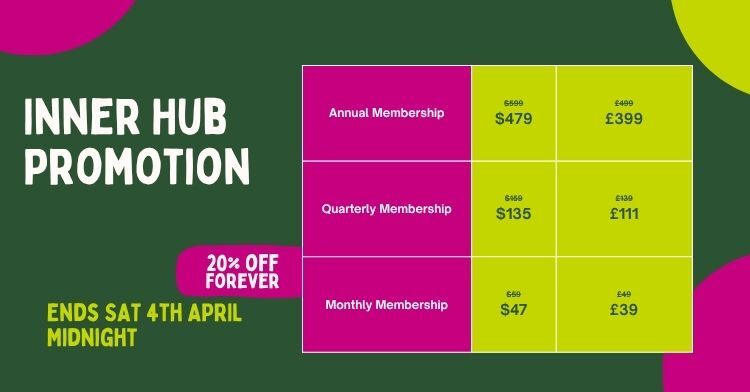
Enjoy our discounted membership to celebrate our fabulous Open House week!
Useful Links and Resources
Subscribe now so you don't miss an episode
