
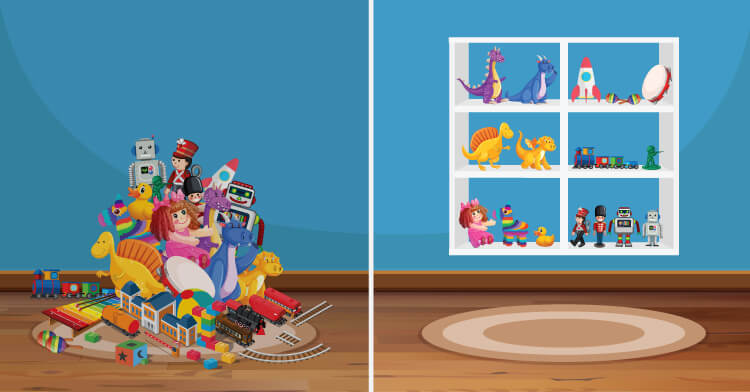
Are you tired of constantly nagging your children to clean up their rooms, only to find the same mess the next day?
What if you could transform tidying from a daily battle into a natural habit that your kids actually embrace?
How can you teach your children to take ownership of their belongings without doing all the work yourself?
This episode reveals 10 game-changing strategies that will revolutionise how you approach teaching children to tidy. Ingrid and Lesley share their tried-and-tested methods for creating lasting organisational habits without the stress and frustration.
The co-hosts dive deep into practical solutions that work in real family homes, from establishing logical storage systems to setting up routines that stick. They explore how to make tidying feel less overwhelming for children whilst building their confidence and independence. You'll discover why leading by example matters more than words, and learn specific techniques to create organised spaces that children can actually maintain.
🎙️ In this episode:
- Introduction: The daily struggle of tidying with kids and why traditional approaches often fail
- 10 practical strategies every parent needs to know for teaching effective tidying skills
- Back to basics: How to break down tidying into manageable steps that children can understand and follow
- Creating designated homes for everything: The fundamental principle that transforms chaotic spaces
- Designing logical storage solutions that work with your child's natural habits and abilities
- The power of labels and visual cues: Making organisation accessible for children of all ages
- Building consistent tidying routines that become second nature
- Establishing family non-negotiables: Setting clear boundaries that everyone respects
- Teaching the one-in-one-out rule: Preventing accumulation before it becomes overwhelming
- The importance of regular decluttering sessions and how to make them enjoyable
- Using positive language and maintaining patience during the learning process
- Final encouragement for parents on this tidying journey
Throughout the episode, Ingrid and Lesley acknowledge the real challenges parents face, including exhaustion and the temptation to simply do everything yourself. They provide honest, realistic advice that recognises family life isn't perfect, but tidying skills can still be developed successfully.
The hosts emphasise that tidying is a learnable skill, not an innate talent. They share insights about age-appropriate expectations and how to adapt strategies for different developmental stages. You'll learn why consistency matters more than perfection, and discover how to create systems that grow with your children.
This episode is perfect for parents who want to move beyond constant reminders and create a home environment where tidying happens naturally. Whether you're dealing with toddler chaos or teenage resistance, these strategies will help you build a foundation for lifelong organisational skills.
What's your biggest challenge when it comes to teaching your children to tidy?
Share your experiences in the comments below, and don't forget to subscribe for more practical decluttering and organisation tips! 📝
Prefer to read rather than listen?
Transcript of this podcast episode
Ingrid: Let's be honest. There's nothing quite so soul destroying in the clutter world, starting a space only to find it back and square one, five minutes after the kids get home. It can feel relentless, frustrating, and completely thankless. But the good news is this. Tidying is a skill, not a personality trait.
Kids aren't born knowing how to manage their stuff. They need to be taught just like anything else. In today's episode, we're sharing 10 realistic, practical tips to help you teach your kids how to tidy in a way that actually sticks without shouting, nagging, or doing it all yourself.
Ingrid: Hello and welcome listeners. I'm Ingrid.
Lesley: And I am Lesley. Now, if you are here for the very first time today, or you've been listening in for ages, we want to say a huge thank you we have a little favour to ask.
Ingrid: If you like what you hear, be sure to hit that follow or subscribe button. Share us with your friends or leave us a review. It makes a huge difference to us.
hello everybody. It's a 10 Things podcast disguised as a 10 Tips podcast, Lesley.
Lesley: Exactly. I was laughing though about the no shouting, no nagging and no doing it all yourself. 'cause I was like, I feel like this is gonna be a do as we say, not as we do podcast. 'cause I think I spent quite a lot of time shouting, nagging, and doing it all myself when my kids were growing up. But hey, we will see how it all goes.
And so I think it's super important, isn't it? Kids and kids toys and kids mess is a constant source of frustration for parents. Everywhere we feel
Ingrid: Yeah.
Lesley: we've been through it. We're still going through it. We've still got children at home or a, adult's, children, let's call them. It hard, and it's not
Ingrid: Yeah.
Lesley: that they get when they're three years old. This is constant reinforcement and serious parenting stuff here and we are gonna do our best to explain how to put that in context in the decluttering world, aren't we? And as we say, we didn't really get it completely right.
We're just hoping for the best. I'm hoping for the best. Now that, all my kids have moved out, I'm hoping that some of the seeds of organisation have stuck. I'm not seeing
Ingrid: Yes.
Lesley: that at the moment. But anyway,
Ingrid: Yes.
Lesley: get cracking Ingrid, 'cause we've got 10 things to talk about.
Let's go. Number
Ingrid: I know tip number one, it's really important to go back to the basics. If you say to a child, tidy up your room and you've never taught them how to tidy a room, they're gonna give you a look like, okay, but I don't think I know what that means. So you have to actually explain what tidying. A room is with having clear steps because that's when you get the funny memes and things on, social saying, I told my kid to tidy a room and now like they open a cupboard and everything falls out, or everything is shoved under the bed.
You need to explain what tidying is and that can already be quite tricky if you are a cluttered person yourself, and you yourself have not really been taught how to do that or what that means. It's very, it's important for children to see that their parent is also doing this. You can't nag other people if you're to get yourself, not tidying up.
So it's a bit of a double-edged sword there, but I think kids come on board quicker if you can teach them how to do this. And if you, of course, lead by example.
Lesley: Says that you can't nagle the people when you're not doing it yourself. You say, we made that rule up. Double standards everywhere is absolutely fine, Ingrid. So yeah, let's, break that down a little bit more. So we've said you really need to get back to basics and ideally you need to lead by example, but what does that actually mean?
How do we.
the basics of tidy into somebody.
So I think to, in the first instance, we need to put talk about what sorting is. Now, you will have heard us talk many, times about gathering like with are like a broken record with this. It's the, fundamentals of decluttering and also the fundamentals of tidying is gathering like.
Things together. And so
starts with categorisation, doesn't it? Ingrid, whether that's in a
Ingrid: Yeah.
Lesley: project or whether that's in a tidying project. We need to gather things together because what that
Ingrid: Yeah.
Lesley: is it simplifies decisions on. you are decluttering, it simplifies decisions on how many of something that you have. 'cause you confront yourself with the reality of what that looks like. And it also helps us when we're trying to put things away as well, it simplifies where, 'cause we can put all of those things away together rather than running around like crazy, trying to just gather things up. So always gather like with like and to sort before you start to put things away is gonna really reduce the overwhelm.
And that's what this is all about.
Ingrid: Yeah. I think if we see that time and time again, Lesley, when we look back to the reset your home challenge that we did back in January, I think the really the we have something called Count and Confess that we used and not in a judgmental way, but more like. Count how many mugs you have or shoes or cleaning products, and I think it creates an awareness because if you just go, oh, just look at your mugs, then it's yeah, but I like them all.
But when you actually take them out of the cupboard and count them and group them together and create categories and understand, that's the basics of sorting, it suddenly goes, wow, I had no idea I had so many. Insert any type of item. And I think that the sorting can really, help, not only adults, but definitely also children learning to put like with and go, okay, so let's put your books together.
Let's put your Legos together, let's put your clothes together. And then of course within that you start to sub-categorise. So, I think that's really the start grouping, like with I completely agree.
Lesley: Let's go to tip number three, actually, which is all about a place for everything and everything in its place. That old chestnut, again, it's so important that things have a designated home. You, it is
Ingrid: Yeah.
Lesley: to start putting things away if you don't know where they're gonna go, and We need to explain that to our children.
We need to explain that everything needs a home. Now, it can be easier said than done sometimes when you've got these tiny little, is with toys, you've got so many different types of things and some of them don't necessarily get grouped together 'cause they're a bit of a random category.
We've always got a bit of a random box. But even if it's random stuff, as long as it's not an excessive random stuff. we might need a random box, right? Show me a toy
Ingrid: Yeah.
Lesley: or a kid's bedroom that has not got a random assortment of things that don't belong into the category of board games, or books, or cars, or vehicles, or dolls, or whatever that might be.
You've always got a miscellaneous category and you need to psyche
up ready for that as well. but
Ingrid: Yeah.
Lesley: to designate a home for everything. Super important, really, it's like the number one rule really, isn't it? Ingrid?
Ingrid: Yeah. Yeah. I, think a really good example of that is as well, in a, children's bedroom, is their wardrobe, right? So if you, for example, in their wardrobe, have a drawer for where their socks go and their underwear goes and their pajamas go, and their T-shirts go. Instead of just open the doors and just shove it in and everything is muddled, then it's really tricky to find things.
But also then when clean laundry comes back, you can then say to a child, okay, now put your socks with your other socks because there is a drawer or a place for socks. Very, similar. So it doesn't only help with tidying up, but it also helps with then finding stuff again for. To wear it's the same with if all the toys are all mixed, how can they play with anything when they maybe just say, okay, I wanna play with trains.
But if there's 12 toy boxes and they're all mixed. Then they tip out all the 12 boxes to find the train things. And then there's far more mess. So you have to really go to, okay, this is where your trains go, and this is where your dolls go, and this is where the soft toys go. So again, categorising it, but then also assigning a place for the items to go and.
Yeah, it really, helps also with, playing, but also with getting ready in the morning or getting down to bed in the evening when a need to, for example, tidy their room up a bit. You can go, let's do this together. Let's put this back here. Let's put this back there. And when it has a home, then it's easier to tidy up because it has a place.
Lesley: Absolutely. Absolutely. And order to assign a place in a room, Ingrid. a kid's room, need storage. Like storage is a
Ingrid: Yeah.
Lesley: in a playroom or a child's bedroom, and we need to get the right kind of storage. And that
Ingrid: Yeah.
Lesley: gonna change over time. The storage is gonna evolve as your child gets older and older, we've really gotta look at certain things when it comes to storage.
So we're going on to number four here, which is. We need to think about logic rather than aesthetics. don't be in by these fantastic, beautiful storage containers that you can see. We really need to think about what's gonna be easier. 'cause what we, what? There's no point in having beautiful storage if there's toys all over the room because they can't use the storage that they've got. That's basically the thing. So really important to think about that storage. And think about logic, size, those kind of things over the aesthetics in the room, if we can get the aesthetics to fit as well. Brilliant. Do you know what I mean? But it's not always possible. I think one rule of thumb when it comes to storage, Ingrid, it is like big toys need big containers, don't they?
Big toys need big containers. it's gonna really depend on the age of your child. The, stuff starts to get smaller and smaller as they get older and older, doesn't it really? But in the beginning you've
Ingrid: Yeah.
Lesley: of these big toys and so you're gonna need fairly hefty containers to put these things in.
So these big tote boxes and, trunks and all that kind of things, there's super useful as well. and then there's categories, Ingrid you wanna talk about, categorisation of, in storage.
Ingrid: So yes, Lesley. when you are looking at, a kids', toys in, for example, a toy room, it can be really helpful to have some main categories, but not make it all. But don't micro organize. Don't go. Okay. This is now all the stuff for the Doll's House, for example. And then I'm going to sub-categorize into, these are the little, furniture things for the bedroom, and this is the little kitchen furniture.
That's far too fiddly for children. You need to just make one container, which says. This is the container where the furniture for the dolls house goes, or this is the container where all the clothes for the dolls go, or this is the container or for the duplo? Like the, large Lego that we have, it doesn't have to be sub-categorized into yellow, red, blue and green.
Just one container for the Lego, one container for the, the train set. That is helpful because then it's much easier to see what the categories are when kids get older and the stuff gets smaller and you, for example, then go to like proper Lego. And if you. Child is a Lego lover like mine, both were.
Then you're probably gonna go, okay, now they're ready to actually have that sub categorisation of these are yellow bricks and red bricks, because when they're building, it's then much easier to find the colors. So you have to really look at the at age appropriate storage as well, because. It really changes over time.
In the beginning, the toys are bigger, so you probably need larger containers and shelves and later you need smaller, containers with probably drawers and smaller, maybe even inserts, where little bits and bobs can live. So because they, the type of toys that they play with really changes.
Lesley: Yeah, I think as well it's useful to talk about in terms of storage. We really need to think about the height of the child. 'cause what we want to do and
what
we want
to encourage is the child to be tidying up after themselves if possible. We've got it within limits, right? You are always gonna have to step in as a parent. but in general, we want to allow them the opportunity to at least try. And we can only do that when we've got like height appropriate storage. So we don't, but there are some things as well. When I talk about height appropriate some things we don't want them to have access to, as well, easily, so those kind of jigsaw puzzles and board games with loads of fiddly bits, we might wanna put those high so that if they do want to play with those, they don't come down with everything else and they come down as a separate entity almost.
And so you might want some stuff that's up high that. their parent needs to grab rather than them. So just think about the different tiers of storage that you might be able to use. really important. And if at all possible with storage. there's some things where it doesn't, work. open containers, try open so that they can rummage, so that they can throw stuff in really easily. the more barriers you've got to putting stuff away. The worse it's gonna be. So if you can remove lids from things, that's gonna be a whole lot better. Now, there are certain things where you're gonna
Ingrid: Yeah.
Lesley: in there, but for the most part, the rule of thumb is have open storage where possible that's easy to think, to get things into and easy to get things out of. The only downside to that, it is also very easy for them to tip everything out at once as well. We didn't say we've got all the answers and that this was gonna work. We just said these are our hints and tips. But yeah. So
Ingrid: Yeah.
definitely.
Lesley: more, what's our tip number five?
Ingrid: Yes, labels can really help. it can be, a label from a label maker. It can just be a bit of masking tape with a Sharpie written on or a white sticker. You can go all out when the kids are smaller and actually snap a picture of that category of, toys and, glue that onto the container.
but make sure that you label it because it can really help with visibility as well. And also because if they have a lot of toys, if there's multiple children in different ages with multiple to toys and even a separate toy room. There might be a lot of containers. So for you, even yourself, it can be really handy to go, oh, here's the books where the train set is.
Because if you look like have similar type looking storage. Then it can be, oh gosh, where did we put that thing? So labels can definitely help. And it's also reduces the whole, oh, where does this live? Where does this go? So it helps you with quicker tidying up and tidying away. But again, these labels will change over time.
In the beginning, you, like I said, you might have pictures later, you might have words, but maybe enough. And at one point you might not need labels at all, but through the, years. That will definitely help you to stay more on top of things.
Lesley: Oh five. How many of those did you do, Ingrid? When your kids were little.
Ingrid: Ooh. Yeah, I've, I, yeah, I think I've done good. I didn't have labels, everywhere, because we did have toys, but not an extortion amount, but we did have big containers when they were little and I was a bit more, easier with that. yeah, just put it in the big container and then later it was, so I didn't really do the labels, but everything else, I think definitely
Lesley: Yeah.
Ingrid: okay.
How about you, Lesley?
Lesley: I'm similar actually. I probably didn't do too much labeling when my kids were little, but I don't think labels were as easy to get then, so back, in the day when
Ingrid: Yeah.
Lesley: it, would only get a sticky label that could stick on. You didn't have a beautiful label maker that you could put pictures of things on and stuff like that.
So I think labeling has, come on in that time. So even when we started as professional organizers, the labels weren't that fancy writing grid. I don't remember having a label maker. Back in 20 2009, I'm sure label makers did exist, but it wasn't as commonplace in general. Organising wasn't, nevermind kids storage, but
Ingrid: Nope.
Lesley: excuse at all really because you can just get a label maker, you can get an app, you can put what you want on, you can put pictures, you can put, stick it, all of that kind of stuff is, readily available,
Ingrid: Yeah.
Lesley: fingertips.
And so absolutely fantastic stuff. So yes, that is our first five to help you help your kids tidy their room.
Ingrid: Let's go to a break and we'll see you after.
Hi everyone. Welcome back. We are talking about 10 tips, top tips. Oh my gosh, it's nearly a tongue twister. Lesley. 10 tips to teach your kids to tidy up. That's a lot of T's. But anyway, we are continuing with.
Lesley: We should have done a full T title, shouldn't we? It should have been top tips to tidy your toddlers from their tantrums in their whatever. Shouldn't we? Do you know what I mean? Like we should have been way more exciting with that title.
The alliteration of possibilities were endless, but here we are. Mid podcast. Can't change it now. So we're going on to
Ingrid: No.
Lesley: Tip,
Ingrid: tip number six, kids do as well learn in school how to tidy, whether they're, honestly, even if when they're in nursery, when they're two or three years old, they are encouraged to tidy up. So don't think, oh, they, don't, do this at all. They are being taught in school and in nursery from a tiny age to contribute and return their plate or give it to the teacher or something like that.
So you can really teach them the basics at home as well. So I think it's really important to have a set time right when you ti because then when they know, ah. Before dinner, we do a tidy or we come home from school, we have a snack, then we have a playtime, and then we tidy up. And then we can maybe while mommy makes or daddy makes dinner, we can watch 20 minutes from the iPad.
But before that we need to tidy up or we have dinner together as a family. And then after dinner we first need to tidy up before we go up. For a bath and bed. See if you can get some sort of routine going. So it's expected. I think that it's, when you play, you also have to tidy up because it's exactly what they're doing in school and nursery as well.
Lesley: I remember the first time I
Ingrid: I.
Lesley: to a nursery school or whatever with my kids, you go as a little helper or something and you do a session and then it was like, okay, ti the uptime, and then all these kids just scooted up and started doing it. And you're like, how did they get them to do that? Do you know what I mean? and they just go, okay, miss whoever I'm here, I'm fine. Like I definitely need to try and do that at home. There's something about peer pressure, there's something about everybody else doing it. there's different relationship between a teacher and a child, so it's not as easy perhaps
Ingrid: Yeah.
Lesley: to get that but know that they are doing it.
Know that they have categories of stuff in school. Know that they. There are places for everything in nursery schools. 'cause there has to be, 'cause they have to
Ingrid: Yeah.
Lesley: away
Ingrid: Yeah.
Lesley: do normal lessons and stuff like that. So yeah, we need to really normalize tiding as part of their playtime really, don't we?
And that's
Ingrid: Yeah.
Lesley: process. And so really important. But I think the problem that we've got England as parents is we're exhausted. We're exhausted most of
the a lot of us are doing full-time
Ingrid: know.
Lesley: and then we're having to do everything, and it's you know what? I can spend five minutes just sorting this out myself, or I can spend 20 minutes in a battle with my children to try and get them to do it.
And that's where we struggle to make progress, isn't it? And so I. No judgment here. We know how hard this is. We're only telling you what you could or should do. We're not telling you what the reality of what every day is after you come in from work and you're like, why is this
Ingrid: Yeah.
Lesley: but
Ingrid: Yeah.
Lesley: think everything, it's really important to. Set some boundaries. And so we've talked
about nursery and school habits at home. And our next tip is all about working out non-negotiables with your child. Now we talk about
Ingrid: Yeah.
Lesley: all the time when it comes to resetting your own, re in your kitchen, your bedroom, living room.
And so you will be hopefully used to non-negotiables and what that represents in your own tidying and resets. And we need to then incorporate that. Within a child's, routine as
Ingrid: Yeah.
Lesley: okay.
Ingrid: Yeah.
Lesley: is the way that you want it, if you want to go out to play outside in the garden, as Ingrid said, go on the iPad, whatever that is, these are the non-negotiables that I'm gonna expect before you move on to your next activity or before you go to bed or whatever that might be. Discuss those non-negotiables with your child and go, what do you think is a sensible thing before we sit down for dinner or whatever, and try and work out what those might be.
Ingrid: Yeah. I think it also is in the kind of daily chores a little bit as well. Like in the morning when you wake up and you get dressed. Put your dirty underwear in the laundry basket and not just drop it on the floor when they're a couple of years older. Open your curtains in the morning or make your bed or hang up your towel after you've been brushing your teeth.
It's all these little things that really help you because if you then don't have to go around the house to. Pick up all the things and the trail they have left. It really, helps. And it's not only with toys, but it's also in all of the normal day-to-day life. And I think you, do end up sounding like a broken record, but you just have to stick with it.
You can't just one day go, you need to put your underwear in the laundry basket and the next day, then not say anything about it. No. The next day you say, can you please put your laundry in the laundry basket? And the next day, and the next day, and the next day. And then they go, oh, actually, then she keeps telling me this.
I just might as well do it. Because it just starts to then be ingrained in their process as well, that's just something that they need to do. And then it starts to be an automatic habit that they do every day. And that's, it just takes time. It just takes time. you have to have a conversation with them and go, We are here all in this house, and there's also certain things that we expect you to do that's really normal. You're setting them up for life. when they'll later live in a student house or in their own house, they can't just drop everything to the floor either. They need to be a able to tidy up as they go along.
So it's not just for the short term, you're doing this is long term, but you can feel like a broken record, I think. But it's really important.
Lesley: I think, to, to have that clarity. it's important that you say that 'cause we
Ingrid: Yeah.
Lesley: when they go, you talk about student houses there Nathan's just moved in with his friends as well. So not as a student, but, Young professionals then, and they're already determining rotors and looking at
Ingrid: Yeah.
Lesley: the cooking and all that kind.
So they know that these things are necessary,
Ingrid: Yeah.
Lesley: to allow a house to function. And you are telling them that that clarity that you're giving them, if you give them specific guidelines to work towards, then they can be confident they are, that they are either. Achieving those or falling short of those.
And that's what it's about.
provides the confidence, I think, for them
Ingrid: Yeah.
Lesley: doesn't it? We need clear
Ingrid: Yeah.
Lesley: Everybody needs clear guidelines, and that comes from communication really.
Ingrid: Yeah. Yeah, definitely. let's go to tip number eight, Lesley, which is all about one in, one out. Oh, it sounds so amazing, doesn't it? But again, this is something that you need to teach your children. When they get new toys in, other toys need to go, it's great. of course when they're tiny, You as a parent decide. What's being donated, what they love, what they want to play with, what they can keep. But as soon as they start to get, a little, even three, four years old, you can start to have these discussions with your children. oh, can you show me your favorite books because we're doing, we're gonna, mommy's gonna do it, tidy up.
And I would love to know that. I know what your favorite books are, so we gonna, they're just gonna stay on the, in the bookcase because I know you like them. And can you show mommy one or two books that you haven't been looking at? It's really, they, you can start with that at a young age, and you don't have to wait till or eight or 10.
that's. That's quite late because if they've never then have been able, been told to let anything go, then it gets really hard. But if you, for a young age go, oh, your, birthday's coming up, or your, whatever it is, or Easter's coming up and auntie is coming and she'll probably bring you a nice toy.
So let's make sure that we've got room in your, in your bedroom to put this or after auntie's left, let's go find a space for your new toy. This is amazing. Ooh. But how we need to probably let something go so we can put the new thing in so it doesn't have to be a right. We're gonna throw all of your toys away.
That's because then you get fed up, right? You get fed up, and then it can all become a bit dramatic. We're gonna do a clear out, we're gonna throw everything out, and then a child goes, oh, so you have to do it, ah. in the heat of the moment, things can you know when you've tripped over Lego too many times.
Lesley: Exactly. And and I think also it's important, just following on from that, I think we need to be, do, doing the, we talk about one, one in, one out, which is a kind of a, rule of thumb. Then for decluttering, that we're gonna try and teach 'em from an early age, but we need to do this week with regularity as well.
So we've got a one in one
Ingrid: Yeah.
Lesley: do that on a one by one basis, but then we also need to declutter quite regularly. So we need to bring that decluttering into normal life. we would love that if that was taught early, that decluttering is process, not a project, and we need to keep on going, Stuff comes in, stuff has to go out. And so yes, we're
Ingrid: Yeah.
Lesley: for a one in one out, and every now and again, we need to go for something that's a little bit more meaty than that and go for a regular declutter and try and get rid of a few more things than one at a time. And I think as part of that
Ingrid: Yeah.
Lesley: process as well, Ingrid. We need to encourage the children to get involved in where they want to donate things within reasons. 'cause we don't
Ingrid: Yeah.
Lesley: we don't want them to that to slow us down and for them to want to send it to a charity that's two hours away or difficult or too niche or whatever. But it'd be really useful for them to understand at that stage that you know, if you know you're. Their granddad had heart failure or whatever that might be, that it's going to a heart foundation and that's really gonna help people like granddad. And so all of those kind of, that kind of donation side of it, really,
Ingrid: Yeah.
Lesley: as well. So yeah, declutter
Ingrid: Yeah.
Lesley: is our tip number nine. Yeah.
Ingrid: absolutely. And I think as well, what's really important in that is don't go well, we're going to declutter your room. And they're gonna go, oh, it's holidays. We need to sort it out. It's a mess. And then decluttering is very negative, right? It can be more like. Oh, we're having holidays.
I would love for you to know, let's make your room nice and tidy and because we, I know you love playing in your room, but now it's a bit tricky because everything is on the floor. Let's look at this together. So I think looking at it from a more positive point of view can really, help as well. And I think what can really be beneficial is to, again, to say to a child.
W can you show me what you want to keep instead of what you want to declutter? Because I think that's more positive language that can really help with children as well. And then tip number 10, and oh my gosh, Lesley, I think of all the tips. This is my worst one. Be patient. Be patient. I'm not a very patient person.
Lesley: exactly. Me neither. I was laughing at the last one 'cause I'm, I did a podcast with, kid my kids' ages ago. With all three of them. Probably and their overriding memory of me as a parent is me coming into their bedrooms, clutching a bin bag on a Sunday morning, yanking them out of bed and telling them it's time to declutter. So I'm not sure that I was like, patient, oh my, let's do it together. This is gonna be such a nice, exciting thing. They were like, oh, here she is with Abin bag. We've got eradicate the contents of my entire room. And so yeah, traumatized children. but yeah, I think it is about being patient because. you set yourself up, it's one of those things that if you put the hard work in, it's gonna reap
isn't it? But
Ingrid: Yeah. Yeah.
Lesley: like that, right? And the stress is, if this was the only thing that we had to do, if we could just spend seven days a week managing our children and being great parents and doing the right thing without all the other stuff that life throws at us, then we could do that, right?
Do you know what I mean? Unfortunately, other things take precedence sometimes and decluttering
Ingrid: Yeah.
Lesley: in
Ingrid: Yeah,
Lesley: kind of parental way. It is not always something that we can do, but we can try. We can try. That's it. And at
the
Ingrid: yeah.
Lesley: and we can go, do, you know what I really
Ingrid: Yeah.
Lesley: be a little bit more positive with them.
I want to get decluttering in on a regular basis. I want to explain to them that
Ingrid: Yeah.
Lesley: just have new stuff all the time without letting go of the old. I want to really look at the storage solutions that they've got in the bedroom to see whether or not they're fit for purpose and look at that
Ingrid: Yeah.
Lesley: So I think it's more
Ingrid: Yeah.
Lesley: 'cause without any intention then you've definitely had it. But we, accept, of course, we accept, we've been parents ourselves for many, years, that this is not the easiest thing in the world. But we just wanted to give
Ingrid: Yeah.
Lesley: tips that you could cling onto for dear life and hope that they work.
That's that thing, wasn't it?
Ingrid: Yeah. So if, you, then, let's look at the tips. Number six to 10. Oh, do, would you say we, we again, are we agree that we both need to work on top 10 num tip number 10. The rest were pretty good, I think.
Lesley: Yeah, I definitely, yeah, I think, yeah, encourage nursery in school habits at home. I think I tried to do that non-negotiables. I think I kept banging on about non-negotiables for like 25 to 30 years.
Ingrid: Yep.
Lesley: sure that we got there with them, but, I definitely think that. My children knew that things needed to go out if they wanted new stuff in,
Ingrid: Yep.
Lesley: there needed to be a throughput. not sure that I necessarily, got them involved in donation choices, but of course, for most of my children's life, I was at the charity shop every day dropping stuff off for.
Ingrid: yeah.
Lesley: So we come at it from a slightly different place, but decluttering regularly. I definitely did that. Like definitely be patient.
Ingrid: Yeah.
Lesley: not sure about that.
Ingrid: Yeah,
Lesley: that,
we, again, I don't think we are any different than any other parent really. We've got a little bit more foundational stuff. We know how it should be done. we know the tactics to try and encourage people. We work with other
as well as professional organizers. and so yeah, that's why we said right at the beginning of this podcast, do as we say, not as we do.
Ingrid: I think, it's clear that, this is not a, we are gonna sort this out overnight and all is fine. this takes time. this is, a long journey. This is a marathon. This is not a sprint. This is not gonna be perfect overnight. You're gonna tweak and try and change, and you're gonna understand all these things step by step.
But, build it up gradually, whether it's with a little cho chore chart or whether it's with, what I'm gonna look at the year and when do we normally have an influx of stuff and can I just pinpoint, a couple of, hours in, in the weekends surrounding that to do a bit of a clear out, and over time it will get better.
But involve those kids. They, they are involved in school, in nursery, in their guide group, in whatever, in sports, all of it. There is a process of starting up and winding down and winding up. Normally put, it means putting equipment away. So all of those good habits can, happen at home as well.
And yeah. Be patient along, the way. So we hope this has been helpful for you listeners, so we hope that we've been breaking it down a little bit for you instead of just going tidy up your room. Go. Oh, there's a bit more to that than I thought. And we hope that this podcast has been. Helpful for you.
So thanks so much for being here, and we'll see you next week.
Subscribe now so you don't miss an episode
Prefer to watch rather than listen? Watch on YouTube
Did you know we have a FREE Open House week soon?

Useful Links and Resources
Subscribe now so you don't miss an episode
