
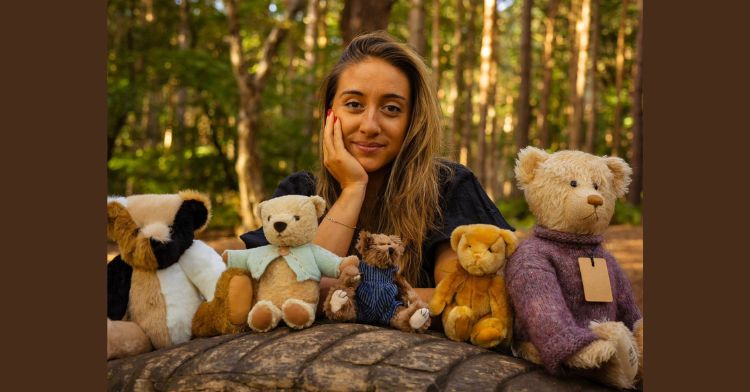
Have you ever looked at a pile of outgrown soft toys and wondered how to part with them without sending them straight to landfill?
What if those beloved childhood companions could find new homes instead of ending up in the bin?
Could there be a way to honour the sentimental value of these fluffy friends whilst decluttering your space?
In this heartwarming episode, Ingrid explores an innovative solution to one of decluttering's most emotional challenges through Charlotte's inspiring journey as the "Fluffy CEO" of Loved Before. Discover how this unique soft toy rehoming agency is revolutionising the way we think about parting with cherished childhood companions whilst making a genuine environmental impact.
Charlotte shares the fascinating story behind creating Loved Before after witnessing charity shops overwhelmed by donated soft toys that were sadly destined for landfill despite their sentimental value. From humble beginnings in a university living room to partnering with prestigious retailers like Selfridges, this episode reveals how one person's vision has saved an estimated 75,000-100,000 toys from waste whilst bringing joy to new families.
🎙️ In this episode:
- Soft toy clutter crisis and why traditional donations often fail
- Meet Charlotte the Fluffy CEO and her mission
- The origin story that started in charity shops
- Bootstrapping a business from the living room
- Early days finding donations through creative methods
- Multiple ways to donate your soft toys today
- UK hub operations with plans for global expansion
- Impressive impact numbers and environmental benefits
- Behind the scenes warehouse triage and stuffy spa process
- Adoption drops and partnerships with major retailers
- The heartwarming process of naming toys and sharing their stories
- The bigger mission to reduce new soft toy production
- Managing sentimental clutter and finding relief
- Environmental impact and future vision
- Where to find Loved Before and get involved
- Essential takeaways for listeners
🕺More about Charlotte:
Charlotte is the founder and "Fluffy CEO" of Loved Before, a pioneering soft toy and doll rehoming agency. After witnessing charity shops overwhelmed by donated soft toys destined for landfill, Charlotte created an innovative solution during her university years. Starting with no investment and piloting with a single London charity shop, she has grown Loved Before into a thriving business that has saved an estimated 75,000-100,000 toys from waste. The company operates a comprehensive process including toy triage, sanitisation, restoration in their "stuffy spa," professional photography, naming, and rehoming through both direct sales and retail partnerships with prestigious stores like Selfridges and Fenwick.
Connect with Charlotte:
Struggling with sentimental clutter in your own home? What soft toys or childhood items are you finding hardest to part with?
Share your decluttering challenges in the comments below, and don't forget to subscribe for more inspiring solutions to your toughest organisational dilemmas! 🎯
Prefer to read rather than listen?
Transcript of this podcast episode
Ingrid: In this episode, we explore what we can do with those soft toys in our home that are too precious to throw away, but adding hugely to our clutter problem. Charlotte, lovingly known as the Fluffy, CEO, is the founder of Love Before a soft toy, a rehoming agency on a mission to save the world. One teddy at a time.
With an estimated 8 million soft toys thrown away every year. Charlotte is on a mission to rescue soft toys from landfill by lovingly restoring them, giving them a spa day and matching them with new families. We can't wait to hear more, so let's dive in.
Ingrid: Hello and welcome listeners. I'm Ingrid.
Lesley: And I am Lesley. Now, if you are here for the very first time today, or you've been listening in for ages, we want to say a huge thank you we have a little favour to ask.
Ingrid: If you like what you hear, be sure to hit that follow or subscribe button. Share us with your friends or leave us a review. It makes a huge difference to us.
Well, Charlotte, I was saying right before I hit record, how excited I am to talk with you on this podcast. I, I, I've been determined to get you on as a guest. I've reached out couple of times because I was like, your story is so amazing. I want everybody, all of our listeners, that we, that tune into us every week in week out.
I want them to know about you because I'm so excited. So thank you so much for being here.
Charlotte: Thank you for having me. Thank you for persisting. I was just saying as well, really appreciate you, you, you trying again, and, and it's lovely to be talking to you. I. Under your audience here as well.
Ingrid: absolutely amazing. Now, what you've built up is I think very, very special. I spotted you on Instagram and I was like. This is like amazing. I and I, I was like, I, I need to talk to Charlotte. I need to get the loan out on this all, and I'm so delighted that you're here. So your company, I mean the, your title alone, the fluffy CEO, how cool is that?
We, we need to know more about that, but so love before, can you please just start from the beginning and tell our lovely listeners. Your journey, why you started this? What? Tell the floor's yours.
Charlotte: Yes, absolutely. so I guess it started a few years ago now. I was fresh out of uni and I was actually, well, I was, I was actually. Still in uni when I, when I actually came up with the idea and I was spending some time in a charity shop that, you know, was in London and I started to notice just how many people were bringing in soft toys to donate. And often when these people brought them in and handed them over, it was becoming really clear to me how much. They meant to those people, how many memories they came with, the emotional and sentimental significance they held, as it was, and as it unfortunately is across the country and actually across the world, those charity shops are not set up in a way that allows them to and process the many, many toys that they get on a daily basis.
And so as it was, those toys were. Thrown into a box and you know, potentially sold us dog toys for, for pennies. The memories and the stories that they came with were thrown away in that moment too, or even more heartbreakingly. They were thrown straight out into the bin, and that's not the fault of the, you know, the charity shops that are doing their absolute best.
They are just so overwhelmed, and so I went home that night.
Ingrid: Yeah.
Charlotte: looked like a, the image of me as a kind of mad scientist, I had scribbles all over the walls and post-it notes everywhere. I was really, really kind of understanding and researching. Is this just a problem in this charity shop? Is it, you know, charity shops on every high street?
Is it in every town? Is it in every country? Like, what's the problem here? And what I discovered just absolutely flawed me. there are millions and millions and millions. Plus, plus plus, that are ending up in landfills in our oceans and in incinerator, every single year. And that number is only getting bigger and bigger and bigger.
Ingrid: Yeah.
Charlotte: someone who's always had my own, you know, little circle of stuffed animals who all have their own names and characters and they all play their own own roles in helping me navigate life, I was utterly heartbroken by this and I thought, okay, well maybe if I can step in somewhere at the core of this and change and transform the perceptions of these toys. rubbish and losing their value once they've been loved, then maybe we can do something about it. We can redirect the toys from landfill and we can change the trajectory of the toy industry. you know, five, six years
Ingrid: Mm-hmm.
Charlotte: here we are, hopefully doing just that. So it's been quite a journey, quite a journey.
Ingrid: Yeah. Yeah. Now you said I had some scribbles on the wall and I kind of looked like the math scientist because you were like, you were on a woman on a mission, weren't you? You just, you started at home, didn't you? You didn't have a, a, a, a warehouse and an office and it, it just really started your old living room, didn't it?
Charlotte: Literally the living room. The living room floor on a Post-it note. it really was just. A, a post-it note. I ha had, you know, money. Frankly, absolutely none. This is a business that's very much been, you know, we, we've never had a penny still to this day of external investment. So it was a case of how do you take five pounds and turn that into 10? How do you take 10 and turn that into a hundred and a hundred into a thousand? I didn't have any experience. The uni, the university degree I did was product design, which, You know, I, I took a lot of my mindsets from and, and, and skill sets, but, you know, I, I was not a business woman. I had absolutely no idea what I was doing. and yet it was, it was step by step from, the living room floor to, you know, having the several warehouses and the workshop and the global team, to this day, Yes, I did very much start with nothing. What I did, was lucky enough to be able to do is at the very start I actually piloted the idea, you know, for a little while alongside that charity shop and I said, can you let me just kind of test this out and see if this could work and see if this is something that other people care about as much as I do? so I'll
Ingrid: Mm-hmm.
Charlotte: grateful for
Ingrid: Mm-hmm.
Charlotte: helping me and sending me off into the world when, when I turned into, you know, a business and what it is now.
Ingrid: Yeah, exactly. So how does it work in Charlotte? So. Do you kind of ask around for people to, in the beginning, right? I mean, now you've got a whole process and I definitely, definitely wanna know more about that, but in the beginning, did you just kind of ask a few friends, like, have you got some soft toys or did you just walk around charity shops trying to find soft toys to kind of, kind of hone your skills on?
Or how did that go?
Charlotte: Yeah, so at the start it was very much a case of, telling and talking to everyone I can. So that started with friends of fam, friends and family. And then I remember, I was working a very intense, full-time job alongside all of this, but I, in my evenings. I would go around the local neighborhood and I would post through little leaflets that just said, just in case you're looking to throw away any toys, I'm down the road.
I'll come and grab them. Give me a call. Here's my number, and I spent my weekends at charity shops. And I would knock on their door and I would say, this is who I am and this is what I'm trying to do. I can see that you've got two bags, you know, sitting out the back that are about to be thrown away. Give me a call.
If you've got anything that you are getting rid of, please just give me a call. and so.
Ingrid: Mm-hmm.
Charlotte: It, it went from there. It went from me kind of pitching myself to anyone and everyone that would listen and those that wouldn't, and, and taking on any, taking on any I could and rescuing them myself. You know, you don't have to look far to find one on the street or in a bin or something as well.
Ingrid: Yeah. Yeah. Amazing. So now of course, you know, you are several years already in, you've refined your processes, so. Let's say I have a clear out of toys from an attic or my daughter who's off the uni in August. What do I do? What? What's, what are the steps? How can I donate my beloved soft toy or her beloved soft toy?
How does it work?
Charlotte: First of all, you've gotta ask permission from the person you're donating from in case they're yours. Because we've had many, many a scenario where they get to the door and they say, the kids are asleep in the car. I've gotta give them to you before they wake up. And I'm like, no, no, no, no.
Ingrid: No, no, no. Yeah.
Charlotte: no. It starts, I think, at a place of, on a personal level, what's the journey that you want to go on with them, and what is the process that matters to you?
So, for example, are you wanting to just send them over or are you wanting to, for example, wrap each one with their story of, you know, the story of their life and their name and all of that? So it starts on a personal level of kind of reviewing what you have and understanding whether you're just wanting to put them in a box and find them, you know, a new adventure or whether you're actually wanting to kind of do a bit more than that.
Give them each a name, give them a story, something like that. They'll all eventually go out with a bio of their own. but. You know, how they arrive with that is up to the person. Sometimes it's just a name,
Ingrid: Hmm.
Charlotte: a couple of bullet points. Sometimes it's a five page essay for each toy. and then we kind of
Ingrid: Oh, really?
Charlotte: to build that into a, of more, you know, shareable standard format. and then I
Ingrid: Mm-hmm.
Charlotte: where you are. Our three kind of top methods of getting them to us are posting them. So we literally receive. and boxes and boxes each and every day. they're dropping them off and we have a few kind of local, locations around where we are based that you can do that. many people will travel, you know, cross country to do so. and we also do events where you can kind of find us. So kind of almost road show, Collections, if you will. and we'll always let people know when we are around their area. We'll collect that information and we'll ping out, of comms around that and you can kind of come and find us as well.
So there's lots of ways to do it. It's all about what
Ingrid: Okay.
Charlotte: each person and their scenario really.
Ingrid: Got it. And is this mainly in the UK that you're speaking about or have you already gone worldwide?
Charlotte: So
Ingrid: I.
Charlotte: in terms of donations, the UK is our kind of main hub. People will send us toys from all around the world to that UK location. Sometimes they will spend $200
Ingrid: Really?
Charlotte: box with one special tiny teddy in because it just means so much to them that they're safe. They're
Ingrid: Wow.
Charlotte: loved. We have now opened, although they're currently temporarily paused 'cause we got a little bit overwhelmed. a UA US donation hub internally within the us. as I said, that's currently paused, but it will be opening soon. And in the meantime, if someone's desperate or people
Ingrid: Yeah.
Charlotte: do send from the US to the UK in the meantime. but yes, we, we will certainly be expanding to quite literally every corner of the globe, as I always say, fluffy, world domination. and so. And so at that point, we will have kind of donation hubs and spots everywhere and we will continue to grow that, kind of reach, you know, in the way that almost you have bottle banks and things around even the
Ingrid: Yeah.
Charlotte: I think it's one of our next steps is really exploring how we could do that from a love before and soft toy perspective.
What does that look like? A safe place to leave toys, that we can then collect from?
Ingrid: Yeah. Now, just to clarify, it's not just any toys, right? It's only soft toys.
Charlotte: Correct. Yeah. Soft toys and dolls. and I often use teddy bears as a collective term, but I don't just mean bears. it's, you know, any species, any type and, and, you know, make, et cetera. but it is just.
Ingrid: Yeah.
Charlotte: no plastic dolls or porcelain dolls, or wooden toys, et cetera, et cetera, is soft toys.
Ingrid: Soft toys. Got it, got it. Important to know, I think, and I'm, I'm really wondering already, Charlotte, if any of our listeners are going Yep. I got two bin backs full in my attic here. I need to, I need to make sure that they get a safe home to go to and, and this sounds right, like right the right place. So listeners, don't worry.
We will definitely, make sure that Charlotte mentions the website. at the end of the podcast. We put all of her details in the show notes, so don't worry. We'll definitely make sure, that all that information is available now. You get boxes and boxes and truckloads full of soft toys every day. Do you have any idea how many you've, do you think you've, you've saved so far?
Charlotte: It's, don't have the exact number. because there aren't systems and infrastructure that's built to kind of measure this stuff, or there wasn't when we started, we're looking at. Between 75 to a hundred thousand, closer to a hundred thousand I think, probably significantly. and yeah, that's
Ingrid: Wow.
Charlotte: And, and when we, when we talk about, for example, the donation size, we advertise that anywhere. We, we, we advertise it on our own website, but we don't push it. We don't market it. So the, for example, donations that we get are the ones that are just. You know, people are coming across us or finding us or hearing of us, but we know that there's so much more
Ingrid: Yeah.
Yeah, definitely. Oh my gosh. I think it's absolutely so amazing. Listeners, let's go for quick break because I would love to know more from Charlotte, kind of what happens once the toys arrive at her warehouse. So quick break and we'll see you soon.
Hi everyone. Welcome back. Oh my gosh. I'm chatting to Charlotte, the fluffy CEO of loft before, who's rescuing soft toys all over the world with her loft before.
Toy adoption agency. I mean, the whole thing around it is like so cool. Charlotte, so like before the break I said I would love to know more about what happens when the toys arrive. Boxes, bags, they arrive at your warehouse that you now have, that you didn't have before. But what happens? What, what kind of journey do your toys go on?
Charlotte: Yeah, absolutely. So actually a lot of them still, well, until the last week or so arrived at my house, which is also a warehouse. I. So it's, it's been a journey. Well, our house is still very much considered a warehouse in there. I think it will be for a little while. Yeah. we, as you can imagine, every toy that arrives with us is different. They are a totally different size, shape, condition, level of loved level of care, all of the rest. And so what the kind of first
Ingrid: Mm-hmm.
Charlotte: is that, guess a triage process, right? So we have to look at each toy and we have to. it, and we have to understand what it's going to need in order to sort it into what kind of processes, what order of processes we are gonna, with it. If a toy is arriving with, name, a bio, anything like that, we are gonna be making sure that that's kept with them, that that's stored correctly and that that's matched with them at a later point when it needs it. and then often people will leave us a little note and they'll say, please let us know. When, when our staffs arrive safely, which is so important to people, it's something that we really struggle to keep on top of. Really transparently. We're doing our absolute best. We've got a big backlog of thank yous, but that's also a part of the process is getting back to people and letting them know. and then from that point. They kind of get booked into our spa. so our stuffy spa is comprised of a range of processes. every toy that comes through with us and goes out with us will have the same base level of care and sanitization, for example, they will all go through antibacterial cleansing, and they will all go through, you know, high temperature, steaming, and a range of stuff like that. really gives us that peace of mind that we're. Covering the basis of kind of sanitization as a first port of call. We've done a huge amount of and testing and experimentation and working with all kinds of people to understand what that really looks like. Obviously, we don't know where these toys are coming from, and so you have to assume that everyone is coming
Ingrid: Yeah.
Charlotte: worst, in order to make it safe.
So
Ingrid: Yeah.
Charlotte: of go through that. And then then all get a, a, a, a relatively bespoke kind of, range of processes that suit the