
Ever wondered what comes after the declutter - when the chaos is cleared but you're left thinking, "Now what?"
How do you actually keep things tidy without just shoving everything back into hidden corners?
What if smart storage could make your daily routines smoother, not just mask the mess?
In this episode, Ingrid and Lesley reveal the secret to post-declutter success: storage that works with your life, not against it. They'll guide you through ten practical solutions designed to improve accessibility, visibility, and those all-important easier resets around your home.
Forget buying storage before you've even started sorting - Ingrid and Lesley explain why that's a rookie mistake. Instead, they focus on how to choose and implement storage after you've decluttered, ensuring every solution truly supports your day-to-day living. From laundry hanging rails that banish creases, to pull-out drawers that transform tricky under-stairs cupboards, they cover it all with their signature blend of warmth and no-nonsense advice.
 In this episode:
- Smart Storage After Decluttering – Why timing matters when adding storage to your home
- When to Buy Storage – Avoid the trap of purchasing containers before you've cleared the clutter
- Laundry Room Hanging Rail – How a simple rail can air clothes, reduce ironing, and streamline laundry routines
- Under Stairs Pull Out Drawers – Transform awkward spaces with clever pull-out systems and lighting
- Pantry Setup to Cut Waste – Organise with shelves, baskets, and first-in-first-out to see what you have and reduce food waste
- Ottoman Bed Storage Done Right – Use under-bed space wisely for seasonal or infrequently used items in protective bags
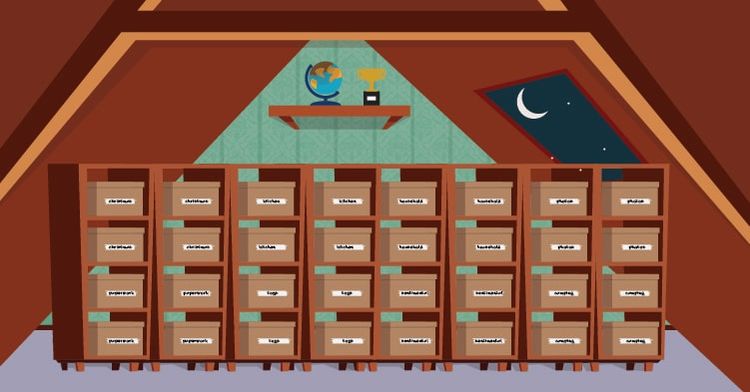
- Boarding Out the Loft – Make your loft accessible and safe with proper boarding, lighting, and ladders
- Garage and Shed Wall Racks – Maximise vertical space with sturdy shelving, racking, and labelled zones
- Kitchen Recycling Bin Systems – Design a system that makes recycling and waste disposal effortless
- Window Seat Hidden Storage – Combine comfort and function with stylish built-in seating
- Sofas and Ottomans with Storage – Choose furniture that works double-duty, including sofa beds with hidden compartments
- Tech Drawer Charging Station – Corral cables, chargers, and devices in one dedicated spot to banish surface clutter
- Wrap Up and Key Takeaways – Final thoughts on supporting your decluttered home with the right storage
What's your biggest storage challenge after decluttering? Have you tried any of these solutions, or are you curious about a particular one?
Share your thoughts in the comments section below, and don't forget to subscribe and leave a review so you never miss an episode packed with practical home organisation tips!
Prefer to read rather than listen?
Transcript of this podcast episode
Ingrid: In today's episode, we're talking about smart storage solutions to consider after a clear out, that actually support your home rather than simply hiding clutter. using the right storage makes your home easier to live in, easier to maintain, and easier to reset. walk you through some practical, thoughtful storage ideas that can transform how your home functions day to day, helping you protect all the effort you have already put into your decluttering journey
Ingrid: Hello and welcome listeners. I'm Ingrid.
Lesley: And I am Lesley. Now, if you are here for the very first time today, or you've been listening in for ages, we want to say a huge thank you we have a little favour to ask.
Ingrid: If you like what you hear, be sure to hit that follow or subscribe button. Share us with your friends or leave us a review. It makes a huge difference to us.
hello and welcome listeners. we talk a lot about decluttering on this podcast, don't we, Lesley? But I think we were like, "We need to talk about storage and storage solutions." And then we came up with a whole 10 things list, and we got all excited because it's a 10 things, Yeah, exactly. You know, it's been a while since we've spoken about storage, but there are some things that can genuinely make a difference in your home if you add them. Now, they're not always possible, so we have to work with what we have, don't we, Ingrid? So yeah, some of these things you might be like, "Oh, I love that, but I just don't know where I can fit it in."
Lesley: But we're gonna talk about them anyway, and we're gonna talk about why they can be a game changer. So this is really when you're getting to the stage of fine-tuning your house. You know, everybody knows we are like buy storage at the appropriate time, put storage in at the appropriate time. This is not for now if you're overwhelmed with clutter.
This is something you can think about later once the clutter is kind of eradicated or made less, decreased, whatever you wanna put it, but n- not in the throes of decluttering. This is things that you can think about later
Ingrid: Yeah. I think so. I think it's really important that we really, you know, ha- Yeah, I think it's really important to get the message across, Lesley, because we know that a lot of people are like, I'm gonna declutter. What am I going to buy to help me with this?" And we're like, "No, you need to actually declutter first, and then look at the boxes and the storage solutions later."
So yes, this is really aimed at you've done a clear-out, you know where the right place is for things. How can you now make it easier for yourself, improve it, so actually the things that you've decided to keep are in their homes, and you can easily retrieve them? So let's get cracking then, Lesley, with number one. I think this is right up your street, because this is a hanging rail for a laundry room. You are so lucky that you've got a laundry room.
Lesley: I'm lucky that I've got a laundry room. I consider myself really lucky to have a laundry room, like a, a designated laundry room or utility room, whatever you wanna call that. So indeed, that is lucky. But you can try and incorporate this into smaller spaces as well. This doesn't have to be just for kind of bespoke laundry rooms.
This can be if you've got space over your washing machine, your tumble dryer, to add a rail. It makes life so much easier because it stops you having to iron everything. Now, well, there'll be a lot of people in who'd be like, "Ironing? I gave up ironing years ago." But there are also loads of people who still do ironing, so...
And either way, whether you're ironing or not, a hanging rail allows the clothes to air, and so it's not just about the ironing. It does take creases out, whether you're ironing or not, if you can hang them where they've got a little bit of space to breathe. So, and it's just about, you know, thinking outside the box a little bit.
'Cause sometimes when we're thinking about storage solutions, we always think about things that you can buy, but this might be something that you need to, if you're not an avid DIYer, you might have to get somebody in to go, "Right, where could I get a rail in here?" It doesn't need to be long. It can be like 50 centimeters wide.
That's all we're talking just to put four, five, six things on, just to make life that little bit easier for yourself
Ingrid: Yeah, definitely. I think, and it, the nice thing is I think when you've got a place for when you're emptying your, your washing machine or when you're emptying your dryer, and you can already hang up some shirts and immediately hang them up without putting them somewhere and then creating a pile of stuff elsewhere, I think it's the tiny tweaks sometimes that can really make a massive difference, and laundry is a problem for a lot of people
Lesley: Absolutely. Yeah, I think it's 'cause as soon as you put it into a basket, that's when it becomes creased. But if you hang it up, then it's as it's supposed to be, which is the reason why we hang things in wardrobes, right? So if you've not got time to fold at that moment in time, then it's a good idea to just to leave it out to air.
So big fan, and in a lot of homes that I've worked in, we've spent a lot of time going, "Where can we get that hanging rail in somewhere?" There's always somewhere that you can add it in. So that's my number one. I don't know whether there's gonna be any that, that can surpass that, to be honest with you, Ingrid, 'cause that is one of my faves.
I'm not gonna lie. But actually, as I look down the list, maybe there is other, other gems coming
Ingrid: Yeah, definitely. Let's go on to number two then. lots of people have, under stairs cupboards. So there's, they have, their homes are on different floors. Under the stairs is sometimes a bit of space that's not really used to its best, and what we see, you know, what we see a lot on the socials as well, is that you can actually make some drawers under the stairs to make the space better accessible, I think is the right word I'm looking for.
Because a lot of times when you have under stairs cupboards, and mine is like that because I've got a tiny little place because the rest of the under stairs cupboard is indeed for me a downstairs toilet. So I've got a tiny little cubby hole under my stairs, but it's difficult to get to, so I'm really putting there some stuff that I don't use a lot.
But often under stairs cupboards have to work really hard in people's homes, They store of stuff, and then when it's hard to get in and out, and it becomes a dumping ground, and it becomes a bit like, oh, TARDIS cupboard. But there are things you can do, right?
Lesley: Yeah, definitely. So it's all about making that space more accessible, and I think, you know, I mean, we've been organizers for a long time now, Ingrid, and, you know, back when we started, this wasn't really a thing to, to change an under-stairs cupboard into a kind of selection of drawers, you know? but I g- I guess it started to happen maybe 10 years ago, something like that, mainstream.
And as more and more people are wanting it, the prices have been driven right down, so it's probably less expensive than you think, and it really can make a big difference to put in shoes, to put in coats, to put in PE bags, swimming kits, all that kind of good stuff that we typically keep under stairs cupboard, and we don't have to then go in and rummage around in the dark and stuff like that.
So really can be a fantastic game changer. So do look out to see whether you've got a space that would support that, and then try and get some prices, some quotes, 'cause it's definitely much more accessible and mainstream than it used to be
Ingrid: yeah, definitely. And also think a little bit... If you're going to do this, think a little bit ahead and go, "How am I gonna do this with lights? Do I need to put a light in, or a strip, or a light with a little battery?" So just to make it all that nudge more visible, can I maybe incorporate a couple of hooks? There's a lot of things you can do to even, you know, to already improve it massively without spending a big budget on it. So definitely have a look at that. Now, of course, gosh, number three, a well-organised pantry. How much money do we all waste, Lesley, on stuff that goes out of date? Oh my goodness, because when...
Often we've got cupboards, larger cupboards that hold the food and the drinks and all of those things, when it's a large cupboard, things can get lost. And then every once in a while you think, "Gosh, oh, I wonder," you know? "Oh, that's, three years out of date. How did this happen?" So it's important to organise your pantry, It's interesting 'cause all homes are completely different, right? And so
Lesley: just spoken about under-stairs cupboards. Now quite often people have got in their kitchen space a little bit of a cupboard. So we're not talking about... I mean, if you've got space for a big pantry, a walk-in pantry, then that's like the dream, isn't it, for everybody?
If you've got space for a cupboard, definitely try and think about that when you, if you're having a new kitchen or something like that. You know, so to get a big wide open space for your food. I mean, I've got, I've got one to be fair. And I've got every, all my food is in one cupboard that, you know, it's all together.
We've got some drawers underneath and it's all there. And it's really nice to have it all in one place. But not, you know, everyone's getting a new kitchen every week. Do you know what I mean? So we have to kind of think outside the box a little bit as to where there is somebody that could create something similar.
And so that might just be in a little, under-stairs cupboard again where you can just put a few shelves on the wall and, you know, and it makes it an accessible space. But it's quite nice to be able to have things at eye level. It's quite nice to be able to really think that through in terms of shelves, the spaces in between those shelves.
So again, this might be something that you wanna get a joiner, to come in and do, just to put some shelves up. It can be less expensive than you think. And allowing your food to be more organized, be more visible, be more accessible ultimately lends itself to less food waste. So it might be a thing where we think, "You know what?
It's worth the investment of, I don't know, 100 pounds, couple of hundred pounds at this moment in time because I know that I'm throwing so much stuff away." So I think if you can incorporate a pantry... Well like, it's interesting, isn't it? We've, we went from Victorian times where everything was in pantries and that's what everybody loved.
Then we went into a kitchen scenario where everything's in base cupboards and wall cupboards. And now people are moving back to pantries for the reasons why they were so good for the Victorians, right? And so it's really interesting to see that sort of shift. Not everybody can do it, but if you can, if you have got a little cupboard that's can just become a bit of a dumping ground, could you repurpose that into a pantry?
'Cause if you can, then that would definitely help I think.
Ingrid: Yeah, definitely. And I think it also can really help then to have, you know, some baskets in there, some shelf dividers in there. maybe even, you know, the, You've got those things that you can put into plate cupboards to divide your plates out. Those could possibly also work in a pantry, You've got these, maybe a lazy Susan that you can use. You can maybe get a tin holder. I mean, there are so many things out there that you can use. But the whole aim is, of course, that you see what you have, and that, of course, when you buy, I don't know, if you, for example, love tomato soup in a tin, randomly I know, but it's, you know, it's getting cold out.
We all like a bit of soup. if you buy new ones, put them at the back of your cupboard so you use up the old ones first, right? So you need to start thinking about a first in, first out system. But having some nice, pantry shelves or baskets in your pantry can help with that as well. So if... you l- waste less food, because that's what we all want, because it's expensive, and it just helps you with your daily routine.
So I think that's something definitely that you can look at. number four, I have this at home, ottoman or a kind of lift-up bed so you can use some storage beneath your bed. Now, of course, we know that ideally we wouldn't want to store anything under our bed, but ideally we'd all have a six-bedroom house, right?
Lesley: Yeah.
Ingrid: you have to work with the space that you've got. So lots of people need to have a bed in their bedrooms that they can lift up so they can store some stuff underneath it
Lesley: Absolutely. So, and, and particularly in smaller spaces, not, not just in smaller spaces, but places where you need that e- that extra storage, they're super helpful. But as Ingrid said, you gotta be choosy about what goes in there, and you need to make sure it's well-protected because dust mites go through beds, and it can become a little bit kind of dusty and a bit horrible if you've not covered it.
So anything that goes in there really needs to be in a box, needs to be in plastic covering, so that you can sort of take it out and things. I mean, I've got one in, in the flat in London actually that we use. I, I put Christmas decorations in there 'cause in a flat you don't have space for that kind of stuff.
You don't have a garage, you don't have a shed, you don't have big storage cupboards. And so it's got Christmas decorations. I've got a spare kind of blow-up bed in there. I've got spare duvets and sleeping bags and pillows but all in plast- all wrapped in plastic. So it's those kind of big things that are really useful.
What I wouldn't use it for is lots of little bits and pieces that you need to be going into on a regular basis. I think it's something that you use infrequently, isn't it, Ingrid? I bet you've got... I think you've got bedding and stuff under yours, haven't you?
Ingrid: Yeah, definitely, because we've got, very regularly guests, so I've got all of the guest duvets, the, winter duvets, and then I swap them over for the summer, that kind of thing. Extra pillows, but indeed all in kind of these nice kind of s- easy-to-access storage. yeah, like the, IKEA ones that you can just zip open.
You put a duvet in it, you zip it closed. It's, not cumbersome. So that's one of the reasons I don't use, vacuum bags, because I find those very cumbersome. They're very handy, but if you then need to quickly get a duvet, that's not a problem, but when you need to put it back, you have to get the Hoover out and yeah.
Lesley: Yeah, exactly
Ingrid: work in my opinion, so. But I've really thought about what I want. It's not become a dumping ground of loads of stuff, because you're sleeping on clutter. You need to really think, "Okay, what kind of category of item fits there, what don't I need all the time?" Because lifting a bed, of course, can be... not like a l- an, light exercise. You need to use your muscles, right, to get it up and down and get it back in shape
Lesley: I think the kind of hydr- hydraulics have got better. So what I would say, 'cause I think even... So I got one in the flat maybe, I'm gonna say five years ago. We put one into Leah's house maybe a year ago. And I think the hydraulic systems are getting easier, 'cause they know that it, it's a lot, you know, 'cause the one in the flat I've got is a Super King.
That's a heavy be- heavy mattress to lift up, right? And so you do have to think about that kind of thing, 'cause someone needs to help you with that potentially. So but I think that an ottoman bed is a real game changer, and they're very smart as well. But obviously there's divans as well, which have got drawers, but they're a little bit more difficult to work with, 'cause often at the side of a bed you've not got much space to work.
Often, not always. And so, es- particularly if you're in, you know, you've just got space for your bed and a couple of bedside cabinets, it's a bit awkward to work with drawers at the side. So an ottoman bed definitely fi- fits the bill for a lot of people. So that is our number four. What's our number five, Ingrid?
And I love this one. I think this might be as good as hanging rails in a laundry room, to be fair
Ingrid: Yeah, it is definitely boarding out your loft. So if you've got a space under your roof, like the attic probably a lot of people call it. We call it a loft here in the UK, and, it's like a great place. Now, of course, lots of people are doing loft conversions, and then they panic about all the stuff that's in their loft and go, "Oh, where are we gonna put all of that stuff?" But if you use it as a storage space, it's really important to have it boarded out and not just have the, beams of wood and then trying to be like a climber trying to get on, onto your ceiling of your... And thinking, fall So you can really make that space, you know, work very hard for you
Lesley: I mean, back in the day when, when I first started out being a clutter fairy, I totally would work in lofts that were not boarded out, like climbing along the beams with the like, you know, that stuff and just... I'm like, "What was I..." Banging my head on the beams all the time and trying to shove boxes up there.
I'm like, "What was I thinking?" Like, we would never do that now. But I was like, "Yeah, we can do this." I was like a proper like, "We can do this. We'll get, we'll get this box up here if it kills us." Do you know what I mean? And so, so yes, that wasn't maybe the best safety, safety conscious thing to do, but luckily now I would just go, "Why don't you board your loft out?"
You know. And again, as people have been doing this more and more and people have fine-tuned their processes, what used to cost thousands of pounds to do you can probably get now for 5, 6, £700. You can get it boarded out, simple light, that's all you need, and it really gives you some great intentional space.
It turns it from a proper sort of dumping ground into somewhere that you have then got, that you can put boxes and things like that
Ingrid: Definitely. And I think also the, the access to the lofts is getting a lot better, right? So in the past it was like get any random ladder and pull yourself up through. And now with all the companies who do this, because there's lots of reputable companies who can now do this for you, they bring the ladder, they bring the light, they bring the boards. Honestly, a day, two depending on how big it is and what you want and, if you need to have it ins- insulated and a lot of things. there are different things you can do, and it's really a game changer, especially if you're struggling with space in your house. I think the thing is a lot of people go, "Yeah, I know I wanna board my loft out, Lesley and Ingrid, do you know how much stuff is up there that I first need to tackle?"
So you have to be brave and go, "Right, if I'm going to do this, I'm gonna take everything down because everything has to come down, and this is the perfect opportunity for me then to do a bit of a clear-out." So yes, but oh my gosh, it's, to- it's lovely. I... Actually, my husband did it himself, about five or six years ago, I believe, and, just so nice to not go, "Ooh, where can I walk?
Where can I not walk? What is really properly boarded and what's looks a bit dodgy?" It's now yep, can put everything in, everything is zoned up there, everything has its own place, everything is labeled. Total game changer. So that's our top five, the break, Lesley. So go for a quick break, and then we'll come back with the next five.
Hi, everyone. Welcome back. We are, doing a 10 Things podcast because Lesley and I were talking about like smart storage solutions that you can put into your house. And before we knew it, we had 10 things we wanted to share with you. So five before the break, five coming in. Number six is have some good wall racks or shelving in your garage or shed or garden room or whatever, but you've got like all of the outdoorsy and gardeny and car kind of stuff, Lots of times the garage is empty when you come into the house. When you buy the house, it's empty, and you start to put stuff in. Before you know it, you can't fit a car in it anymore, and then you're like, "Okay, we maybe should have put some shelving in here. That would've been really, handy."
So project to do. Why do I tell it like this? Because I did exactly the same thing. my garage with lots of stuff and then thought, "Oh, I can't get to things anymore." So then we emptied everything, put wonderful shelving in, some really good crates and things like that, heavy duty crates, because stuff is always heavy for some reason. then it got... everything got a lot better because it really helps, doesn't it, Lesley?
Lesley: It does, and it's interesting 'cause when I, bought this house, there was a garage outside, but it was falling down, and I decided not to have a garage. So I've not got a garage or a shed, but I've got a basement and I've got a couple of rooms in there that I designate for... I've got one that's designated for a bike storage room, so all the bikes are in there.
A few other bits and pieces as well, like sledges and stuff like that. and bike stuff for Steve, like his bike stuff. And then I've got another one that's got mostly, like, garage things, you know, kind of pots of paint and old tiles and Christmas decorations and... So it's, it's things like that. So that's my storage room.
And I have got that racked out as well, so I got a joiner to come in and just put shelves in. They're super sturdy. I thought very carefully about what kind of height I wanted, and it's brilliant. Do you know what I mean? So it doesn't need to be crazy. I was talking to a client of mine yesterday actually, and, we're doing her loft.
we're sort of... We've been sort of redesigning her loft, and some of it is gonna be a- an overflow wardrobe. it's kind of a holiday home really, and some of it is gonna be bigger items like Christmas and stuff. And I'm like, "We don't need to go crazy." You can literally get racking, plastic racking, which is sturdy enough, for, like, £40 each, you know, from, like, DIY shops and stuff.
So it's not crazy money. So but it's really useful not to just leave everything piled up on the floor. That's the important thing,
just be able to split some of these things off and put them on a shelf. Looks intentional, really helps with being able to zone things, and that's what garages and basements and lofts is all about.
We want things to be zoned so you can easily find them. So, and then you can, of course, you can label the racking, or you can label the boxes, or you can label both, which would be the wa- the way that we would do it as well. So wall racks and, and systems. And we don't need to go crazy. I mean, obviously there are some beautiful bespoke garage solutions that probably cost thousands of pounds which look incredible.
But not many people have got the money or the desire to spend that on their home. You know what I mean? So, so keep it simple, but try and get some racking in if you can
Ingrid: Yeah, definitely. Yeah, I, think we, went also for... I think we took galvanised steel in the end, just because it's outside. The garage at the time, it's better now, but it wasn't really, like, weatherproof, so I was like, "We need to really make sure that we spend good..." But it wasn't crazy. Honestly, a
Lesley: Ja, ja, ja
Ingrid: pound and we were there.
So yeah, love it. Great idea. number seven. Oh, difficult one, but very important. You need to think about how you're going to sort out your recycling and your bins in your kitchen or in your utility room or whatever you got it. How is this gonna work? How is this flow gonna work? Where are you going to... I mean, in this co- my goodness, in this country I recycle glass, and paper, and food, and, cardboard, tins, and metal, and five bins.
So, but you can't with every one bit walk outside to your bin, so you have to think about how can I improve my recycling situation and my bin situation in my home?
Lesley: I mean, I would go so far as to say that I would give space in my cupboards, like, in my cupboard space to a good solid bin and recycling system rather than excessive food. So I would really forfeit, food... This might seem a bit ridiculous, food storage space for recycling. Because I think, you know, we can...
There are some great bins out there now where you can re- there's recycling compartments within freestanding bins. But if you can get it hidden behind a kitchen door and have it all sectioned out, then that's absolutely fantastic, 'cause it keeps the place kind of clear and, and sort of, doesn't it, like clutter-free.
But not everybody can do that, 'cause some of us have got to working with quite small kitchens. But if you are working with a larger kitchen, don't forget the recycling bins, you know. And if you co- got the opportunity to repurpose a bottom cupboard for, like, pull-out recycling bins where you can section it off into four.
So I've got... The way I do mine is I've got two bins at the front that are, for general waste. Then I've got one for paper, and then I've got the other one for glass and bottles and, you know, tin and, cartons and all that kind of stuff. so yeah, so that's the way that I do it, 'cause we've only got...
And then the food waste is somewhere different, right. That's my... Like, on my counter. So here we have bins for general waste. We have bins for paper and cardboard. We have bins for, you know, all those things, tins and bottles and glass and all that, and then another, bin for garden waste. And so, but some places have even more and have another extra bin for other things.
So you need to think about what your situation is. But if you can give some space into a kitchen, particularly if you're designing a kitchen from scratch, don't overlook bins and recycling, because it is something that makes your kitchen messy. So however you do it, you section it out, you put little bits of paper on the side, you know, 'cause you've not got that much paper in a week.
But if you can just put it into a bin, it's brilliant. Not everybody's got that. And most recycling... The problem is with it, a lot of the recycling bins now, if you want to create the kind of thing that... You know, at the end of the day, my cupboard is, like, let's see. That's... I've probably given, like, 1.2 meters w- wide of a cupboard to recycling, which is amazing, but not everybody can do that, right?
And so, but to, to get that in a bin is a huge bin, right? To be able to have all those different compartments. And so, but there are also some other things that you can buy. So places like IKEA have, like, stackable bins as well, where you can start putting recycling in. It's more, more about having a space that looks intentional and not just leaving it on your work surface or something like that.
so things like that. So don't overlook recycling and bins if you can, 'cause it can be a real game changer in keeping your kitchen neat
Ingrid: Yeah, definitely. Now, the next one is one I can dream of, Lesley. I can dream of, because envisage this lovely cottage with a bay window, and then in the bay window there's a window seat with these lovely, beautiful cushions and, you can sit and glare out over the sea or over the, country, she says, living in London on a busy street.
Lesley: Yeah. Watch the London buses go by. Yeah, exactly. No, I hear you. I hear you. And, and it is a really... You know, if you've got any h- home that I've ever been to that's got a window seat overlooking a garden, overlooking a view, whatever, it's beautiful. Like, what's not to like about that? And so, but equally, you could put a chair in your window as well.
But what you can't do with a chair is you can't put storage underneath it. And so
Ingrid: Yeah.
Lesley: why we're talking about window seats is because we're always looking for extra storage. Bottom line is every- all you guys are like, "We need a little bit more space for our stuff." And so if you've got a bay window, even if you've got a flat kind of, window, and you can put a window seat into it, then you can put some stuff underneath it.
Perfect for things that you don't need. The types of stuff that we're talking about with ottoman beds, you know, Christmas decorations, maybe board games. Fantastic for things like that. Put them somewhere you don't need them that often. So if you are ever doing a window seat, never, ever give up that space that's underneath it.
Every single thing that you buy, that you think about for your house, think about the storage as well as the aesthetic. We're thinking about, form... we're thinking about form and function together. Really, really important. And a window seat is brilliant 'cause it's l- it's big, and it's a lot of space.
I've got a Jewish client, actually, who, you know, you have to have different crockery for different, celebrations and things like that. That's where all hers is. You know what I mean? It only gets used once a year. Do you know what I mean? So it's a fantastic use of that space. And so things like that.
So love a window seat. Love a window seat. Love an ottoman bed. Do the same. I think they follow the same, fulfill the same purpose, right?
Ingrid: Definitely, And this ties nicely into number nine, Lesley, because these days also lots of sofas have inbuilt storage. Sometimes even the sofas are actually sofa beds. There's a whole, like, bed comes out. You're like, "Wow, how is that possible?" But a lot of sofas, especially for the apartments, I think that's really the rise of the apartments, es- especially in the inner city where people just struggle with space. They were like, "Okay, we might not have a lot of guests, but we have stuff that we need to keep, so the sofa..." Did Nathan have a sofa bed? Have I, or have I envisaged this
Lesley: Luke. Luke, Luke.
Ingrid: look.
Lesley: Yeah.
Ingrid: I remember
Lesley: we... It was genius. I mean, that's a year, that must be, like, oh, how long now? Seven or eight years we found that at IKEA. So it's kind of like a corner sofa. We could sit on as a sofa, then you pulled out an extra bit for a sofa bed, but underneath a section of it, you could put all the bedding for the sofa bed, right?
Which is absolutely brilliant in that small space. He's still got it, still got it in his h- his, his... He's not letting it go. He absolutely loves it in his new house. He's got a bigger house now, 'cause he was in a flat then, but he's got a house now, so still there, absolutely fantastic. So they do them, and it was, like, £400 or something from IKEA.
It was, like, good, good value as well, you know what I mean?
I mean, a lot of, a lot of sofas don't have that. A lot of ottomans have that. So if, if you want an ottoman or a footstool, then you can get the ones that, you know, you can get the ones with fancy feet, of course you can, but you can also get ones that have got storage in them.
A lot of people use them for newspapers and magazines, which we wouldn't necessarily recommend because we want you to keep your newspapers and magazines to a minimum and not, like, pile an ottoman full of them. but they're useful for things like that, particularly if you like blankets and throws. You know, they're great for that kind of thing when you don't need them in the winter.
And so yeah, we love a sofa or an ottoman with built-in storage
Ingrid: nice. and then number 10. yeah, this is getting, more important like every day, Lesley. do you store away all of the tech and, how can you make it look a s- some- sort of looking nice, you know? So there's charging stations, there are tech solutions, because all the wires and everything looks so messy, but we all now have charging galore.
You know, especially when you're with multiple people, it's "Where's your plug? Where's my plug? Whose is what? borrowed mine and why is mine gone?"
Lesley: I think it's really... I, I... It's kind of annoying tech, isn't it? Because... So when I got the kitchen done, which was, like, five years ago, I was like, "Right, okay, I don't wanna be having to look for the plugs, but we can have wires that are like..." So I had USBs, you know those plug sockets with USBs in them, and now it's not USBs anymore.
It's, it's not USB-Cs or whatever it is. I don't even know which one it is, UBC... The, the big one, the big USB. Now it's gone to little USBs, and so I'm like, "Well, that's a waste of time." Do you know what I mean? So no sooner have you done... So, and they are trying to do something. They're trying to make them universal, aren't they, so that, you know, companies can't just say, "Oh, you need a different charger for this.
You need a different charger." Because it's just all trying to make money, and you know what I mean, all that kind of stuff. But I'm like, they're obsolete now. But what I do love is where, again, you probably need a lot of space for this. We can't all dedicate a whole drawer to a charging station, but how nice is it when you can?
You know, so you have one drawer in your house that is like, that's where all the phones go when they're being charged. The cables stay in there. No one's hunting around for a cable. And you just pop your, whatever it is, your phone, whatever it is, your portable charger, anything like that, in the drawer and it charges up without being on your work surface.
Because the thing is, cables and wires are kind of messy. You know, you, you... And then you have them trailing over your work surface where you're trying to cook your dinner and all that kind of stuff. And so a charging station or tech drawer I think is a lovely smart storage solution for a home. But it is quite top-endy, isn't it, really?
Ingrid: yeah, I'm, come thinking, Lesley, I think I did better on part one than on part two of this
Lesley: Yeah, so what have you got? So what, what have you got? This is the question
Ingrid: I've got a well-organised pantry, number three. I've got a lift-up storage bed. I've got a boarded-out loft,
Lesley: Well done
Ingrid: and I've got wall racks in my garage That's it. I got four of the 10.
Lesley: Well, I've got hanging rails. I've not got under-stairs drawers or cupboards, 'cause I... Well, I have, I have got under-stairs cupboard, but I've not got, like, the ones with pull-out drawers and stuff.
Ingrid: Exactly. That's what I'm thinking,
Lesley: Yeah, I've got a well-organised pantry. I've got a pantry cupboard. I've got an ottoman bed, not here, but in London.
Does that count if I've got two places? And I've got that one, and I don't have a loft because I converted my loft into a laundry room. So my loft is my laundry room, right? So I don't have that. so that, how many I've got? One,
Ingrid: Three
Lesley: Three
I don't have a garage, but I do have wall racks in my equivalent of garage, so I'm gonna take that one.
I do have a designated bin. I don't have a window seat. I don't have a sofa with built-in storage, and I don't have a charging station or tech drawer. Did you win?
Ingrid: So f- you five. You had five. I only had, I think three or four. So, you know, it just shows you, right? We can have all the ideas, but that not necessarily means that we have them all in our own houses. You can take away from this podcast whatever works for you. Because in the end, storage should support and not overcomplicate.
Lesley: Yes, absolutely, 100%.
Ingrid: if s- if something works, it works. That's why, Lesley's got in her pantry beautiful containers with labels that she, did it a couple of years ago. She loves it. I don't have that, the moment. My rice and my pasta is still in the original packaging because for me it's not so important.
But Lesley put a beautiful pantry and she wanted it to look pretty as well, as organized. So think about what works for you. Don't overcomplicate
Lesley: Yeah
Ingrid: It's much more important to have less which has a designated place, and if you can make it easier to access, better looking, that's the storage, that's the icing on the cake.
So I think that's really important. But it can make a difference, that's for sure
Lesley: I think it's about looking at your home with a fresh pair of eyes, Ingrid. And so that's, again, that's some- that's something where we've worked, when we've worked with clients, we go, "Ooh, you could totally do this with that space." And so it's not something that they've ever thought about. And so I think, you know, think about the possibility within your home.
Look around and go, "Could I do any of these things, or would I want to?" As Ingrid says, you don't necessarily need to do them. But a lot of the things that we have mentioned serve two purposes. They allow visibility and accessibility, or they take clutter off surfaces. I think that's important. So it's not to hide it away, 'cause we definitely need something where it's still s- a sensible storage solution.
but they serve one of those two purposes, I think. Now, this is kind of... This podcast is more aspirational than it is practical, I guess, but these are very practical solutions that we're coming up with. But some of them will cost money to implement. That's the, that's the sa- we- the reason why we talked about it being aspirational.
But have a think. We wanted to go down this route today. We hope it's been useful. I've only got... What is it? Five. Ingrid's got four. But they're all really good options if you've got space for this in your home
Ingrid: Definitely. So thank you so much for being here. We hope this was helpful, and we'll see you next week
Subscribe now so you don't miss an episode
Prefer to watch rather than listen? Watch on YouTube
Looking to further your decluttering? Take a look at our book!
Useful Links and Resources
Subscribe now so you don't miss an episode
