
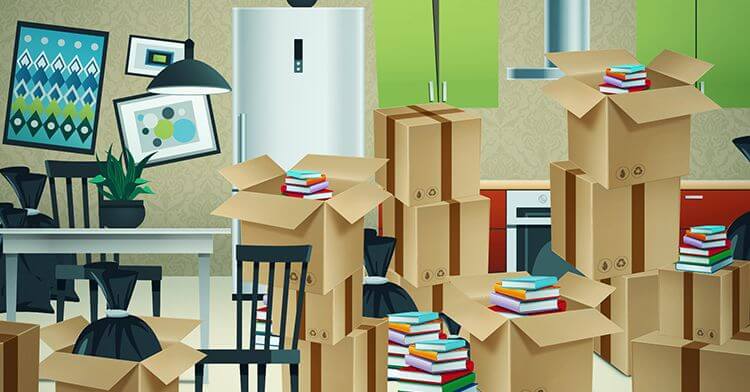
Have you ever felt overwhelmed by the sheer emotional weight of clearing out a loved one's home?
Do you struggle with knowing what to keep and what to let go when every item feels precious?
How can you navigate family dynamics and conflicting opinions whilst honouring your grief and protecting your own wellbeing?
In this deeply compassionate episode, Ingrid and Lesley tackle one of life's most challenging tasks with honesty and practical wisdom. They'll share the truths nobody mentions about sorting through a loved one's belongings, from managing family expectations to distinguishing between genuine sentiment and guilt-driven keeping. You'll discover strategies for pacing yourself, setting boundaries, and making decisions you won't regret later.
Ingrid and Lesley draw on their extensive experience as professional organisers to guide you through this difficult journey with sensitivity and understanding. They explore why this process intensifies grief in unexpected ways, how to establish ground rules that prevent family conflict, and the importance of starting with easier categories before tackling deeply sentimental items. Whether you're facing an imminent deadline or sorting through belongings in your own time, this episode offers invaluable support for one of life's most emotionally demanding tasks.
The conversation addresses the hidden challenges that catch people by surprise, from discovering unexpected contents in letters and diaries to managing well-meaning pressure from friends and family who don't understand why you can't just "get it done." You'll learn why it's crucial to avoid the trap of moving two houses into one, how to choose quality memories over quantity, and why taking breaks isn't a sign of weakness but rather essential self-care during an emotionally exhausting process.
 In this episode:
- Facing The Hardest Task
- Meet Ingrid And Lesley
- Why This Hits So Hard
- Family Dynamics And Conflict
- Ground Rules And Easy Wins
- Deadlines And Outside Pressure
- What To Keep And Why
- Guilt Versus Sentiment
- Passing Treasures Forward
- Don't Move Two Houses Into One
- Pace Yourself And Avoid Regret
- Final Thoughts And Goodbye
What's been your biggest challenge when sorting through a loved one's belongings?
Share your experiences in the comments section below, and don't forget to subscribe and leave a review to help others who might be facing this difficult task find the support they need.
Prefer to read rather than listen?
Transcript of this podcast episode
Ingrid: Today we're talking about one of the hardest jobs many of us will ever face, going through the belongings of someone we've loved and lost. It's a job with no positive endpoint and no sense of achievement waiting at the finish line. Just something that has to be done in our own time and in our own way. you are with this, whether you're right in the middle of it, or you've got boxes tucked away that you're not quite ready to open yet, we wanted to share some thoughts that might help without any pressure to do it in a particular way
Ingrid: Hello and welcome listeners. I'm Ingrid.
Lesley: And I am Lesley. Now, if you are here for the very first time today, or you've been listening in for ages, we want to say a huge thank you we have a little favour to ask.
Ingrid: If you like what you hear, be sure to hit that follow or subscribe button. Share us with your friends or leave us a review. It makes a huge difference to us.
Hello and welcome listeners. A quite tricky, hard subject to talk about today, but some- something that none of us can avoid. At some point, we are going to be clearing the house of a loved one, whether that's a distant aunt, that we've grown cl- grown close to over the years, possibly our parents. some point in our lives, house is going to need clearing, and in this episode, we really wanted to give you some food for thought because there's a lot of emotions around this subject, Lesley?
Lesley: Yeah, it's interesting. While you were saying it, I'm like, "Oh, have I actually done that myself?" I don't know whether I have. obviously I've done it a lot as a professional organizer, so I have some, sense of what that feels like. But I'm not sure because my mum and my mother-in-law both died in their 50s, as I've probably shared before, but the dads were still...
and thankfully are still around, right? So 25, 30 years later. And so they dealt with all that. So I might have helped along the way, but I've never actually done a full loved one house declutter, which is...
Ingrid: Yeah
Lesley: so we say that everyone has to do it. Not everybody has to do it, right? But,
Ingrid: Yeah.
Lesley: a lot of people certainly do, and I think that's what I wanna talk about.
And it might be, that situation where it's like for my dad and my father-in-law, where they cleared out their loved one's belongings in their own home, or it could be that somebody dies that are, that's on their own in the house, and you have to clear the whole house for it to be sold or for it to be, I don't know, for move into, whatever that might be.
So there's different ways of looking at that, isn't there?
Ingrid: Yeah, definitely. I've not done it yet, but I think it also is something that normally, maybe we're generalizing a little bit here, but normally happens when get older, right? And we're all getting more older now these days, so maybe it's away. But, my mom downsized already, but at some point, I really hope not anytime soon, but she is 84 now, but at some point my sister and I are probably gonna end up clearing her house.
We did it for my dad who passed away l- say last year, but it's already the year before, I think. Gosh. so we emptied his room, but of course, because my mom still had her house, it was different, and he didn't have a lot of stuff, so it was something that could be done quickly. And we were aware that the home really needed his room, because there are so many people, who, absolutely are on the waiting list to go into a, a place where elderly people live.
So yeah, but it's, something that at some point we have to probably deal with, and it seems something when you talk to people, some people seem to done already eight houses like that. I'm like, "How can you actually have done so many? How is that possible?" But it's just, is different for everybody really, isn't it?
Lesley: Yeah, definitely. I think, I think sometimes as well... So if it's, I think if it's your own house, I think there's pressure. So if it's your house and you've lost a partner or a child or whatever that might be, it's horrific anyway, 'cause you've got the loss of that person in the house and it pervades the house, right?
If it's somebody else's house, then it brings often with it an extra layer of responsibility because often there's a deadline associated with that. And so however it is, it's not nice, and you're having to make decisions that feel either premature or difficult or both. Do you know what I mean? And it's hard because of course with stuff comes emotion, and with somebody that's passed away, the emotion heightens hugely, doesn't it?
And so it's not an easy job, and I think it's something that people really struggle with. It's something that takes people a really long time as well. It's something that pervades people's lives for months if not years, isn't it, Ingrid? And so that's why we wanted to talk about it today. So a, a few weeks ago or a few months ago, I can't remember, we did a podcast all about...
I think it was called something like The Things That You Need To Do Before You Die. So that was almost like from a decluttering perspective. So that was almost like more of a, legalities and administrative thing, wasn't it? not e- exclusively, but we talked about a lot of the admin. So we're not gonna talk about the admin side of things today.
We're gonna talk more about the stuff, the emotions, the sentiments, and all that kind of stuff. And but this podcast today is really there to say, "We hear you. We know this is difficult stuff, and we're here to help you along that process, give you a little bit of food for thought, things that might like make it a little bit easier."
But we also recognize that whatever we say, it's not gonna be that easy of a job
Ingrid: Yeah, exactly. And I think one of the things that will be happening is that you are not the only person involved in this pro- process. And I'm not talking about the solicitors and all of those things. I'm really talking about when an house needs to be emptied, often other people are involved, like family members, possibly brothers or sisters or a partner or y- I don't know, your mom's or dad's best friend. So other people are involved, so it's not you. And different people have different things, in mind how this is going to happen. sometimes people put all the burden on you, possibly because you are the most involved or because you're the oldest or because you live the closest or whatever reason. And then you might feel that the pressure's all on you and o- other people are not pulling their weight, or it might be that somebody else takes charge and you're like, "But hold on a minute, you're suddenly now taking charge, but where were you the last two years?" "While I was doing all the work here."
So it can be quite a, a difficult situation to deal with and, really how you are in it and how other people around you are in this whole
Lesley: I think the most difficult thing with any decluttering journey is typically other people, Ingrid? So even if you're on a, a decluttering journey yourself, then other people not getting involved or getting involved too much is what causes problems because that's where the real emotions and sentiment rear their head.
So you're right, there's many ways that can rear its head in there. We've heard about it a million times, brothers, sisters, people taking what they don't... doesn't belong to them, saying that things were promised to them when there's no evidence of that, not getting involved, leaving it to one person, overstepping.
all of those. And I think it's such a tense time, isn't it, as well? Such a, a charged time emotionally that it really can... I- it can destroy relationships as well or it can be something that brings people together as well. So it can be a very lovely time to remember that person, so it doesn't necessarily need to be bad but as with everything, what we hear about is the bad stuff typically.
People... If you have a perfectly lovely time going through your late mum's things with your sister, with your brother and it's a nice time of remembrance and spending times looking at photographs and remembering the good times and saying goodbye to a family home, it can also be very positive. But we don't talk about the good stuff, do we, Ingrid? We talk about the difficult stuff. That's the way our minds naturally go, and we've all got examples of that where somebody's taken something that you thought belonged to you or, that you really wanted or that your mum of- promised to you and, we don't need to go into it.
Everyone's got their own versions of that. But it's really difficult. I think it's really useful, I think, to set your stall out in the beginning. So even if you're gonna be... we can't avoid people not pulling their weight, and probably if that happens now, it's probably happened all your life if it's siblings, for example, and it's just a thing that happens.
Some people are naturally more organized or better at things than others. So there's all different things. And so at some point you're gonna have to go, that's fine. This is what's gonna happen and so let's, let- let's have a bit of a meeting to try and agree the parameters of this and to try and get some kind of ground rules in place."
I think that's really important rather than just going it alone and then starting to upset people or vice versa. So I think it's really important where other people are involved to say, we're gonna set up a WhatsApp group," or, "So we're gonna... I'll send you some stuff if I don't understand anything to see whether you like it.
Let's have a WhatsApp group to get people to come over and see whether there are things that they wanna take of my mum's or my dad's," or whatever that might be. So it's really useful to be open and honest and set out the ground rules and parameters from the start in my opinion
Ingrid: Yeah, definitely. And I think that will really, help because... And also then, of course, always, start with the easier things, right? Some, categories of items are easier, work your way up towards the hardest items. If, for example, the, personal paperwork is very hard, or the book collection was a treasured thing that your parents had and now that needs to be divided, or the jewelry or money or what...
Do you want to... You first want to want to bet yourself in this whole process a little bit and start with the easier things, Maybe the linen cupboard with the towels that are 40 years old and you're like, "Okay, that's, easy. We can all agree, they can go," unless they're maybe new in packaging and you can go, "We can donate that." Easier things first. You build your way up to harder items, and that will also then you can get the lay of the land a bit with, the people. Who are the people are invested in this? Who are the people that you can count on? Who are the people that are helping or that are, So then it becomes easier.
And sometimes, your, dad's or mom's best friend would love something from the house and not be the last one on the list to, Because they've been friends for probably a very, long time, and how lovely is it that you can say, "You know what? Why don't you come over and just, me two or three things that are really special to you, and I can talk to my, family if we're all okay and that it's, that we're not..."
those are the things. But when you are grieving for somebody, it's really hard to try and stay calm in these situations, and the littlest thing can over the edge because we're still, of course, thinking about the loss of a loved one as well in the middle of all the paperwork and the stuff and the sorting the house out, and then dealing with all the other people is just not easy
Lesley: It pervades the whole project. So that person that you have lost pervades everything. The paperwork has got their name on it, their things that they've touched all the time, their linen that they didn't use, even if it's a kind of "I can't believe they've still got in that cupboard and it's still in a packet."
All of the, every single thing that you touch takes you back to that person, and that's what's difficult. And so
tricky. It's really hard because it's very emotionally charged. I think, Ingrid, one of the things that's really important to talk about here is deadlines and timescales, because with the best will in the world, we could sit here and go, "Do it in your own time.
Do it when you feel ready. Use the phased approach." because we know how emotionally charged this is, we've just spoken about it for lots of different reasons, but it's fair to say that often deadlines are imposed upon us by external forces, by houses need to be sold, photos needing to be taken, all of that good, people needing to move in.
Whatever that is, sometimes we have to speed things up. But I think that's if a house needs to be sold. If this is in your own house, so you've lost somebody in your house, for example, don't go with other people's deadlines and, n- don't go along the w- where people are like, "Oh, it's time now, mum that you need to be letting go of Dad's stuff."
That's your decision to make. That's nobody else's decisions. we w- we have worked as professional organisers so many times where people who are clearly not ready to make decisions on things like that, that's been forced upon them by their very well-meaning. No one's meaning this with malice, but people are not quite in the same place and feel that, Mum needs to move on a little bit into the next phase.
I've done it myself. my d- my mum died, I told you, at 59. My dad lived, 30 miles away. I'm like, "Dad, I need you to move to Manchester now." He's like, "Love, not quite ready" to move to me. And 'cause because we want to fix things, as children of people that have been bereaved, we're like, we wanna do what we can do to fix things.
And so it's all very well-intentioned, but I think it can be really damaging if you start to make decisions before you're ready. So ideally, we need to do something, and so we can't just live in a sort of shrine to that person for decades. That's also not healthy. But we need to find something where when we feel like the time is right, that we are starting to slowly but surely let go of it.
When there's a deadline, that's a different matter, isn't it, Ingrid?
Ingrid: Yeah. for sure, because it might be a rental property, that, you only have a couple of weeks for to empty and clear. It might be a house that needs to be sold to, get sorted out because different family members might want their part, and you got probate and you've got the whole thing. So you might have a whole other deadline, and then you've got in that probably if a house needs to be sold, an estate agent involved, and photographs that need to be taken, and viewings that need to be done. Because you also don't want to have a house stand for two years, because a house runs down over time. It needs to be lived in. So it's a really fine balance between taking your time, but also, let's be honest, realistic about the situation. And it's not always down to you alone, so you have to take other people into consideration as well. So a lot to deal with when a, loved one, is no longer with us and their stuff needs to be sorted out.
So let's go for a break, and let's di- delve a little bit deeper into all of those items and the sentimentality around that. So see you soon
Hi, everyone. Welcome back. We are chatting about, the five things nobody tells you about sorting a loved one's belongings, and we talked a lot about other people before the break, and we talked about deadlines and timescales, and now we really d- wanted to talk about something that we hear a lot as well, and that is from people in our communities who say, "I'm now clearing my, my mom's house," or my dad's house, or my friend's house, or my aunt's house, and it's really hard what to do with the stuff. It's really hard what to do with the stuff. I want to take everything, or, I'm taking more than I thought, and how do I do this now? and I remember them be- but I find it hard to let it go because I, feel that I'm erasing them from my memories when I let all the stuff go. So there's, that as well, Lesley
Lesley: I know, it's really hard. It's really hard because as we said before, everything is wrapped up. everything that you touch is m- a memory of that person, right? Just because it belongs to them. And so it might give you no emotional response, but you feel like you should have a response because it belongs to them, and you feel that you are doing them a disservice by letting these things go.
So as Ingrid said before, really useful to start with the easy stuff first, right? No one's gonna be too bothered getting rid of a bit of washing up liquid from under the sink from your mum like it's a practical item. She used washing up liquid. She no longer c- no longer can. Let's move it on and not worry about it too much.
But when it comes to other things, it's more difficult. And so but it's really important for us to think when we see sentimental items from other people, so we're talking letters, photographs, jewellery ornaments, pictures, all that kind of good stuff which you could s- say that was sentimental. We need to think about, first and foremost, whose memory is it?
Yeah. They may have been your mom's, your dad's memories, maybe her, your grandma's memories that have been passed down. If you feel no emotional connection to that item at all other than that it belongs to your mum or your dad or your grandma, then you should be letting it go because every sentimental item that we feel by its nature should evoke a sentimental emotional response in us, not guilt.
And so if we are keeping it purely because it belongs to our mom, that's more of a guilty feeling than it is a sentimental one. And so the most important thing is whose memory is it? If we look at a photograph that was our mom's and we have no idea who was on that photograph, notwithstanding family trees and all that kind of stuff and genealogy and all that, which is a completely separate thing, we don't need to keep that photograph because we, know-- we don't-- we won't ever know who that is unless we start to do our own work and research, which is a different thing.
And so but we need to get that firm in our mind. What is guilt? Why-- what are we keeping out of guilt? And what are we keeping out of sentimentality because we feel something when we look at it? Now, if it's our family home,
often there will be things in our family home that give us an emotional response.
And so if that's, I've got things from my grandma, in my room next door, and I remember using them as a child, as an eight-year-old child. And so every-- even though my grandma's things and even though I don't use the sugar shaker that I've got in there anymore, it gives me an emotional happy memory of my grandma, which is the reason why I want to keep it.
On top-- layered on top of that, I can't keep everything that I remember from my g- grandparents' house as a child because I was there all the time. I more or less grew up there, and so there's a lot of that. And so I have to think about quality over quantity. So we've got two main things that we need to look at when we're looking at a loved one's belongings, Ingrid, haven't we?
Ingrid: Yeah. I think so. it's really important to not go, "Okay, I'm just gonna keep everything." It's about finding the right things and not how much stuff can I cram into my own house and bring with me, but really what are the things that have that special meaning and mean something to me.
Exactly what you said about your grandmother's stuff. You couldn't take all of your grandmother's stuff. You took the ones that may gave you that warm, fuzzy feeling inside and were special to you, so you chose the quality. And I think that's really important, and like you said, do the harder things last. And also be mindful when you're going through, those harder items, especially when you come to photographs, and mainly correspondence. Be mindful you read and what you open, and personal letters and diaries, because you might come across things that you didn't know happened in your family. You might...
There might be contentious things, and, pe- things come out after people pass away. So that's why, of course, in Swedish death cleaning, they make a personal box which says, "Burn this stuff and don't even open it. just needs to be burned, I'm gone." But it's not a really super common concept, this, Swedish death cleaning, that everybody around the whole world does this. So a lot of us, when we clear out homes, we will come across personal things and letters and paperwork and things, and we might find things out that we had no idea about. So be prepared for that to happen possibly at some point.
Lesley: Yeah, exactly. No, it is a tricky one. And I think one of the other things that I wanted to say now while we were talking about my, grandma's things is, I've got, a few nice things. My... This, 100 years, the... they were born in like 1905, so so they would be now like 120-odd.
they lived in quite a grand house because my granddad was a vicar back in the day, so some beautiful things. And so I've got some things that aren't necessarily that sentimental to me. I know they belong to me, but I've got, silver, beautiful kind of silver plates, stuff like that. Doesn't really belong, suit my house that much.
I wouldn't really have it out. but I know that Luke and Ellie, who've moved into their house, a couple of years ago, love little quirky bits and pieces. And so I saw that, so for Christmas I gave them, it was like a little tea tray with a little kind of milk dish and sugar. like a typical sort of tea tray from a, a antique one, silver.
and they will bring it out. It's on display, and they know, Luke knows that's his grand- great-grandparents, even though he never met them. So it's just a nice thing that he wants to see, as a quirky little ornament, but it has that additional sentimental feeling. So I don't think it evokes a special memory for him, but I think it's...
we're, big fans, Ingrid, of bringing these kind of things and displaying them and enjoying them, however that looks. And so if you know somebody that
you can say, "This was my grandparent's," or, "This was my auntie's and I'd love you to have it," they don't necessarily have that sentimental, connection to it, but they'll feel more special about it, and that will be part of the story as well.
And so I just think these things need to be used and enjoyed. And that's the kind of thing that I, love to do, actually. But no, sentimentality's a tough one. But often it's wrapped up in guilt, and that's what we need to recognize. We feel like we are doing a disservice to that person by getting rid of their stuff, even though it has no, we have no memory or connection to it
Ingrid: Yeah, definitely. And I think what we have to be really, and why we talk about this, so much as well, is that we have to be really careful that we don't just take cars and cars full of stuff back to our own house. If our own houses are already cluttered and we're already struggling with keeping everything moving along in our own houses, and we then empty a house, and we think, "Oh, yeah."
you mentioned washing up liquid. You might think, "Oh, that's really handy. I use washing up liquid, so I'm gonna take that home." But there's gonna be hundreds of things like that. You might be better going, "You know what? I know it would be really handy to take washing up liquid at home, but I'm just either gonna put it in a food bank or I'm gonna put it on a giveaway app, because I already have washing up liquid at home, and I need to make sure that the stuff that I'm going to take actually is stuff that is meaningful for me." And of course, if there's something in your, in that house that is an upgrade from something that you own, you can go, "Oh, that's fantastic thing. I remember my mom using that, but it's a really good quality one, and the one I have is a plastic one. I'm gonna swap them over and I'm gonna use..." there's no problem with that.
But what we don't want you to do, and it's what we see, is what people tell us, have a whole full of boxes of my mom and dad that I haven't opened," or, "There is a storage unit somewhere full of stuff that I couldn't make decisions about," or, "My loft or my basement is packed to the rafters full of stuff that I, at the time, either couldn't deal with or just boxed up and boxed up At some point, it's, this, it stops, right? So you have to kinda go, "How can I figure this out?" Because what we don't want you to do is just move stuff to your house, and basically churn the stuff to your house instead of making any decisions. You have to be realistic about what you can take, what your house can hold, and that's not, you're not being, how do you call it?
Selfish. You're actually being kind to yourself. You are being kind to yourself by going, Mom or Dad or my Aunt really loved you. I think, I'm gonna miss you, but it doesn't mean I can bring everything from your house to my house, because I have my own life to live with my own stuff.
I'm gonna be kind, and I'm gonna pick and choose what is important for me."
Lesley: I I, so agree, 'cause two houses should never become one, right? So we're not supposed to take an entire contents of another house and bring it to our house just because it's useful. And that's, the thing,
Ingrid: Yeah
Lesley: we are cluttered people, we always see the possibility in everything. But what we've gotta see is the downside of doing that.
Really, important. And Ingrid's right, if you c- see something that is a sentimental item, that is an upgrade from something that you've got, of course make that swap, but have it firmly in mind, really important. But it's when we're just bringing the washing up liquids and the bleaches, and the towels, and the sheets, and the this, and the that, and the plates, and the cups, and the, whatever, waiting to see whether or not.
If you've never had, you've never had it before, you're not gonna miss it. Do you know what I mean? But, if you have had your eye on some crystal glasses that you've, known have been in your family for generations, that's a completely different matter. But if it's something from IKEA that your mum had, then we don't need that stuff.
We can just pass that on. But this is not easy. It's not easy. But it's all about getting the balance right between all of these things
Ingrid: Yeah, definitely. So just remember that also when you are working through a loved one's belongings, you might have days that you're doing really well and you're like, "Okay, I, I, it was a good day today because I got through a lot and I wasn't, crumbling down in a heap and just being overwhelmed by it all."
And other days are going to be super tough because that's just how life works. So don't be hard on yourself if you're having a super tough day and you can't make any decisions and it's just too overwhelming. You sometimes, you have to just maybe say, "You know what? I know I've been now going at this for, several days, or several weeks, or several months. need a weekend off," or, "I need a day off," or, "I need an afternoon off." And just... Or you might need to do some research, or you might just to go for a walk with your best friend and have a big chat, and have a cup of tea and a slice of cake. You know what I mean? And just share your woes a little bit because there's a lot of emotions going around in this whole thing, and you need to be able to adjust your plan as a needed.
So this is not about, yeah, shortest time possible, clear this all out, and over quantity. No, it's be mindful that you can be taken off track, but that doesn't mean the whole plan was flawed in the first place, or your whole idea of how you're gonna do it is not gonna work. You're allowed to have a tough day.
You're allowed to have a tough afternoon. You're allowed to have a, a weekend off. So take that into consideration. It's a lot to carry all at once
Lesley: Yeah, definitely. And I think, so it is about making a plan and not going too fast as well, 'cause sometimes we can make rash decisions as well and then have regrets over things. So there are also a lot of people who regret having let something go from their parents' house. so we see that. So we need to be really careful how we're doing this.
It's all about balance. It's all about balancing all of the things, balancing our grief, balancing the timescales, balancing the people. You're balancing what we keep and what we don't, understanding all the different emotions that are at- attached with that. This is probably one of the hardest bits of decluttering when it involves somebody else's stuff, so that's why we wanna talk about it and give you a li- a few ideas about the kinds of things that might be tough, the kinds of things that you wanna think about in advance and be ready for, and to try and, be ready for those questions from other people as well, to go, "You know what?
Just this is the way that I feel that we're gonna do it." it's fore- forearmed is fore... What is it? Forewarned is forearmed. Which, or is it forearmed is forewarned? No. Things, we, whichever way it is,
Ingrid: think the
Lesley: have having the information, and the self-awareness and the desire to be kind to yourself and to take this process one step at a time will mean that you feel more in control of a situation, and that's what's important.
Any kind of decluttering is about feeling controlling of the situation, 'cause if you feel in control of the situation, what that means is you make the right decisions there and then, and you feel like you won't look back and have resentment or regret, and that's what this is all about. That's why we bang on about understanding the emotions behind the stuff, phased approaches, big picture goals.
Stuff is not easy to navigate if you're a person who likes stuff and has liked stuff in the past. This is not easy. Some people could care less, and they just chuck it out. They're not, got a bother on them. But the people in this community and you guys that listen to this podcast today, you have got a relationship with stuff, which means that you find yourself here listening to us.
So yeah, tough thing to talk about. but it is indeed something that many of us will have to face and deal with over the time. so yeah
Ingrid: Yeah. Let us know if you want to share any thoughts, about this podcast. we'd love to hear from you. Leave us a comment. but yeah, we appreciate you listening in. whether you're a brand new listener or have been here for ages, thank you so much and, we look forward to seeing you again next week.
So see you soon
Subscribe now so you don't miss an episode
Prefer to watch rather than listen? Watch on YouTube
Looking to further your decluttering? Take a look at our book!
Useful Links and Resources
Subscribe now so you don't miss an episode
